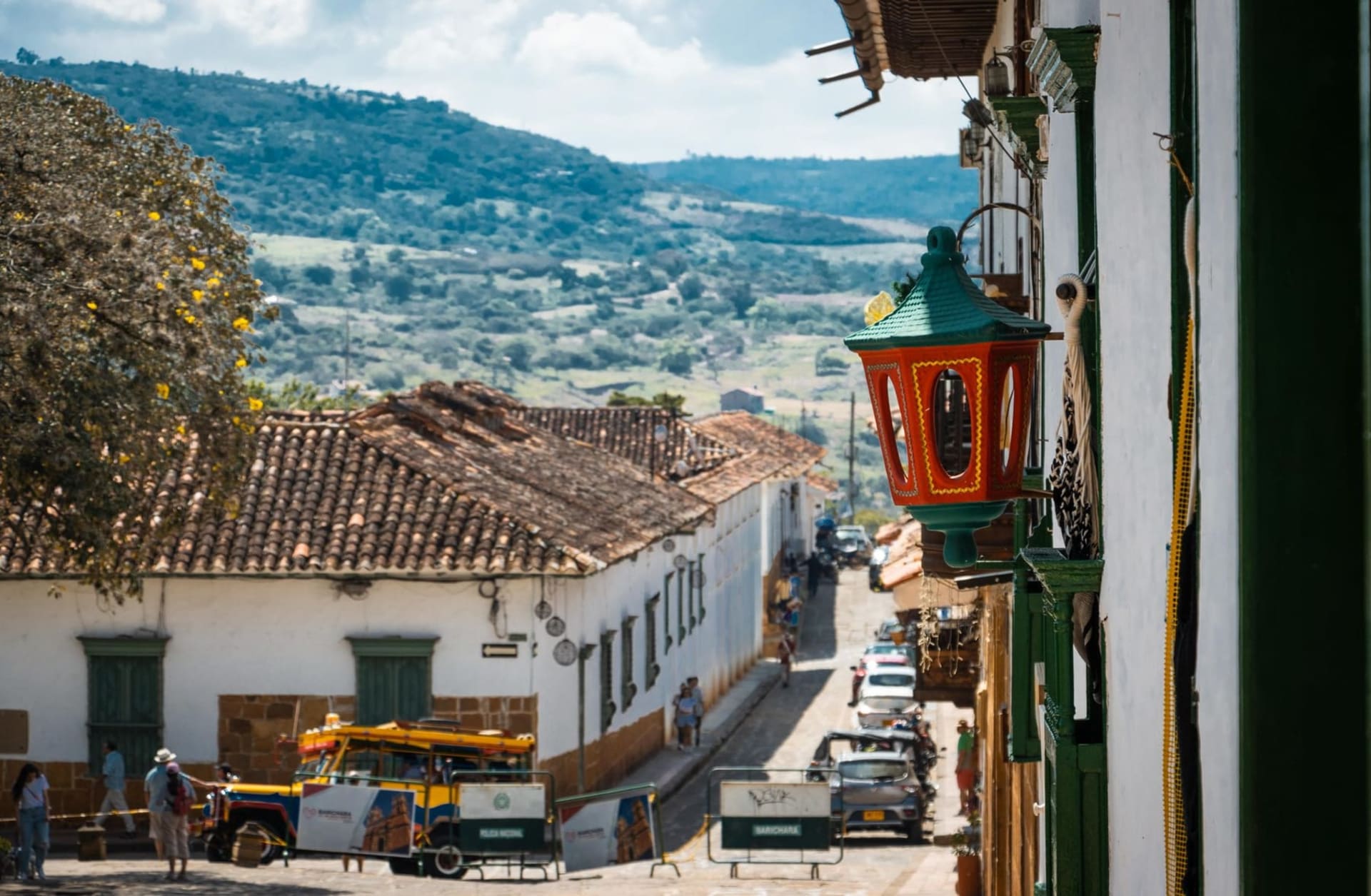
A coffee-region pueblo of candy-colored balconies in Antioquia, surrounded by waterfalls and untouched cloud forest.
There is a particular quality of light in Jardín around six in the morning, when the mist is still caught in the folds of the Andes and the roosters on Calle de la Independencia have only just started their argument with the day. The facades — tangerine, cobalt, lime, the yellow of old bus seats — glow softly in the grey. Then the sun clears the ridge and everything becomes saturated, almost theatrical, like a film set built by someone who loved color too much and had no one to tell them to stop.
Lia and I arrived by bus from Medellín, a three-hour winding descent into the Cartama River valley. We had no plan beyond finding the plaza, which in Jardín is exactly what you should do. The Parque Principal is the anchor of the whole town — the Basílica Menor de la Inmaculada Concepción rising white and gothic at its head, the wooden eaves of the surrounding buildings hung with ferns and orchids, old men in ruanas playing tejo and drinking tinto from tiny ceramic cups.
The Taste of the Tierra
I drank more coffee in Jardín than anywhere else in Colombia, and that is not a small claim. The cafés along Calle del Ferrocarril serve it the local way: black, barely sweetened, hot enough to require patience. The surrounding hills — the steep fincas visible from any second-story window — produce the beans. Breakfast was always the same: arepas de chócolo with fresh cheese, scrambled eggs with tomato and onion, a basket of pan de bono still warm from someone’s oven. We ate it every morning at a corner place off the plaza where the owner’s daughter did homework at a back table and the television played the regional news on mute.
Into the Cloud Forest
The road to the Cascada El Escobal took us through shade-grown coffee plantings, past a farm where a man was spreading freshly washed parchment coffee on flat concrete to dry in the afternoon sun. The waterfall itself drops about forty meters into a cold clear pool. What I did not expect — the genuine surprise of the place — was the silence. Not absence of sound, but a particular layered quiet: water on rock, insects, the distant whistle of a chestnut-capped brushfinch. No other visitors. We sat on a boulder and did not speak for a long time, which for us is rare.
The Evening Light
The chiva — the open-sided wooden bus painted in the same colors as the buildings — runs routes into the surrounding vereda in the late afternoon. We took it nowhere specific, just out along the ridge road above town until the valley opened below us and Jardín looked like a handful of pigment someone had dropped into a bowl of green.
When to go: December through March and June through August offer the driest weather and clearest views into the surrounding cordillera. The Feria Anual del Café in August draws coffee growers from across Antioquia — worth timing the visit around if you can.