Shenzhen
"Shenzhen is the city built fastest in human history, and it shows in ways that are alarming and thrilling in equal measure."
China's Silicon Valley — a fishing village in 1980, a megacity of 13 million today.
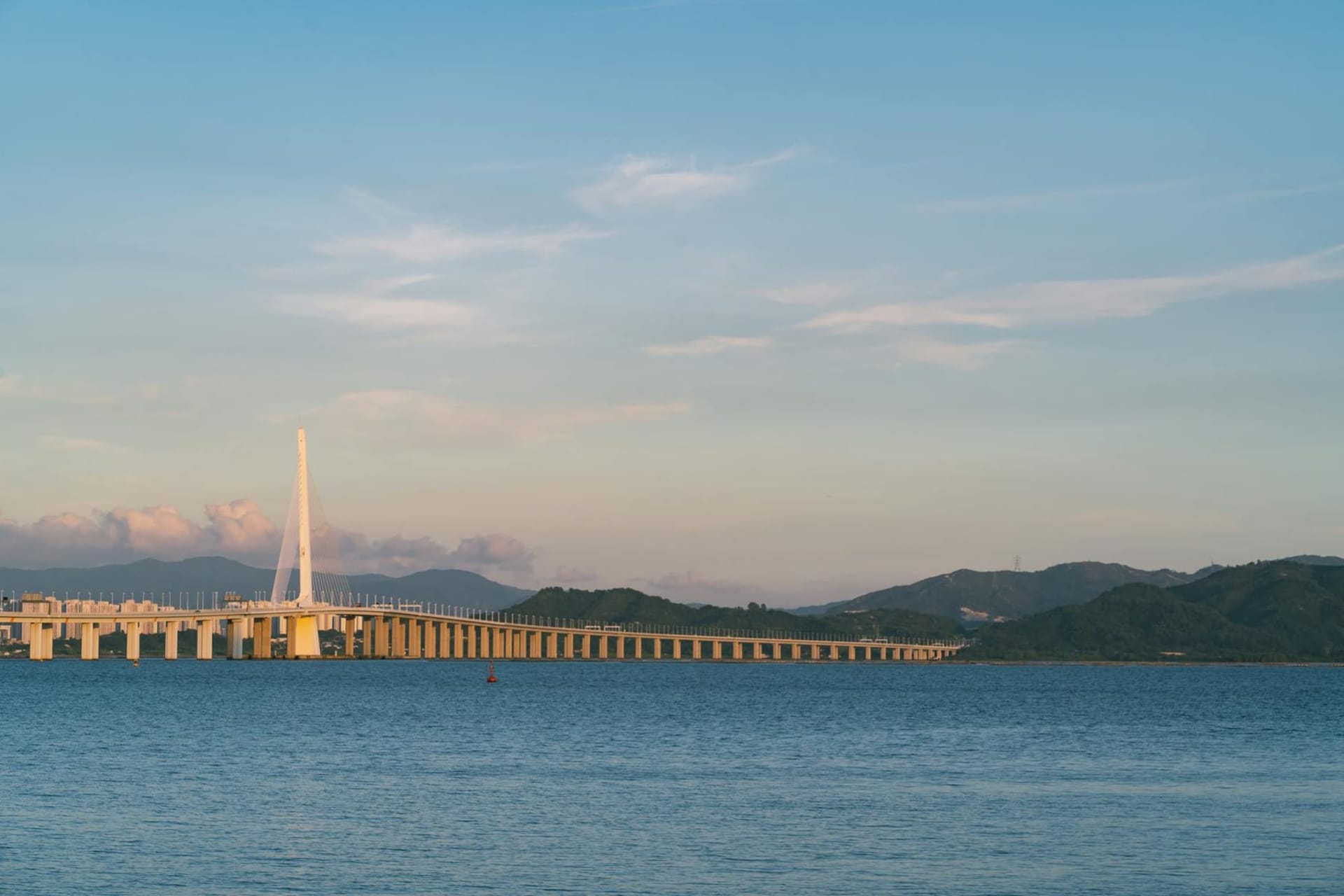
There is a photograph in the Shenzhen Museum of Contemporary Art that stops me cold every time I think about it. On the left side: a muddy estuary, fishing boats, a handful of low concrete houses — 1980. On the right: the skyline I am standing in front of right now, forty-four years later. The same patch of earth. The speed of that transformation doesn’t make sense to the human mind. It makes more sense to the body — standing on Shennan Boulevard while eight lanes of traffic hiss past and a forest of towers catches the late afternoon smog-light in shades of copper and bruise.
Huaqiangbei and the Architecture of Abundance
We arrive at Huaqiangbei Electronics Market on a Tuesday morning, which turns out to be the only reasonable time to visit before the crowds compact into something genuinely claustrophobic. Lia wants a cable. We exit ninety minutes later having seen circuit boards sold by weight, a floor dedicated entirely to LED strips in every conceivable color temperature, and a woman eating a bowl of congee at a table surrounded by disassembled drones. The market is seven blocks wide and runs across multiple towers connected by aerial walkways. It smells of solder and machine oil and, inexplicably, faintly of jasmine from a single tea vendor who has set up between two component stalls.
This is where the world’s electronics are stitched together and unmade and stitched again. The pace is not frantic — it is methodical, which is somehow more unsettling.
Unexpected Quiet in OCT-LOFT
The surprise comes, as genuine surprises do, from having no expectations. We wander into OCT-LOFT — the Overseas Chinese Town creative district — expecting the kind of sanitized arts neighborhood that exists in every Chinese city now, full of overpriced matcha and boutique hotels. Instead the old factory buildings are actually porous, half-occupied by working studios, and we spend an hour watching a ceramicist throw porcelain in an open doorway, the afternoon light falling flat and white through north-facing skylights. A man is sleeping on a cot in the corner. Nobody is performing anything for anyone.
We eat at a Cantonese roast-meat counter on Zhenhua Road afterward — char siu so lacquered it catches the fluorescent light, white rice tasting faintly of the rice cooker itself, a cold Tsingtao that costs eight kuai. I have no complaint about any of this.
The City as Argument
Shenzhen is not a city that wants to be liked. It wants to be useful. Every surface is optimized, every transit connection calculated, every skyline element pushing vertically with a confidence that has no nostalgia in it. The city was invented by decree in 1980 and has been revising itself ever since, replacing its own buildings before they age. Walking here feels like reading a sentence that is still being written.
When to go: October through December brings the most bearable weather — lower humidity, temperatures in the low twenties Celsius, and the air quality occasionally clears enough to see the hills in the north. Avoid the Golden Week holidays in early October unless human density is something you seek out.