Lhasa
"At 3,650 metres, Lhasa makes the act of breathing feel like a prayer you hadn't planned to offer."
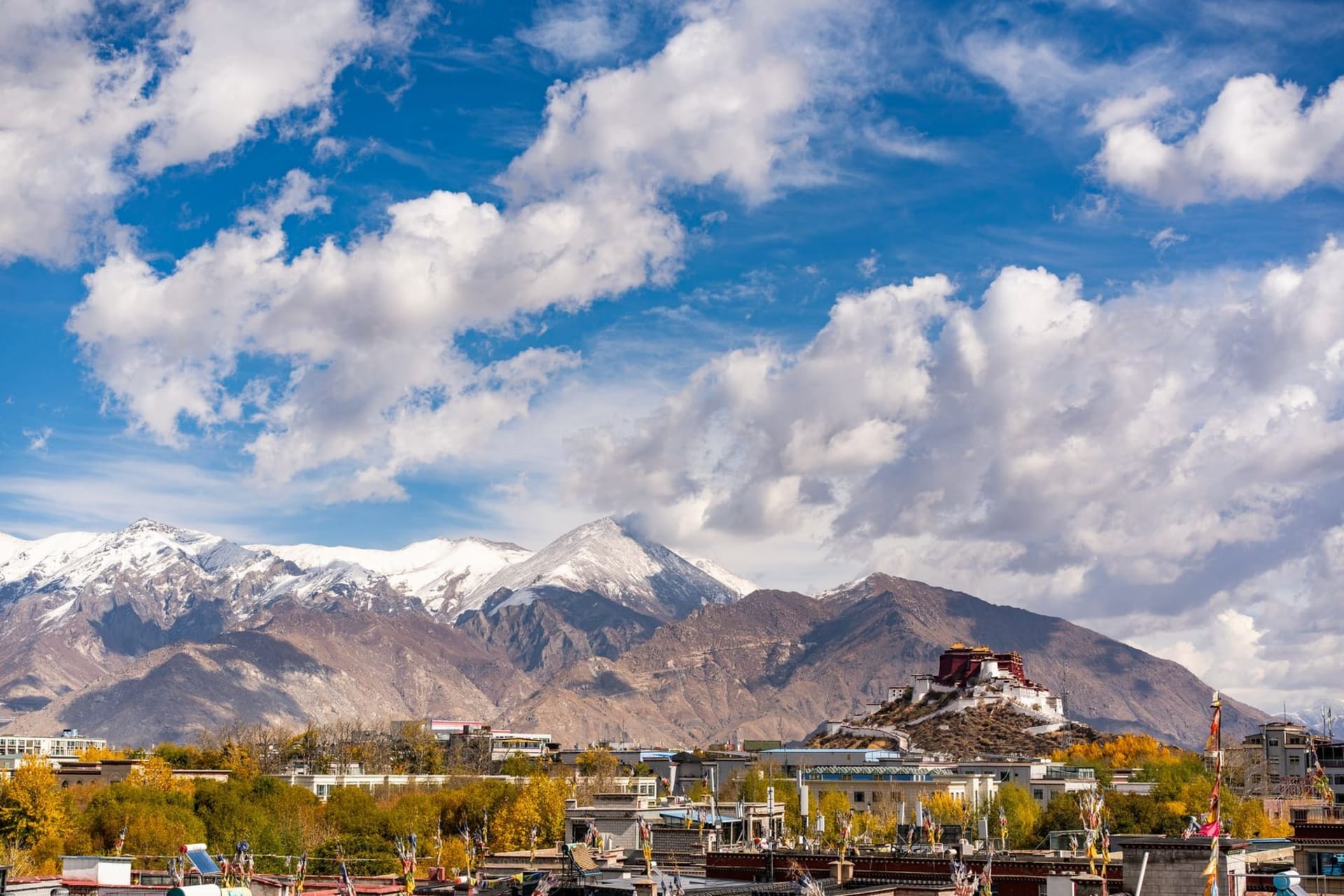
The Potala Palace rises above the Roof of the World where pilgrims prostrate themselves across the plaza.
The first thing Lhasa takes from you is your breath. Not metaphorically — literally. I stepped off the train at Lhasa station and stood on the platform in the thin morning air, lungs working twice as hard for half the return. Everything slowed. My thoughts, my stride, even my sense of urgency. At 3,650 metres, the city insists on a different pace, and it does not ask politely.
The Palace That Refuses to Be Background
The Potala Palace is not a landmark you approach. It approaches you — from every street corner, every gap between buildings, every turn on Dekyi Nub Lam. Thirteen storeys of white-washed stone and dark crimson rising from Marpo Ri hill, it is the kind of architecture that rearranges your understanding of what human hands can do. I had seen photographs for years. The photographs had lied by being insufficiently excessive.
We arrived at the Jokhang Temple before eight in the morning, and the circuit of the Barkhor — the sacred circumambulation route around the temple — was already dense with pilgrims. Elderly women in striped pangden aprons spun hand-held prayer wheels. Men with weathered faces pressed their palms together, lifted them to their foreheads, then lowered their entire bodies flat to the flagstones in full prostration, stood, stepped forward, and began again. Some had been doing this for weeks, travelling hundreds of kilometres to Lhasa this way. Lia stopped walking and just watched, and neither of us said anything for a long time.
Yak Butter and the Smell of Devotion
Inside the Jokhang, the air is thick with something ancient — juniper incense, molten yak butter from thousands of butter lamps, the breath of the crowd. It takes a moment for the eyes to adjust and for the nose to stop resisting. Then it becomes the most natural smell in the world. I drank butter tea at a small teahouse on Barkhor Square — salty, rich, faintly rancid in the way that anything deeply nourishing tends to be — and ate tsampa, roasted barley flour kneaded into paste, which coats your mouth like a memory you didn’t know you had.
The unexpected discovery came on our second afternoon, wandering down an alley behind Ramoche Temple: a courtyard where three old men played mahjong in absolute silence, a pot of tea between them, the sound of tiles the only punctuation in the still air. No tourists. No ceremony. Just an ordinary Tuesday afternoon in the highest city on earth.
Light at the Roof of the World
The light in Lhasa is the thing I think about most now. At altitude, the atmosphere filters less, and the sun arrives with an almost aggressive clarity. Shadows are sharp-edged. Colours — the saffron of monks’ robes, the turquoise inlay on door frames along Linkuo Dong Lam, the white of the Potala against that relentless blue sky — read like they have been saturated beyond what should be possible.
When to go: April through June offers clear skies and tolerable temperatures before the summer monsoon clouds move in from the south. September and October are equally good — crisp air, long golden afternoons, and slightly thinner crowds after the peak Tibetan pilgrimage season.