Jiuzhaigou
"Jiuzhaigou's colour palette looks like a Photoshop error until you're standing knee-deep in confirmation."
A mountain valley of impossibly turquoise lakes, waterfalls, and autumn colour in Sichuan.
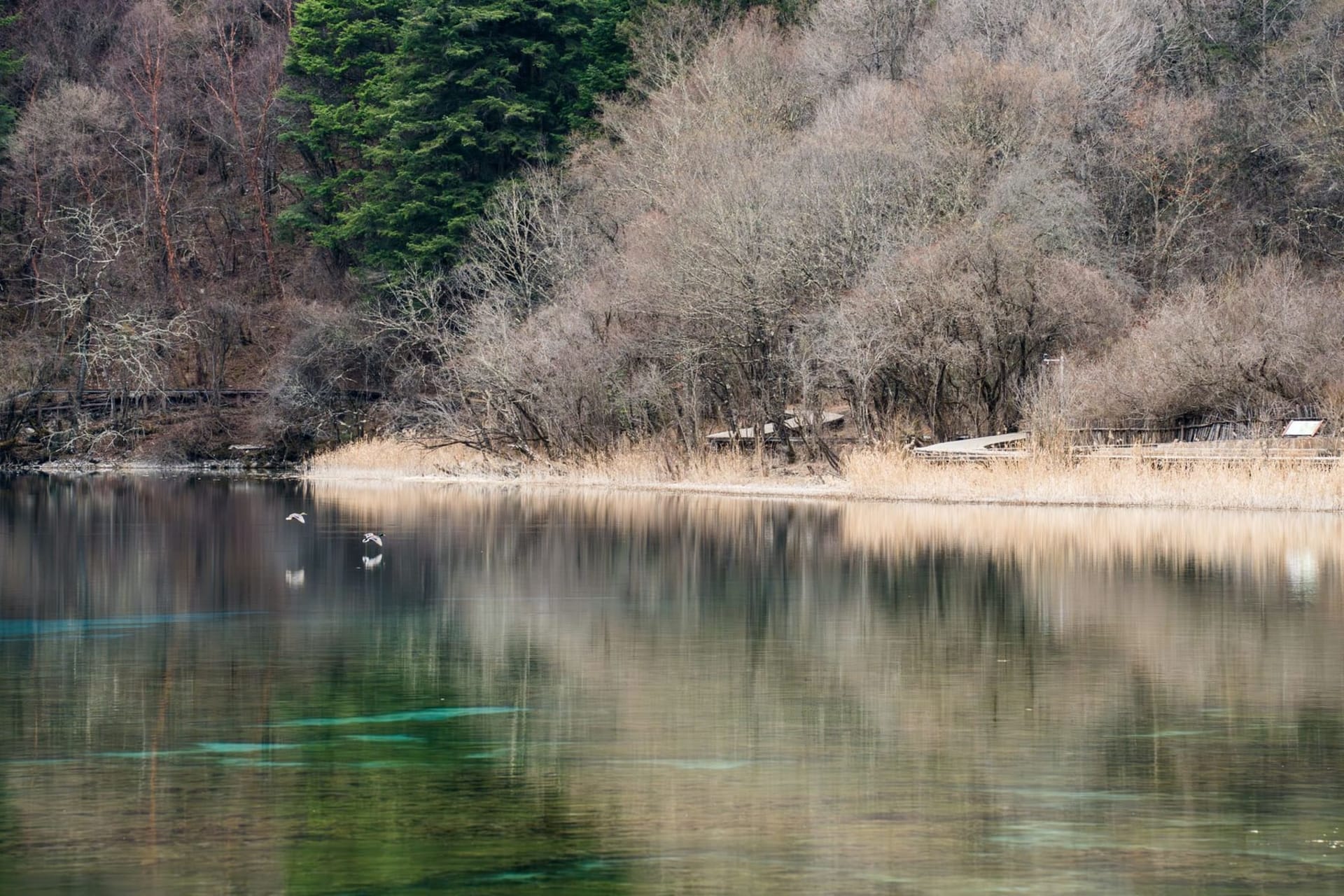
I didn’t believe the photographs. I assumed some algorithmic trick had saturated the blues past the point of honesty, the way Instagram once made every Mexican sunset look like a chemical spill. Then I stood at the edge of Five Flower Lake — Wuhua Hai — at nine in the morning, the light still low and cool through the fir trees, and felt genuinely embarrassed for my skepticism.
The water was that colour. Luminous turquoise shading into cobalt at depth, with submerged trunks of fallen trees preserved intact beneath the surface like insects in amber, their pale limbs caught mid-reach three metres down. A ranger’s whistle echoed somewhere along the boardwalk. Lia grabbed my sleeve and didn’t let go for a full minute.
The Valley’s Architecture of Light
Jiuzhaigou is structured like a sentence with three clauses — the Rize Valley, the Zechawa Valley, and the Shuzheng Valley form a Y-shape through the mountains of northern Sichuan. Each branch has its own rhythm. Rize is the dramatic one, home to Pearl Shoal Waterfall where the Peacock River spreads wide and shallow over travertine shelves, catching light in a thousand individual drops before disappearing over the edge. I arrived just as a tour group was leaving, and for four minutes I had the overlook essentially to myself, the roar filling my chest like something important being announced.
The Shuzheng lakes lower in the valley are older, calmer, their surfaces so still on windless mornings that the reflected tree line looks more real than the trees themselves.
What the Guidebooks Don’t Warn You About
The surprise that stopped me entirely was the smell. I’d expected the visual spectacle — nothing prepares you for the mineral coldness of the air, something between glacier melt and pine resin, a scent with actual weight to it that made the back of my throat feel clarified. It’s the calcium carbonate in the water, I was told later. The same chemistry that creates the colours creates that particular kind of silence in the lungs.
I had also not expected how genuinely remote the feeling is despite the infrastructure. The shuttles run on timetables, the boardwalks are engineered to the centimetre, and yet the valley walls close in steep enough that by midafternoon, cloud shadow moves through fast and cold, and the whole place feels briefly wild again.
I ate a bowl of yak butter noodles at a small stall near Nuorilang Waterfall junction. No particular name on the stall. The broth tasted like something that had been decided upon a long time ago.
When to go: Late September through October brings the famous autumn foliage — the valley’s larches and maples turn the slopes amber and crimson while the lakes remain their impossible blue. Late spring, once the snow has cleared the high passes, offers the water at its most vivid with far smaller crowds.