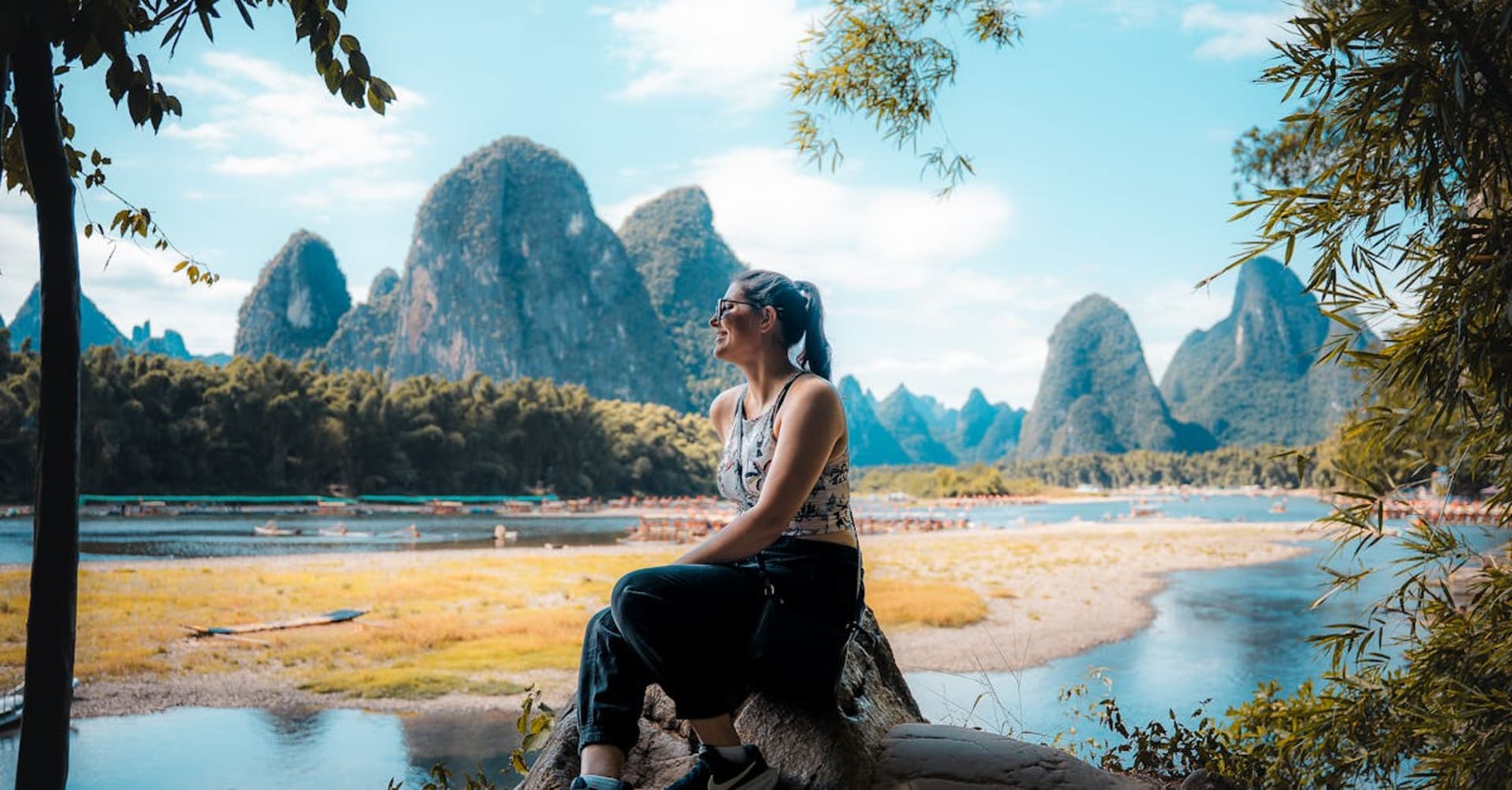
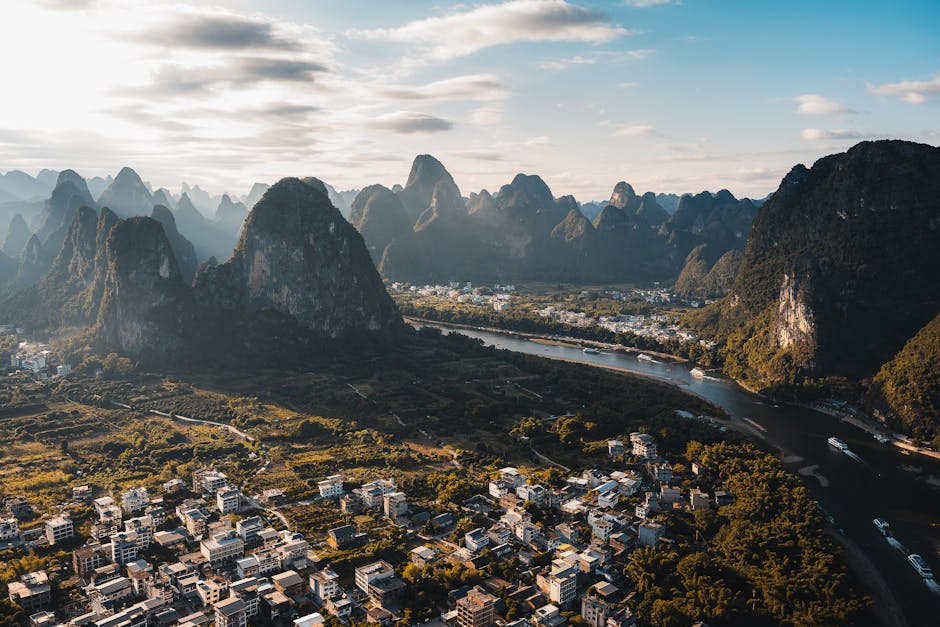
Guilin sits in the heart of a karst landscape so beautiful it appears on Chinese currency, and the reality exceeds the banknote. The limestone peaks rise in soft, conical shapes from the plains along the Li River, their reflections doubling the scenery in the still water below. A cruise from Guilin to Yangshuo follows the river through four hours of peaks, bamboo groves, water buffalo, and fishermen with cormorants — it is one of the most scenic river journeys in the world, and the slow pace lets you absorb every frame. I took the cruise on a morning when the mist sat low on the river, erasing the line between water and sky, and the karsts emerged from the whiteness like something from a dream that has not decided whether to become real. A woman next to me on the boat, Chinese, visiting for the third time, said quietly: “It is different every time.” She was right. The light changes everything here.
Yangshuo and the Yulong River
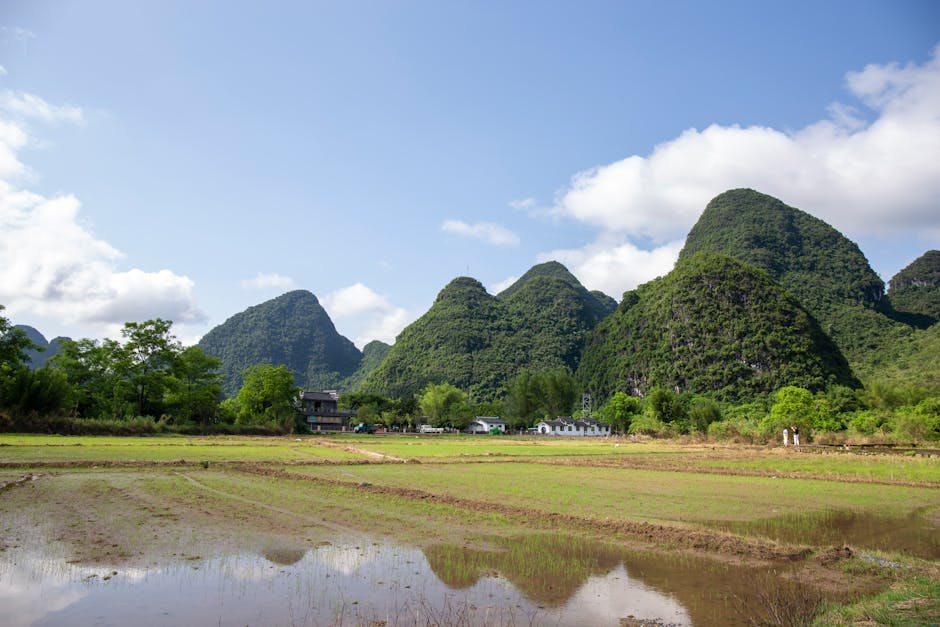
Yangshuo, at the end of the cruise, is the base for deeper exploration. Rent a bicycle and ride through the rice paddies along the Yulong River, crossing ancient stone bridges and passing through villages where the karsts rise directly behind the farmhouses like stage scenery placed by a director with an excessive budget. Moon Hill offers a short hike to a natural limestone arch with panoramic views that justify the sweat. The bamboo rafting on the Yulong is the quieter alternative to the Li River cruise — a pole-man guides the raft through shallows where the water is so clear you can count the pebbles, and the only sound is the bamboo scraping the riverbed and the distant call of a farmer to his buffalo.
Guilin City
Back in Guilin, Elephant Trunk Hill is the city symbol — a rock formation that looks exactly like an elephant drinking from the river, which is either a geological miracle or proof that nature has a sense of humour. Reed Flute Cave is a subterranean light show of stalactites and stalagmites that has been illuminated with coloured lights in a way that is half tacky and half genuinely spectacular, a tension I found oddly Chinese. And the night markets along Zhengyang Pedestrian Street serve beer fish — a Yangshuo specialty of river fish braised in beer with tomatoes and peppers — and Guilin rice noodles that keep you coming back. I ate the noodles every morning for breakfast, standing at a counter, choosing my own toppings from a dozen bowls, and I understood why the locals say that Guilin’s noodles are the best in China. They might be right.
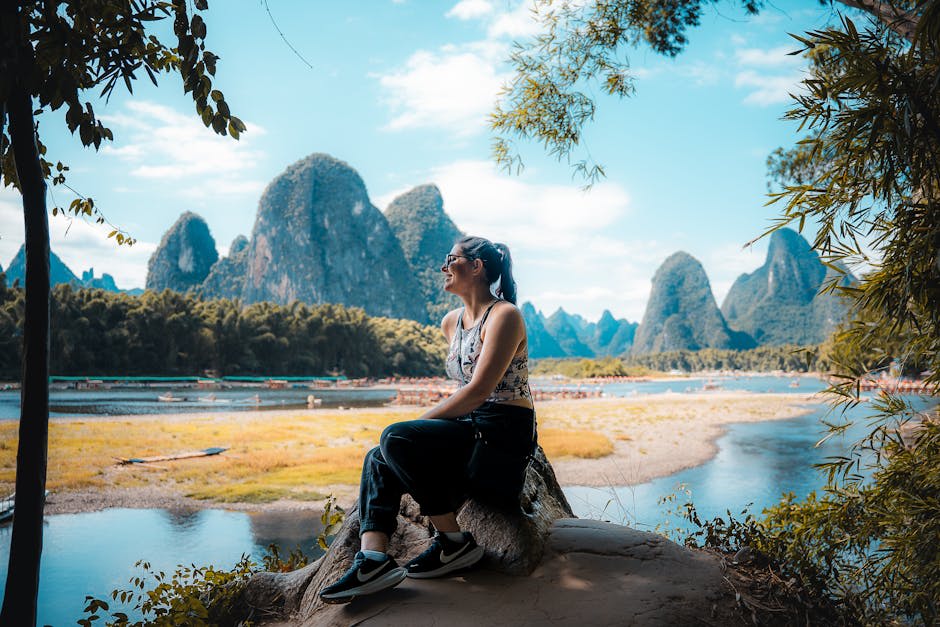
When to go: April to October for warm weather, with April to June being the greenest period. Autumn (September to November) offers clearer skies. Winter is cool and misty but atmospheric and uncrowded.