Stilt houses, wooden UNESCO churches, and a mythology of sea monsters and witches on Chile's misty southern island.
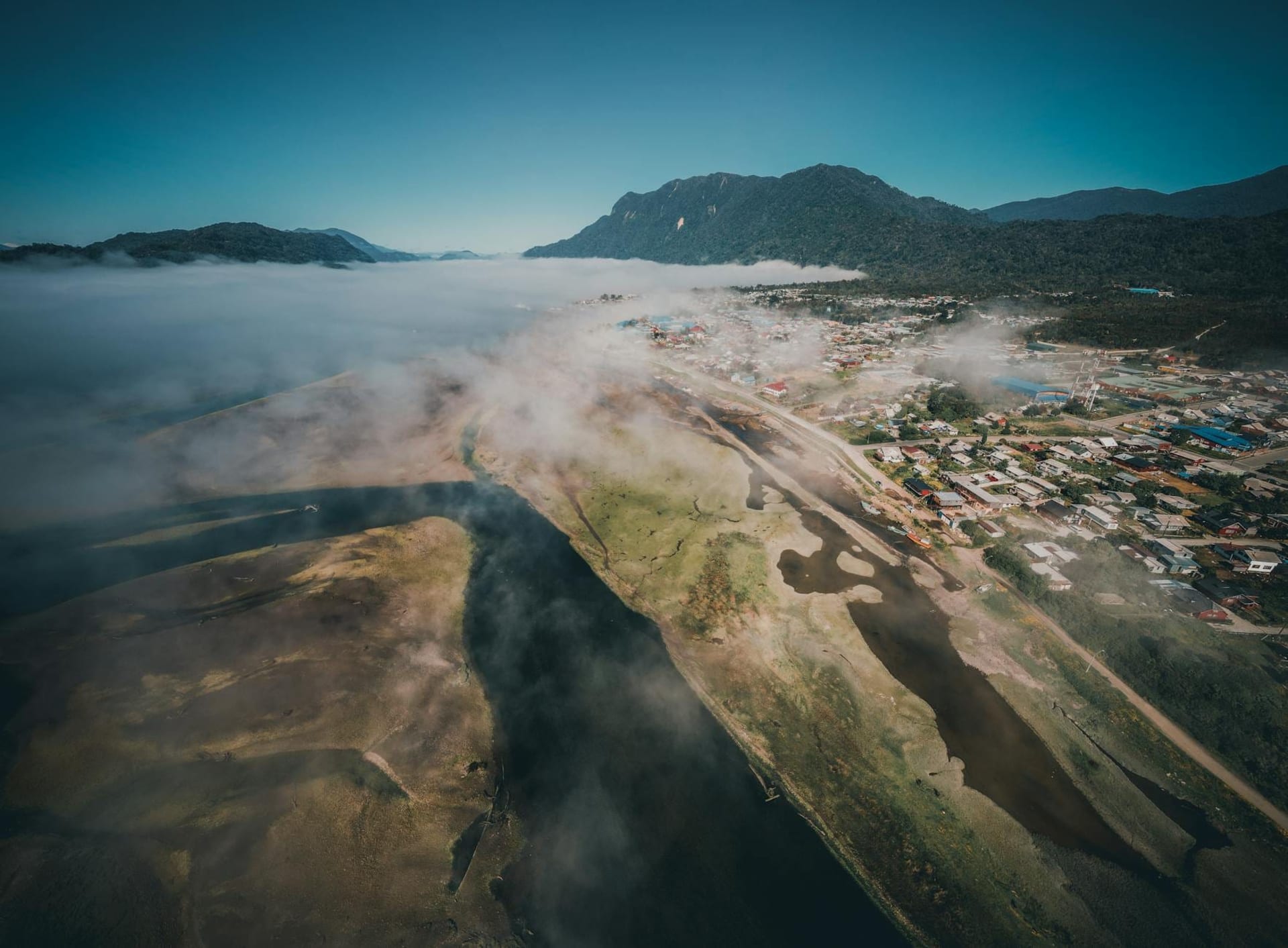
There is a particular quality to Chiloe’s light — or rather, to its absence of light. Arriving by ferry from Pargua on an October morning, the island materialized slowly through a curtain of drizzle: dark fir trees on low hills, a pale strip of shore, and then the palafitos of Castro rising from the water on their wooden stilts like a village that had waded in and decided to stay.
The Palafitos and the Weight of Color
The stilt houses are impossible to photograph badly, which is perhaps why I kept trying to capture something the camera couldn’t hold — the smell of low tide and creosote, the sound the planks make underfoot when you walk the narrow promenades of the Gamboa neighborhood. Each palafito is painted a different shade: saffron, cobalt, a dusty coral that the locals call tabaco. Lia stood at the end of one dock for a long time, looking down at the water, and when I asked what she was thinking she said, “I’m wondering what it’s like to hear the tide from your kitchen.”
We ate curanto that night at a small restaurant on Calle Ramírez — the slow-cooked feast of clams, mussels, chicken, potato milcao, and longaniza sausage, sealed in a clay pot and served with the kind of ceremony that suggested we were receiving something beyond a meal. The broth tasted of the sea floor. I ordered a second bowl.
Churches Built Without Nails
The sixteen UNESCO-listed wooden churches scattered across the island were built between the seventeenth and nineteenth centuries using a technique called carpintería de lo blanco — joinery without a single iron nail. Inside the Iglesia de San Francisco in Castro, the painted columns are made to look like marble, a trompe l’oeil so committed it becomes its own form of faith. The light through the small windows falls pale and thin, the same light that falls everywhere on Chiloe.
What surprised me: the churches are not museum pieces. People use them. An old woman in a wool shawl was arranging flowers near the altar when I entered, and she glanced up with the mild acknowledgment of someone accustomed to strangers passing through the edges of her ordinary Tuesday.
The Mythology That Lives in the Fog
The Huilliche people and their descendants have populated Chiloe with creatures — the Trauco, a forest dwarf who seduces young women; the Caleuche, a ghost ship crewed by the drowned dead. Standing on the waterfront at dusk, watching the fog collapse the distance between the island and the mainland until there is no distance at all, the mythology feels less like folklore and more like honest description.
When to go: December through March offers the most reliable dry weather and the longest days, though even summer brings clouds. Avoid July and August unless you don’t mind heavy rain and ferry delays — though some find the deep-season emptiness worth it.