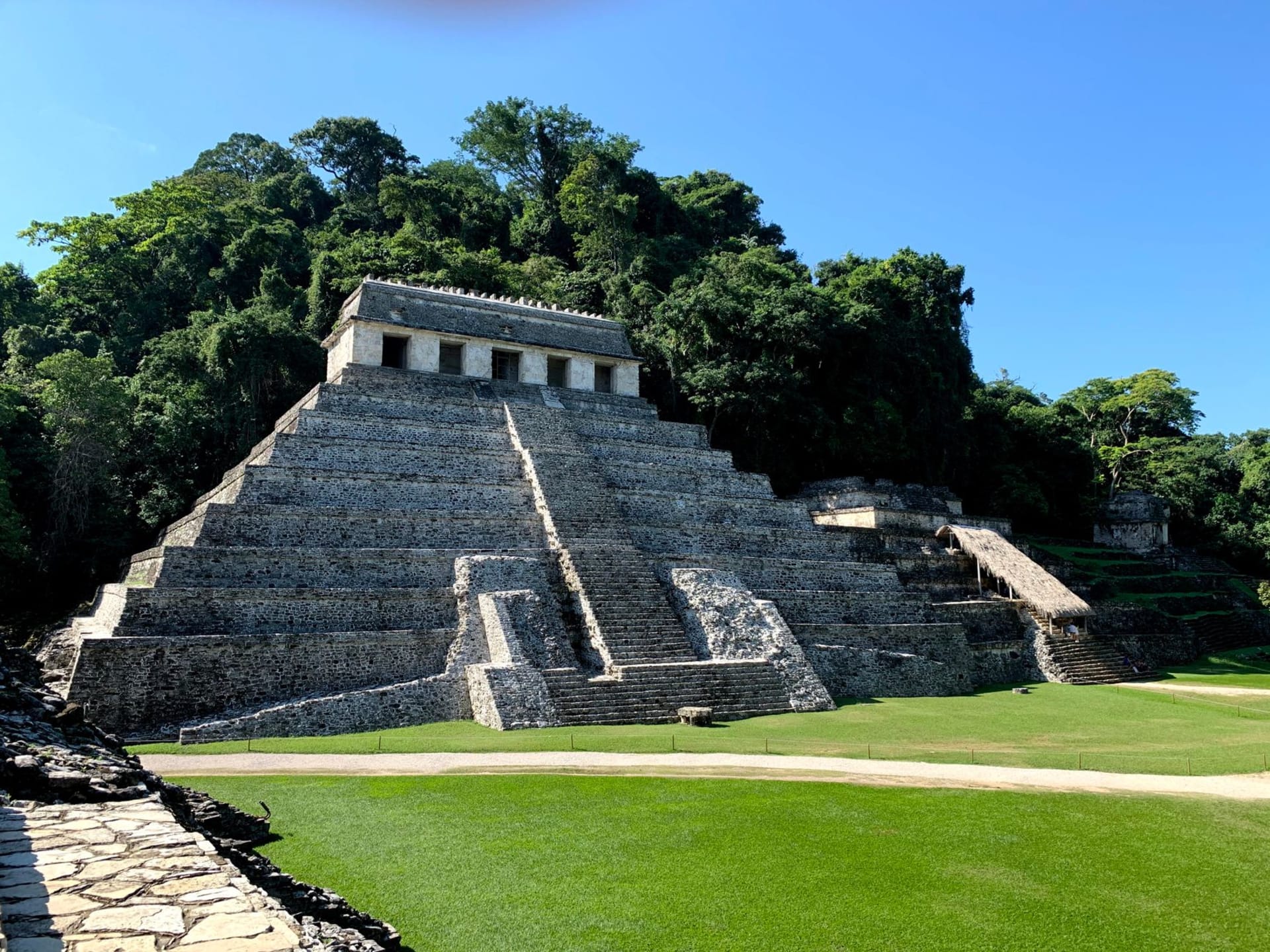
Palenque
"At Palenque the jungle has not been pushed back — it has been allowed to remain, which changes everything."
I was at the gates of Palenque at eight in the morning, which is early enough that the busloads from Villahermosa had not yet arrived and the site still belonged mostly to the birds. A long-tailed motmot watched me from a branch near the ticket booth with what I can only describe as professional disinterest. The path into the ruins drops through genuine tropical forest — ceiba trees, palms, the damp-sweet smell of undergrowth — and then the first temple emerges from the green wall like something your eyes needed time to decode. It is not the gradual buildup that a stage-managed archaeological site would engineer. It simply appears, and then you are inside it.
Palenque is the Maya ruin I keep returning to, and the reason is atmosphere more than scale. Chichén Itzá is larger and more dramatic by any objective measure. Palenque is quieter, less photogenic in the obvious ways, and it sits in a fold of the Sierra Norte foothills where the forest is so thick and present that the distinction between ruin and jungle becomes genuinely porous. Howler monkeys pass through the canopy above the Palace while tourists photograph below. At the Temple of the Cross, a narrow path into the jungle behind the structure continues for another kilometer before the undergrowth swallows it entirely — a reminder that less than fifteen percent of Palenque’s known architecture has been excavated.

The sarcophagus of Pakal the Great is the thing most people have come for, and it delivers. It was discovered in 1952 inside the Temple of the Inscriptions — archaeologists had dug down through the pyramid’s core, following a sealed staircase, until they found a burial chamber that had been untouched for 1,300 years. The original sarcophagus lid is in Mexico City, but the chamber is accessible, and the replica lid in the adjacent museum carries the full weight of the image: Pakal descending into the underworld, or rising through the world tree, depending on your reading. I have stood in front of that image several times now and I am still not sure I understand it. That not-understanding feels correct.
The town of Palenque, a kilometer from the ruins, is functional rather than beautiful — hotels, restaurants serving comida corrida, tuk-tuks idling outside the market. But in the evenings the main square fills with families, and the tostadas at the market stalls are excellent: thick corn discs piled with black beans, queso fresco, and a habanero salsa so orange and fragrant it smells like dessert before it hits. I ate four of them on a wooden stool listening to a cumbia floating from a phone speaker somewhere above me.

Between the ruins and town there is a strip of jungle lodges and small hotels built into clearings along the road, and I always stay here rather than in town. At night, the howler monkey calls echo across the forest like something a large animal is distantly being harmed by. It is, once you know what it is, a deeply satisfying sound to fall asleep to.
When to go: November through February, when the rains have cleared and the forest is still intensely green. From March onward the heat builds fast — by April the site is genuinely punishing by mid-morning. Arrive at opening time regardless of season; the crowds arrive an hour later and you will have shared the Temple of the Inscriptions with almost no one.