St. Helier
"The market on a Saturday morning is the best argument anyone could make for this island."
I arrived by ferry from Saint-Malo on a grey October morning, and St. Helier announced itself the way most harbour towns do: the smell of salt and diesel, the mechanical lurch of the gangway, the accumulation of waiting faces. But then the market opened — Les Halles du Marché, a covered iron-and-glass structure on the edge of the old town — and the morning changed entirely. The stalls were stacked with Jersey Royals still carrying dark soil from the fields, spider crabs with their arms folded in a gesture of resignation, local butter so yellow it looked painted, and a wheel of camembert from a Cotentin farm that the woman selling it described as “un peu aggressif” with obvious pride. This is the thing about St. Helier: it is technically British, spending-wise, but its stomach is firmly French.
The town spreads back from the harbour in concentric rings of granite. The oldest streets — Mulcaster Street, Pitt Street, the tight lanes running north from the fish market — retain the compressed dignity of Norman urban planning: narrow, direct, built for function rather than promenade. Further north, the town opens up into Liberation Square, where the memorial gardens commemorate the five-year German occupation with a set of bronze figures that manage to be both understated and genuinely moving. The occupation of the Channel Islands is something that most mainland British people know almost nothing about — Jersey occupied, Guernsey occupied, Alderney’s population almost entirely evacuated — and the town wears this chapter with a quiet seriousness that the sunny beach-holiday marketing tends to obscure.

The food scene has improved markedly in recent years. The Italian restaurant on the waterfront where I ate linguine alle vongole was not pretending to be anything other than what it was — an honest plate of clams, a carafe of dry house white, the harbour through glass in the afternoon light — and that absence of pretension is something the town does well. There are wine bars now in the converted granite cellars off Mulcaster Street, and a Japanese-run izakaya that has found an unexpectedly loyal clientele among the island’s financial services workers, who constitute a significant percentage of the people you will encounter eating well on a Tuesday evening.
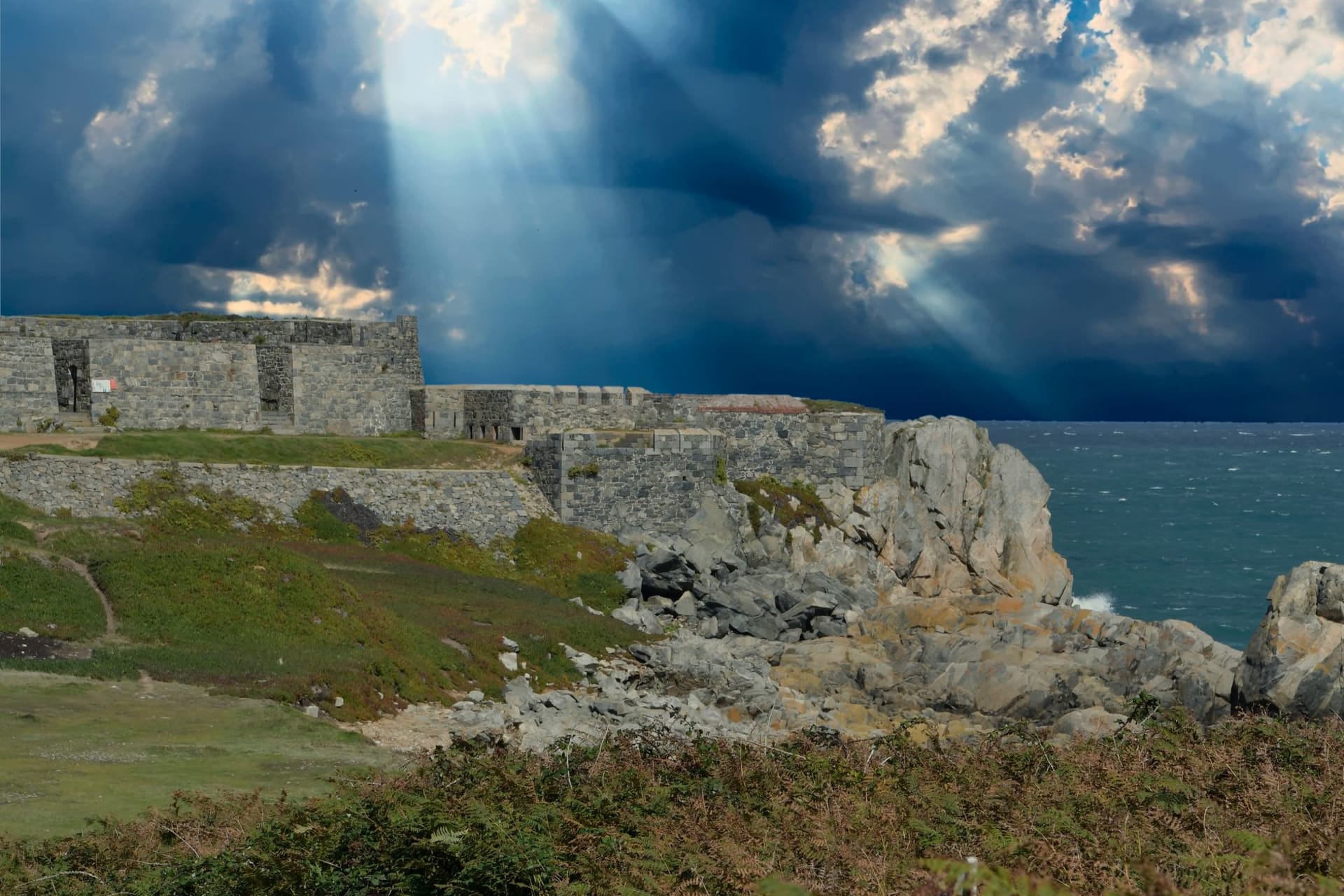
Fort Regent, the Napoleonic-era fortress that crowns the hill above the town, is worth the climb not for the sports centre it now contains but for the walk up through the old fortifications, the glacis walls still solid, the view across the bay towards Elizabeth Castle standing on its tidal rock, the whole improbable geography of a small island that has somehow remained significant for the past thousand years.
When to go: Saturday mornings year-round for the market. May through July for the best weather and the Royals harvest. The town is genuinely lively in summer but never overwhelmed.