Phong Nha
"I floated into a mountain on a wooden boat and watched the sky disappear. Then I watched a new one form inside."
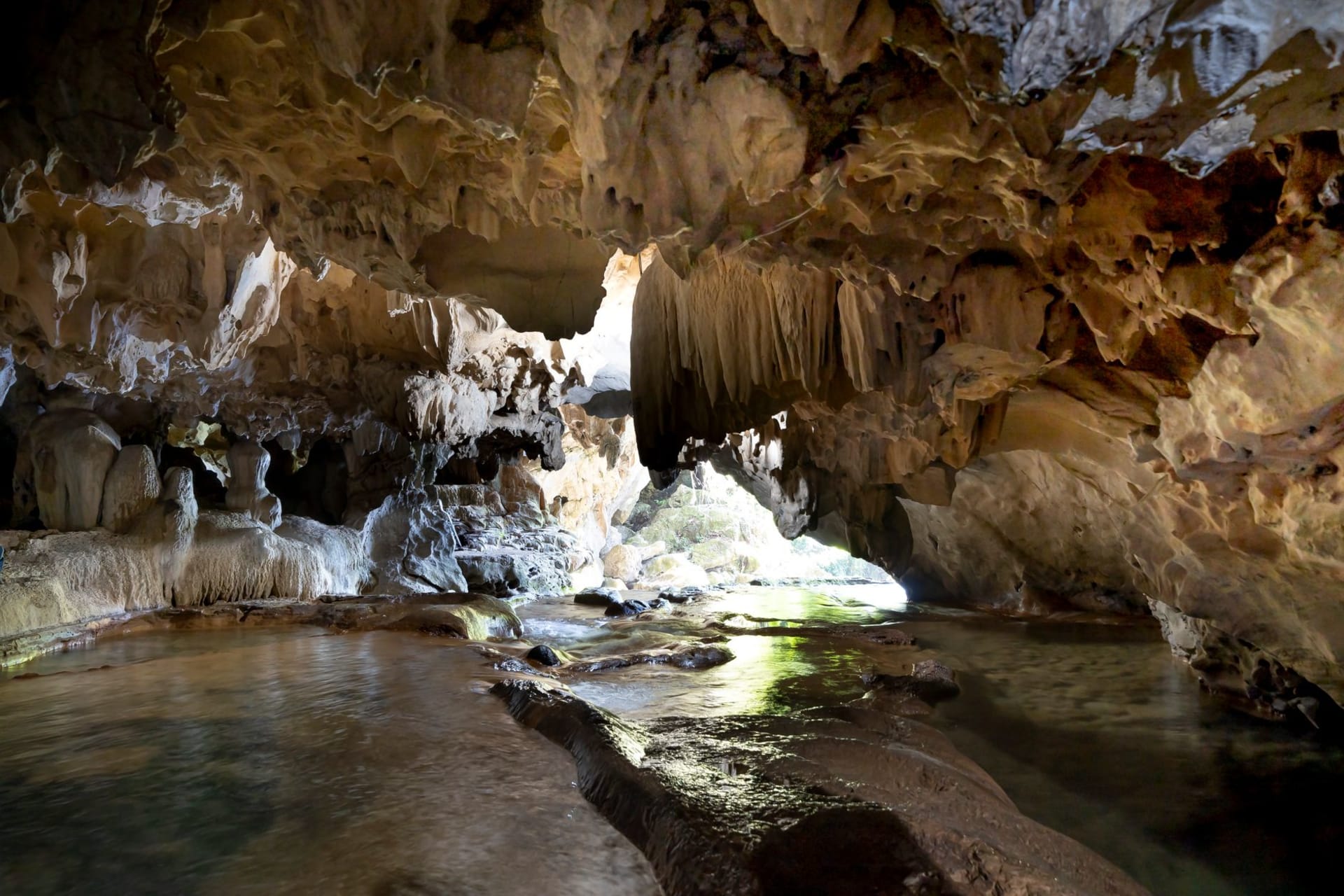
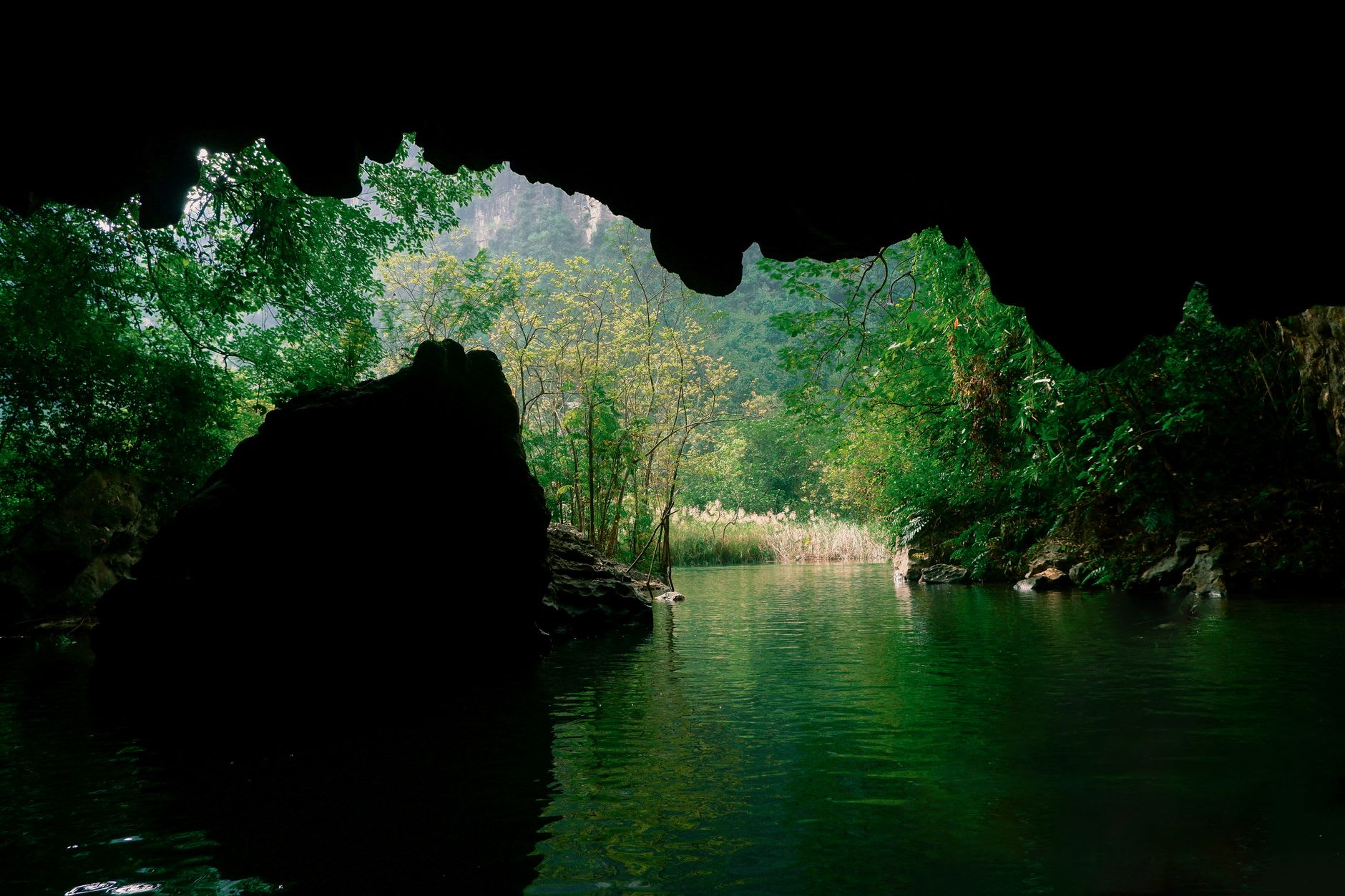
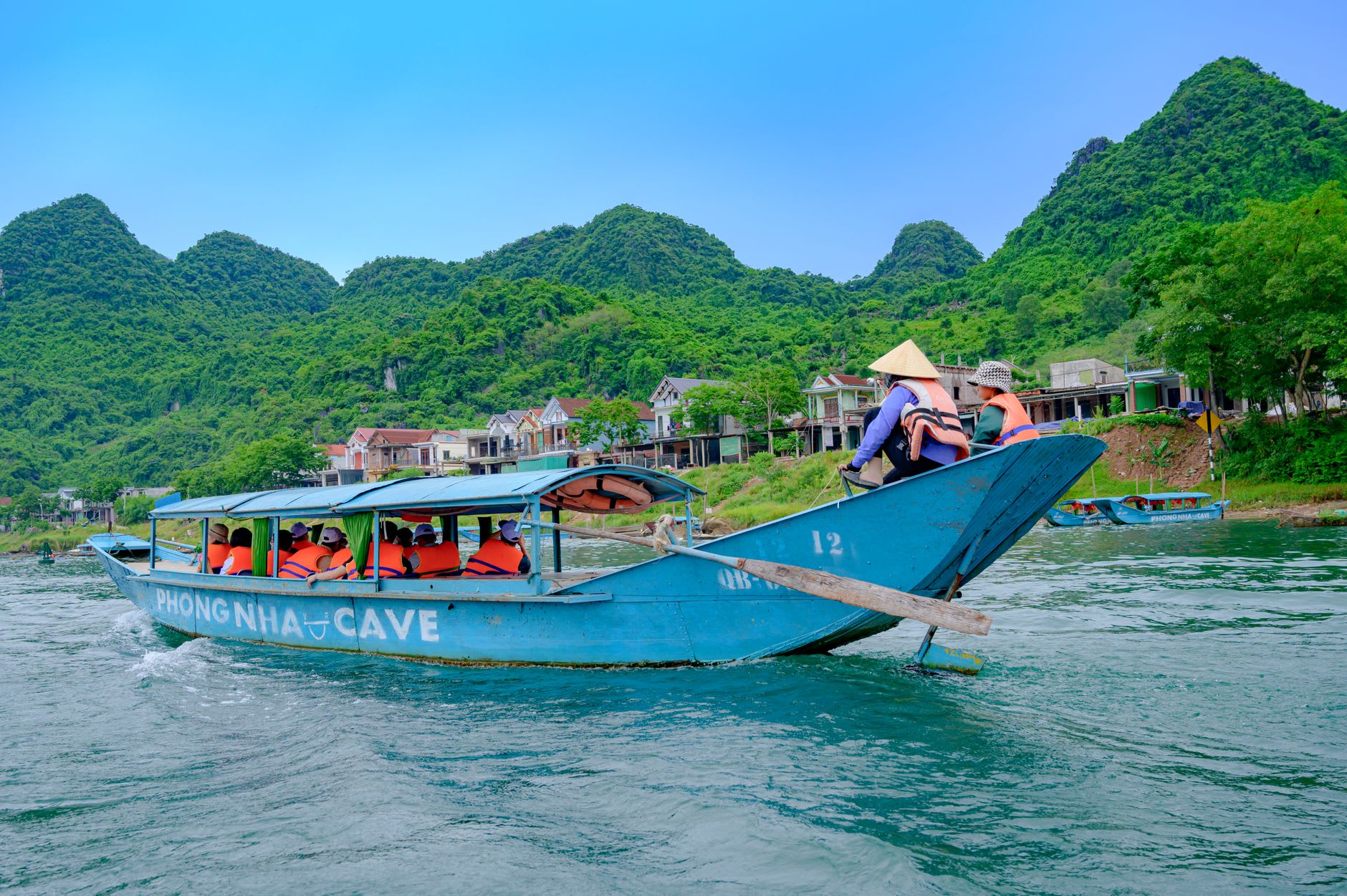
The boat was a long wooden thing with a low roof, and the boatwoman paddled without speaking as we moved out of the sunlight and into the mountain. The entrance to Phong Nha Cave frames a rectangle of green-blue water and jungle-choked limestone cliff, and then it swallows you. The light changes first — yellow to gold to something submarine — and then the temperature drops four or five degrees and the smell arrives: cold mineral damp, the particular breath of stone that has not seen daylight for geological time. The boatwoman switched on a small lamp and we kept going, deeper into the mountain, the walls narrowing and then expanding into chambers whose ceilings I could not see, stalactites reaching down toward their reflections in the perfectly still river below. I had seen cave photographs before. I was not prepared.
Phong Nha-Kẻ Bàng National Park occupies a limestone karst plateau in Quảng Bình province, the northernmost part of what most people call central Vietnam. The park contains over three hundred caves, including Hang Sơn Đoòng — the largest cave in the world by volume, so big that a Boeing 747 could fly through its main chamber, and so new to international attention that the first full scientific survey happened only in 2009. Sơn Đoòng requires an expedition permit and a four-day journey with a specialist operator; most visitors don’t go. But Phong Nha cave itself, accessible by river boat, and Paradise Cave, reachable by a wooden boardwalk through rainforest, are staggering enough to justify the journey from anywhere. Paradise Cave is seven kilometres long and its ceiling in the main chamber rises thirty metres above the boardwalk — a cathedral of living stone, the formations still growing, the drip of water audible in the near-silence as the last tour group disappears around a bend.
The village of Sơn Trạch, at the park entrance, is the kind of place that grew up to serve a single purpose and has become surprisingly good at it. There are comfortable guesthouses, decent restaurants serving local dishes — bún bò Huế at lower altitude, fish from the Sơn River, a locally grown pepper that turns up in everything and is genuinely excellent — and a population of young guides who grew up inside these hills and know which trails lead somewhere and which peter out into karst scrub. The Dark Cave, a kilometre up a tributary from the village, involves swimming through an underground lake to a chamber full of fine white sand and complete darkness, which sounds gimmicky and is actually one of the more disorienting physical experiences I have had in Southeast Asia.
What the park does that no amount of description can replicate is the scale. You look at a hillside and realize the hillside is hollow. You walk a trail and it passes over a void that the ground doesn’t acknowledge. The karst here is a landscape where solid and empty have traded meanings, and you spend a day or two recalibrating your relationship with the surface of the earth.
When to go: February through August is the accessible season — the Sơn River stays navigable and the cave entrances don’t flood. September through November brings significant rainfall that raises the river level and can close Phong Nha cave. May and June have good visibility and manageable crowds. Avoid July and August if possible — this is the main Vietnamese holiday season and the park gets busy.