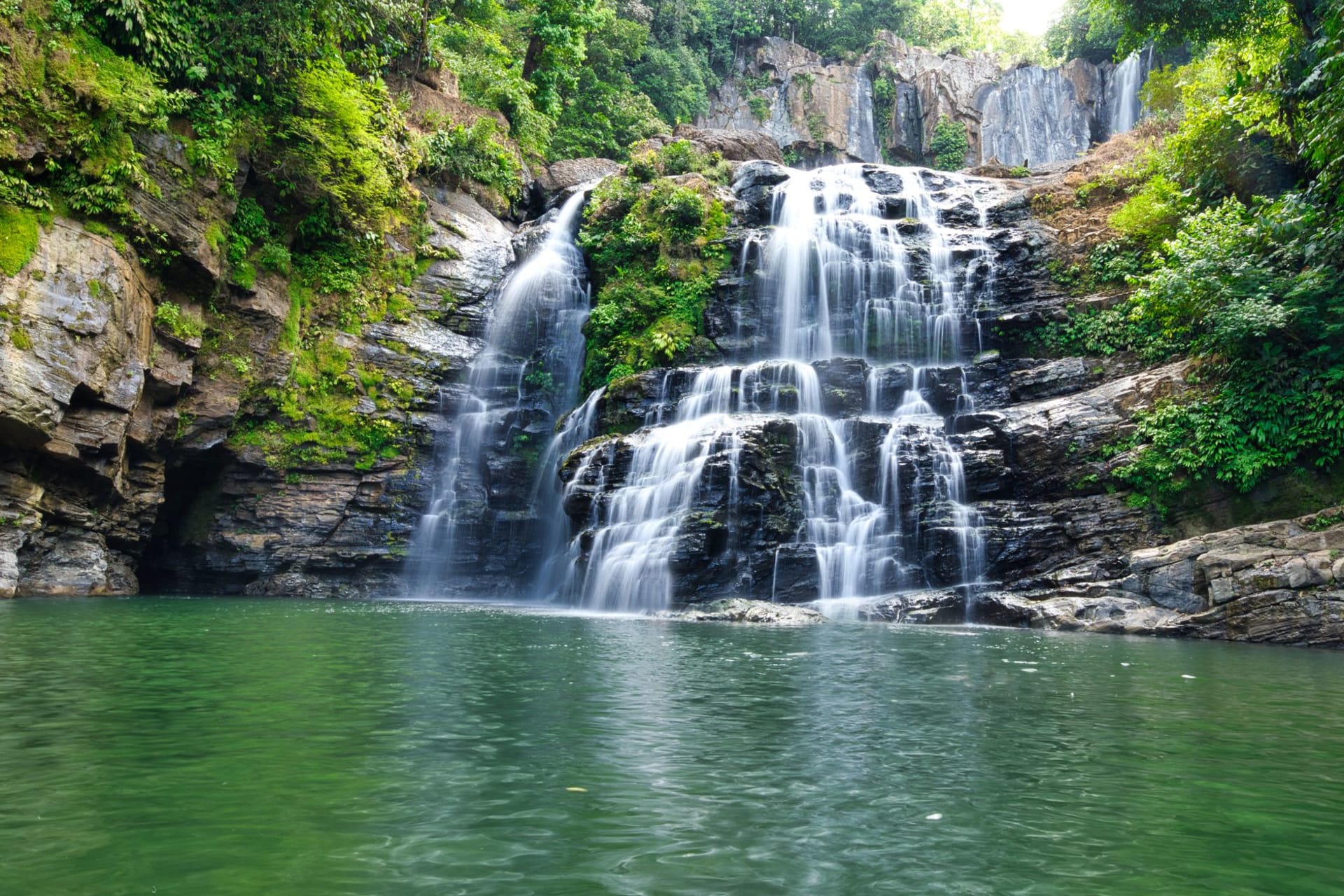
Boali Falls
"The falls are louder than anything I expected from a place most maps don't bother labeling."
The road north from Bangui runs through a landscape that opens up after the city sprawl relents — savanna grassland punctuated by termite mounds the height of a man, the occasional baobab, and small villages set back from the road with their cooking fires sending thin white smoke into the flat morning sky. There is nothing on this drive that suggests what is coming. The falls announce themselves through sound about two hundred meters before you can see them: a low, continuous thunder that doesn’t fit the placid geography you’ve been moving through for the past hour.
Boali Falls drops around fifty meters over a basalt cliff on the Mbali River, and the volume of water it carries in the wet season is genuinely difficult to process. The entire drop is visible at once from the main viewpoint — a wide curtain of red-brown water, colored by the laterite soil it carries from upstream, hitting the gorge below and throwing mist far enough that you are damp before you even consider getting closer. I stood there for a while just adjusting to the scale of it, which felt disproportionate for a country that barely registers on most travelers’ radars.
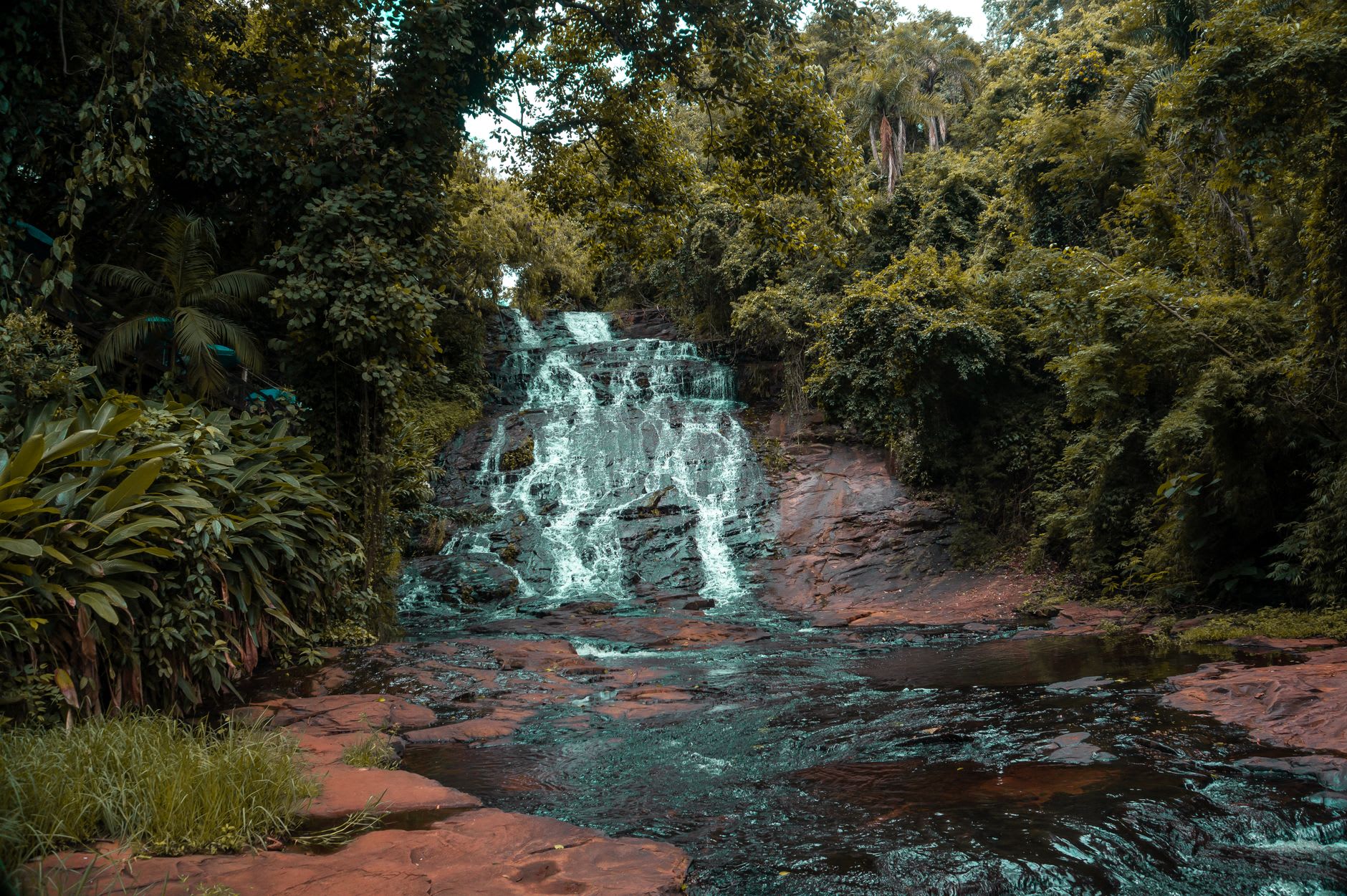
There is a worn path down to a viewpoint closer to the base, where the mist hits your face in sustained waves and conversation becomes impossible at normal volume. I went down there with a guide named Emmanuel who had worked the falls for twelve years and clearly found my astonishment entertaining. He pointed out the hydroelectric installation on one bank — a small plant that supplies a significant portion of Bangui’s electricity, remarkable and mundane at the same time. Below the main falls, the river settles into a series of pools that are genuinely swimmable in the dry season, when the volume drops and the current gentles. Some local families were there, children launching themselves off a low rock shelf with the complete absence of hesitation that characterizes children everywhere near water.
What surprised me most about Boali was the quality of the surrounding vegetation. I had expected a cleared viewing area, the kind of managed access you find around tourist infrastructure. Instead, the vegetation comes right up to the path — enormous ficus trees, stands of elephant grass, and birds I couldn’t name moving through the canopy above the falls in a way that suggested the spray creates its own microclimate. It probably does. The air near the base is noticeably cooler than the savanna road we drove in on, and it smells of wet rock and growing things.
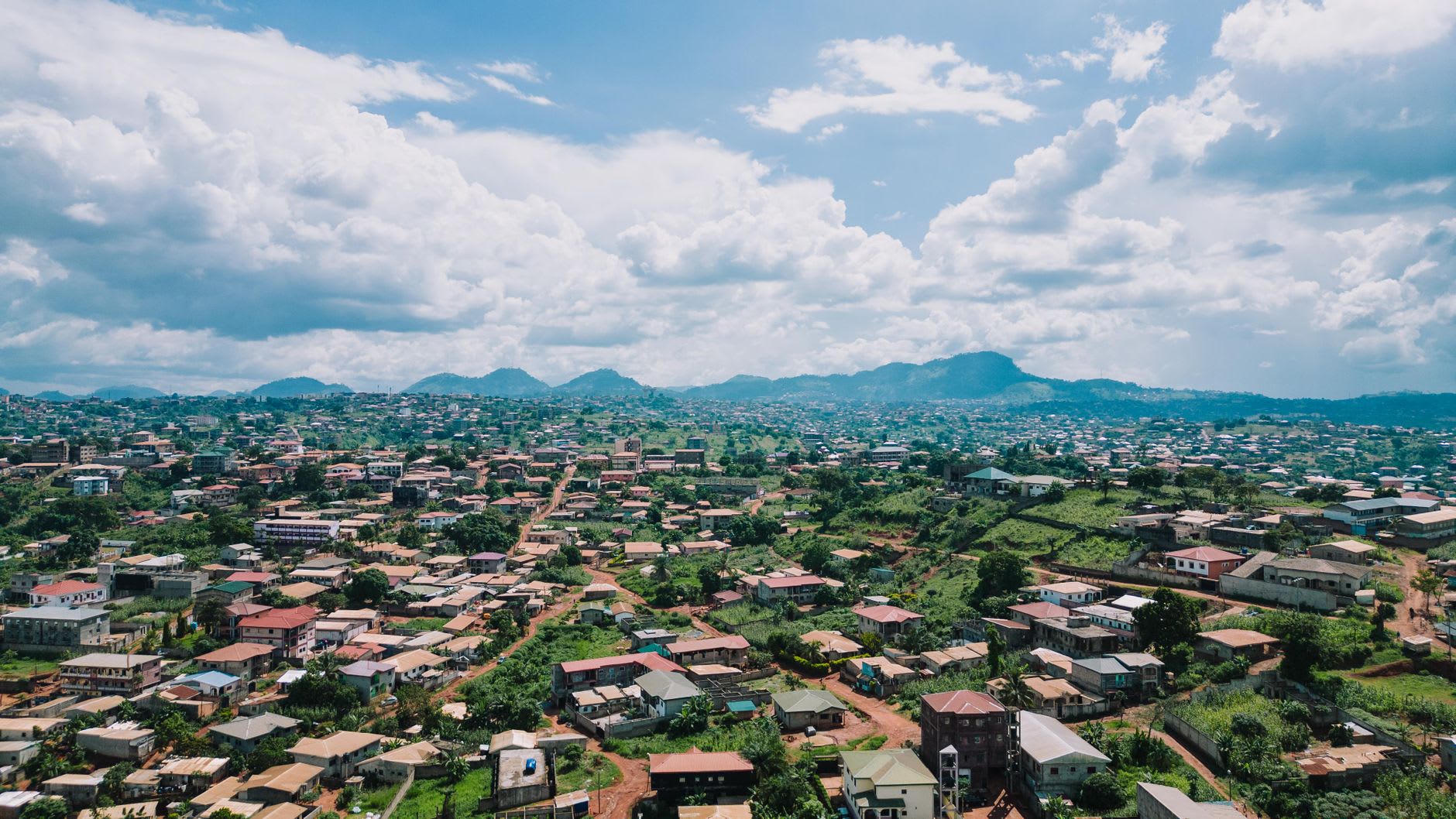
We ate at a small wooden canteen near the falls’ parking area on the way back — grilled goat, plantain, a glass of something sweet and intensely cold. The woman who ran it clearly sold the same meal every day to whatever visitors appeared, and she had the efficiency of someone who has been making the same dish for years and sees no reason to change it. It was excellent. The drive back to Bangui took an hour and a half, and I spent most of it still hearing the falls.
When to go: The dry season (November through March) offers the most accessible path to the base pool and swimming conditions, though the falls are substantially less dramatic in low flow. March through May and September through October — the shoulder seasons — offer a balance of volume and accessibility. The full wet season produces the most spectacular falls but turns the access path slippery and occasionally dangerous.