Villa O'Higgins
"I kept checking the road ahead expecting it to continue. It doesn't. That's the whole point."
The last sixty kilometers before Villa O’Higgins are the most beautiful and most difficult on the entire Carretera, which is saying something. The road becomes a single lane of compressed gravel in places, crosses sections that require four-wheel drive even in dry conditions, and offers views so relentless — lake, glacier, forest, peak, repeat — that concentrating on driving requires a specific kind of discipline. I arrived in the village in the early evening with the low Patagonian sun turning everything amber and a feeling I recognized from other journeys: the specific satisfaction of having gotten somewhere that asked something of you.
Villa O’Higgins is not a town that has much to prove. It has maybe five hundred permanent residents, a hostel or two, a restaurant that opens when the owner is ready, a bakery that does its best work in the morning. The streets are unpaved. Horses appear occasionally. Children play outside in the long Patagonian evening with no particular urgency about being anywhere. The infrastructure around them is spare and functional: houses built for weather, gardens protected by windbreaks, firewood stacked in covered piles beside every building.
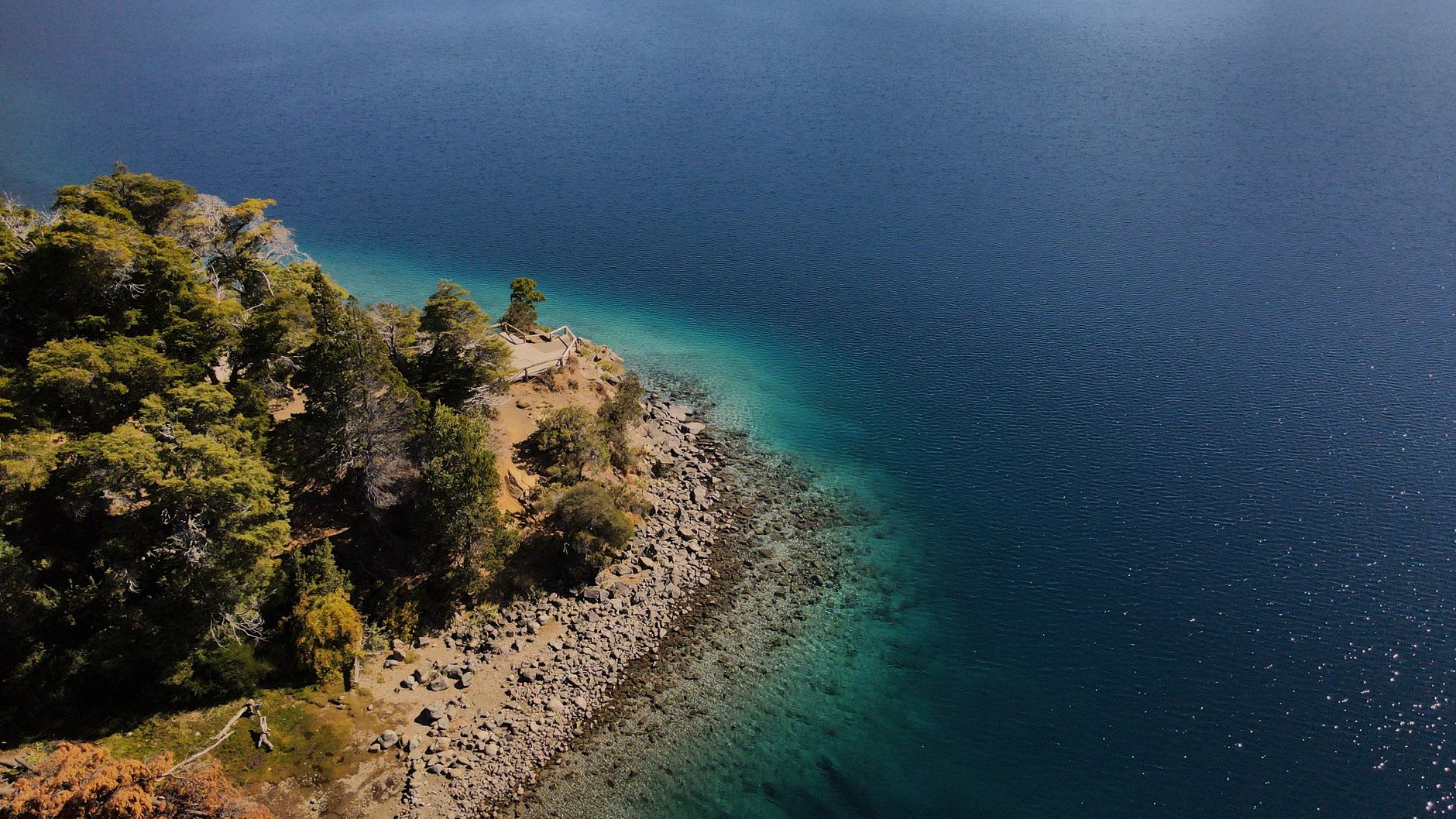
But the surrounding landscape is the reason you’ve driven twelve hundred kilometers to reach a village of five hundred people. From the road above town, the Lago O’Higgins stretches south into Argentina — one of the deepest lakes in the Americas, so dark it appears almost black under clouds and startlingly blue under sun. On the horizon, the Southern Patagonian Ice Field pushes its glaciers into the water with slow, indifferent force. There is a boat that crosses the lake south to the Argentine border, the only practical route forward for those continuing to El Chaltén on the Argentine side — and watching it leave in the morning, loaded with cyclists and their battered bikes, is a particular kind of moving.
I ate dinner at the only restaurant with a menu that evening — lamb again, because it’s always lamb down here and that isn’t a complaint — and ended up talking for two hours with the family who ran it. The daughter was studying at university in Coyhaique and came home for the summer; the father had been born here. They asked me where I was from, which led to a long discussion about France that I fueled by mentioning cheese, which they found interesting because Villa O’Higgins gets its dairy products flown in or trucked on a road that takes two days. This seemed to them a reasonable trade for where they lived.

The road truly ends here. Not metaphorically — there is a physical end, a turning circle, and beyond it a trail that leads to the lake crossing. Standing at that terminus on a clear morning, with the ice field visible on the southern horizon, produces a feeling that I’ve been trying to describe accurately ever since and can’t quite get right. Not triumph, not exactly. Something quieter than that. The recognition that you’ve arrived somewhere that resists easy classification.
When to go: December through February. The road south of Cochrane becomes genuinely impassable in winter, and Villa O’Higgins effectively closes to outside visitors from May through September. The lake crossing to Argentina operates in summer only. Come in January for the longest days; come in November if you want it almost entirely to yourself.