
Lago General Carrera
"The marble moves when the light moves — you understand eventually that the cave is painted with water."
Lago General Carrera is shared between Chile and Argentina, where it goes by a different name on the other side of the same border. The lake is enormous — 1,850 square kilometers — and the water is a color that the photographs I’d seen before arriving had represented inaccurately. Not inaccurately in the sense of being falsified, but inaccurately in the sense that no single image can capture something that changes continuously with the angle of light and the depth of cloud. At nine in the morning, driving east along the lakeshore from Chile Chico, the water was the color of glaciers — milky turquoise — and by midday, under direct sun, it had shifted toward something closer to cobalt. I stopped the truck four separate times to look at it and didn’t feel repetitive about it once.
The Marble Caves — Capillas de Mármol — are reached by a short boat crossing from Puerto Río Tranquilo, a small lakeside town whose entire economy has quietly organized itself around this natural formation. The peninsula of marble that juts into the lake has been eroded by millennia of glacial water into a series of caves and arches and columns with walls that spiral in grey and white and faint pink, polished so smooth they look like they’ve been hand-finished. The water inside the caves turns the color of the lake — that same turquoise — and reflects upward onto the marble ceiling in patterns that shift constantly as the boat moves.
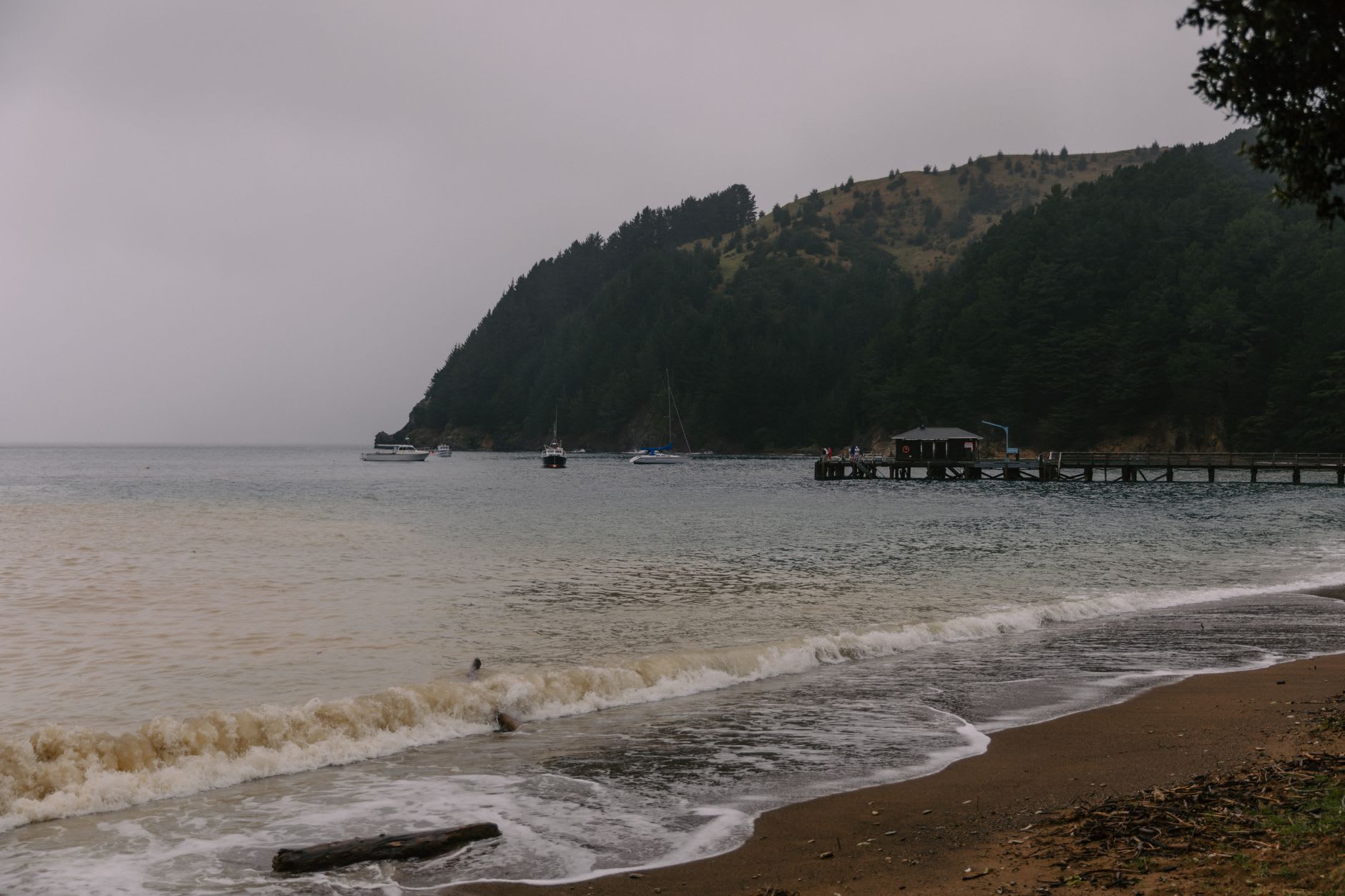
The boat operator maneuvered between the formations with practiced ease, cutting the engine at the moments when the reflection was best. At one point he turned the boat sideways so the light entered at an angle, and the entire ceiling of the cave above us lit up in moving blue-green as if the water itself were luminescent. It was one of those experiences that insist on their own reality, that refuse the framing of attraction or tourist site and simply happen at you.
Puerto Río Tranquilo is also the staging point for glacier overflights and boat trips to the Exploradores Glacier — a river of ice that descends from the Northern Patagonian Ice Field toward the Pacific. I did a guided walk on the glacier that involved crampons, an ice axe briefing I didn’t entirely follow, and a lot of careful step-placement on blue ice above crevasses that my guide pointed at with an enthusiasm I found instructive. The glacier smelled faintly of mineral dust and cold, a smell that has no equivalent elsewhere and that I’ve never successfully described to someone who hasn’t encountered it.
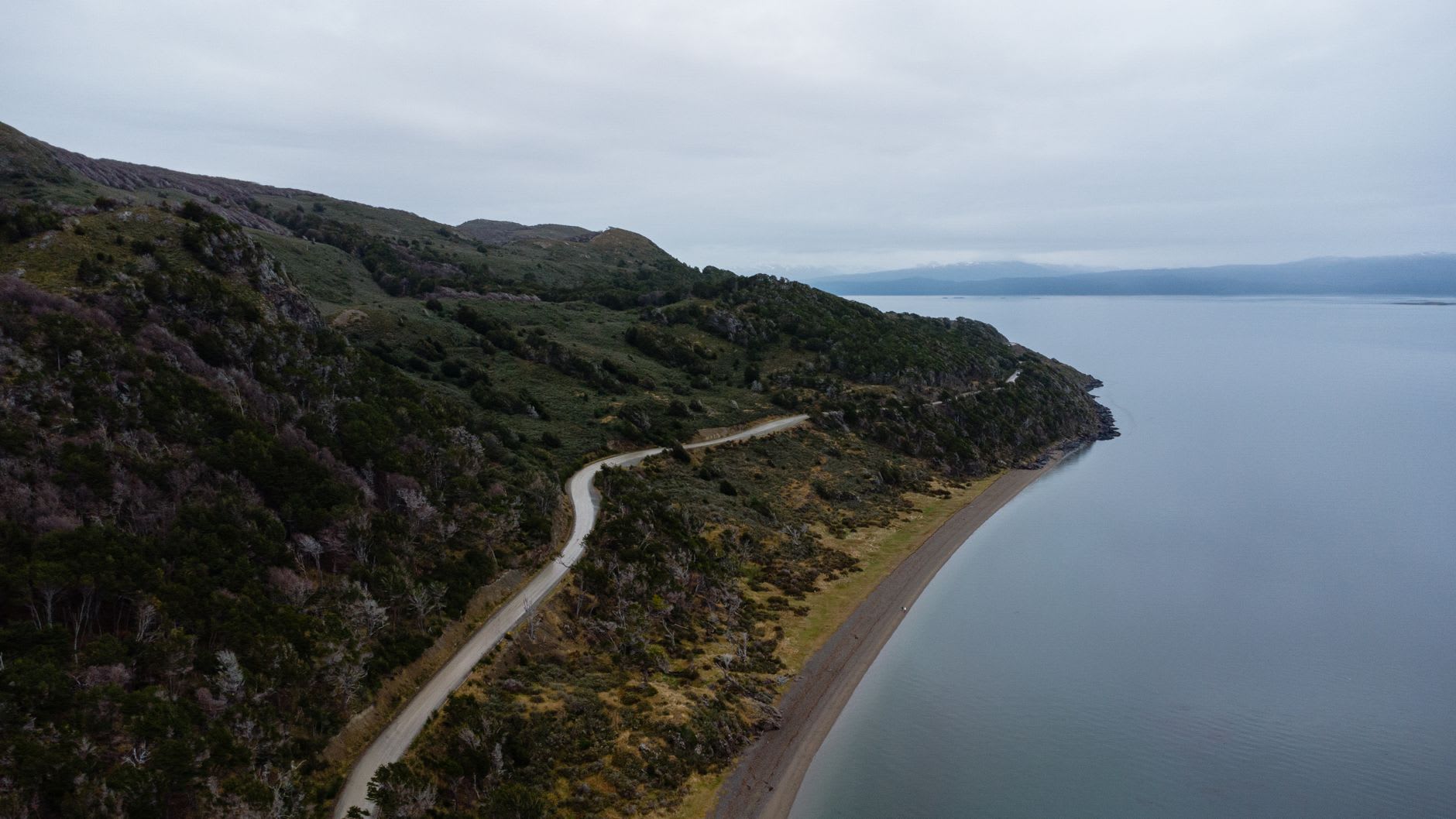
Chile Chico, at the eastern end of the lake near the Argentine border, is worth spending a night in — not for the town itself, which is serviceable, but for the morning light over the lake from that shore. The Argentine wine town of Los Antiguos is a short drive across the border and has a fruit stand culture — fresh cherries, strawberries, apricots — that feels entirely foreign to the rest of the Carretera’s diet of lamb and bread. I ate a bag of cherries in the car and crossed back into Chile with red-stained fingers and no regrets.
When to go: November through March. The Marble Caves boat trips run year-round but lake chop can cancel them in winter. The Exploradores Glacier walk operates October through April. January and February see the most visitors; go early morning before the tour groups reach Puerto Río Tranquilo.