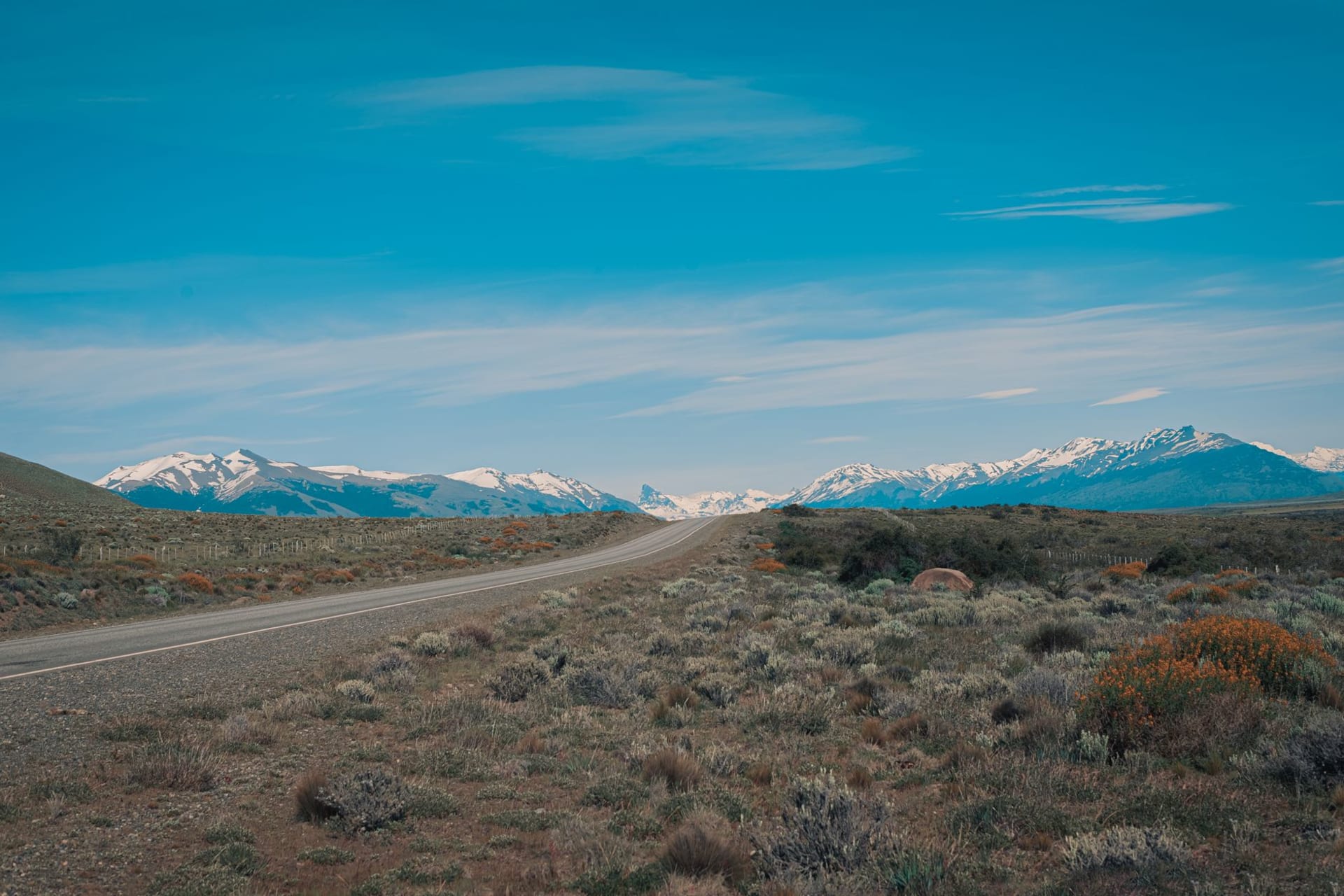
Cochrane exists at a point on the map where the Carretera stops being a route and starts being a statement of intent. South of here, the road thins, settlements disappear for long stretches, and the concept of a backup plan feels extravagant. The town sits in a valley carved by the Río Cochrane — a tributary of the Baker — and has the particular composure of a place that has never bothered competing with anywhere else. The streets are partly paved, partly not. The square has the standard metal gazebo. The mountains frame every road in every direction.
I came for the lamb, which I’d heard about from two different travelers at different points on the route, both of whom described it in language that made me suspicious. The place is technically a butcher shop — Carnicería Lautaro, or something close to that, the name I memorized from a handwritten sign — but in the afternoons they set out tables and grill over coals in the back. There is no menu in the formal sense. You order by pointing and discussing with the man who does the cooking, who is also, as near as I could tell, the man who cuts the meat. He had massive hands and the composed authority of someone who has never been hurried.

The lamb arrived on a wooden board — a rack of costillas, grilled simply over coals with the fat properly rendered and the edges crisped to something between charcoal and caramel. There was a knife but no fork, which communicated priorities. The chimichurri was loose and bright with fresh herbs, and there was bread that had clearly been made that day. I ate everything. I ordered more bread. I sat at the table for an extra hour because leaving seemed like an error.
What Cochrane also holds is access to the Baker — the most powerful river in Chile, which the Carretera crosses near here on a bridge that rattles satisfyingly under the truck’s wheels. The Baker runs turquoise in certain lights and dark green in others, and it roars rather than flows, the water under enormous pressure from the glacial volumes it drains. Kayakers come specifically for the Class IV and V rapids downstream; I watched a group of them preparing their boats in the morning with the focused calm of people about to do something they can’t afford to think too hard about.

The town also has a small museum dedicated to the Tehuelche and Aónikenk peoples who inhabited this Patagonian territory before colonization — a modest collection with good photography and bad lighting, the sort of place that rewards the thirty minutes it asks of you. And at the southern edge of town, there’s a lookout point above the valley where you can see the confluence of the Baker and Cochrane rivers from above, the different water colors merging in a visible line. Worth getting there before sunset.
When to go: November through March, though Cochrane sees fewer visitors than the northern sections of the Carretera. February is the busiest month by a modest margin. The butcher shop grill operates daily but winds down in the early evening — arrive between twelve and three to be safe.