Paarl
"Paarl is what the Winelands looks like when nobody is performing for the tourist."
Paarl doesn’t try. That’s either its greatest failing or its best quality, depending on how much you want the Winelands to flatter you. The town itself — South Africa’s third oldest — sprawls along the Paarl Mountain for nearly fourteen kilometres without ever quite cohering into a single centre. Main Street is long and slightly frayed at the edges, the kind of road where a hardware store sits next to a wine bar that sits next to a place selling farm feeds. The tourists mostly drive through on their way to Franschhoek. Which is their loss.
The three granite domes on the mountainside that give the town its name — Paarl, from the Dutch word for pearl, because the first Dutch settlers saw them gleaming after rain — are enormous and strange in the way that ancient rock always is. I hiked up through the fynbos on a February morning when the proteas were still in flower, and from the top I could see the entire valley: the Berg River running silver below, the KWV estate’s cathedral-like cellar buildings, the vineyards of Simonsberg in the middle distance. The scale up there makes the wine industry’s ambition look appropriately modest.

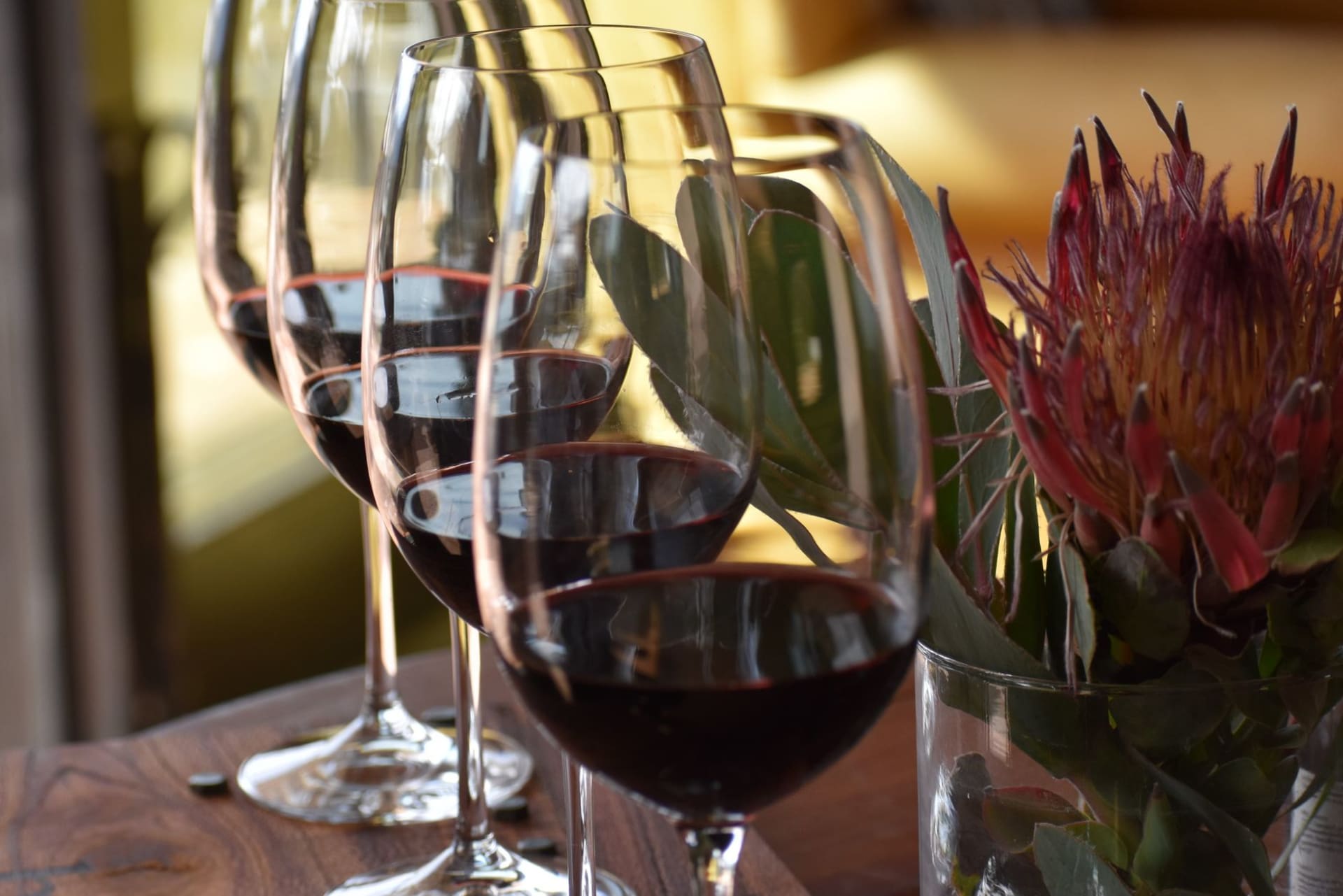
The KWV — the Koöperatieve Wijnbouwers Vereniging — built Paarl’s reputation and for decades essentially controlled South African wine production from here. The Cathedral Cellar, a vast arched building from the 1930s, holds vats that are the size of rooms and carved with scenes from the winemaking year in a style that crosses religious iconography with agricultural practicality. Tasting there feels slightly formal, as if the building itself expects a certain decorum. Outside it, the independent producers have gotten interesting. Perdeberg, Glen Carlou, Avondale with its biodynamic vineyards — these are farms working with real seriousness, producing Chenin Blancs that outperform their price and Rhône-style blends that are finding export markets in places that should know better than to ignore them.
The food scene in Paarl is more functional than aspirational, but it has the quality of honesty. Marc’s Mediterranean Kitchen operates out of a Victorian house with a garden so green it seems to exist in a different climate from the surrounding town, and the food — oven-roasted vegetables, fresh fish, slow-cooked lamb — tastes the way cooking tastes when someone has been growing the ingredients themselves. The farmers’ market on Saturday mornings at Paarl brings the farming community into town in a way that makes the valley’s actual economy briefly visible.

What I keep coming back to about Paarl is the light at the end of the day. The Paarl Mountain catches the last of the western sun and the granite holds the warmth well past sunset. The valley goes amber and then purple, and the temperature drops with a speed that sends you looking for a sweater. It is a working landscape doing its work — without apology or theatrics — and that is increasingly rare in a wine region this well-known.
When to go: The harvest months of February and March are the best time to see Paarl at its most purposeful — the farms working, the cellars fragrant with must, the energy directed inward. April and May offer cooler weather and golden-toned autumn vines. Winter (June–August) is wet but carries a brooding atmospheric quality that rewards the few visitors who arrive then.