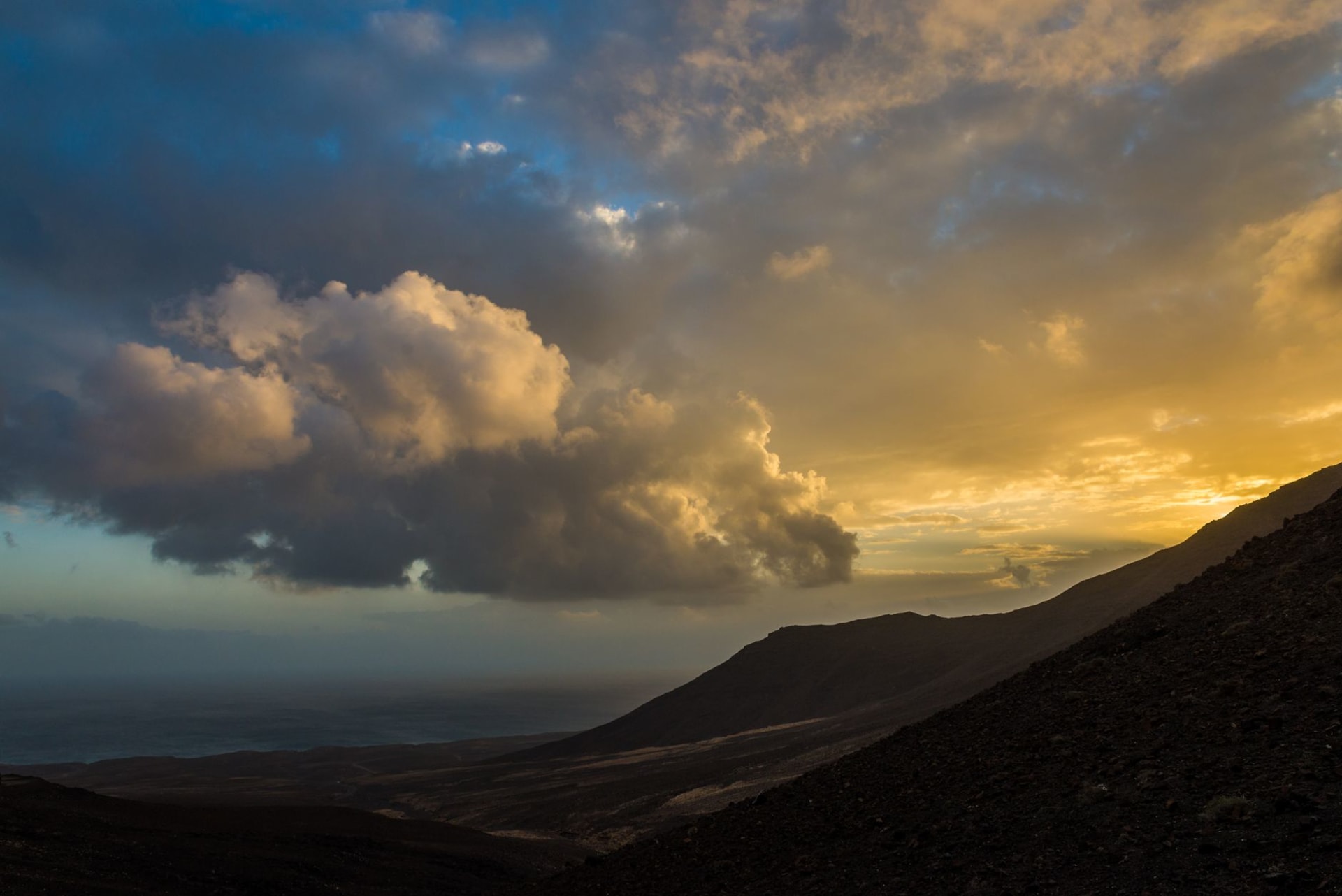
Pico do Fogo
"Wine grown inside a volcano. I don't know why I find this so funny, except that it is also completely serious."
I understood that Fogo was an active volcano in the way you understand something when you read it — abstractly, without full commitment. What made it real was stepping off the small plane at São Filipe and watching Pico do Fogo appear behind the town like a door left open to another geological era. The cone rises almost straight up from the island — 2,829 metres, the highest point in Cape Verde — and it does not look dormant so much as paused. The last major eruption was in 2014. The lava is still there. In some places, it is still warm.
The road into the caldera — the Chã das Caldeiras, the broad volcanic plain inside the crater wall — passes through progressively stranger landscape until you have left the orderly world entirely. Below the caldera rim, the climate changes: clouds form and dissolve, the temperature drops, and the black lava fields that the 2014 eruption left across the plain erase the previous geography with the totality of something that has no memory of what was there before. Former villages are visible under the lava as outlines — walls, a doorframe — like archaeological sites from the very recent past.
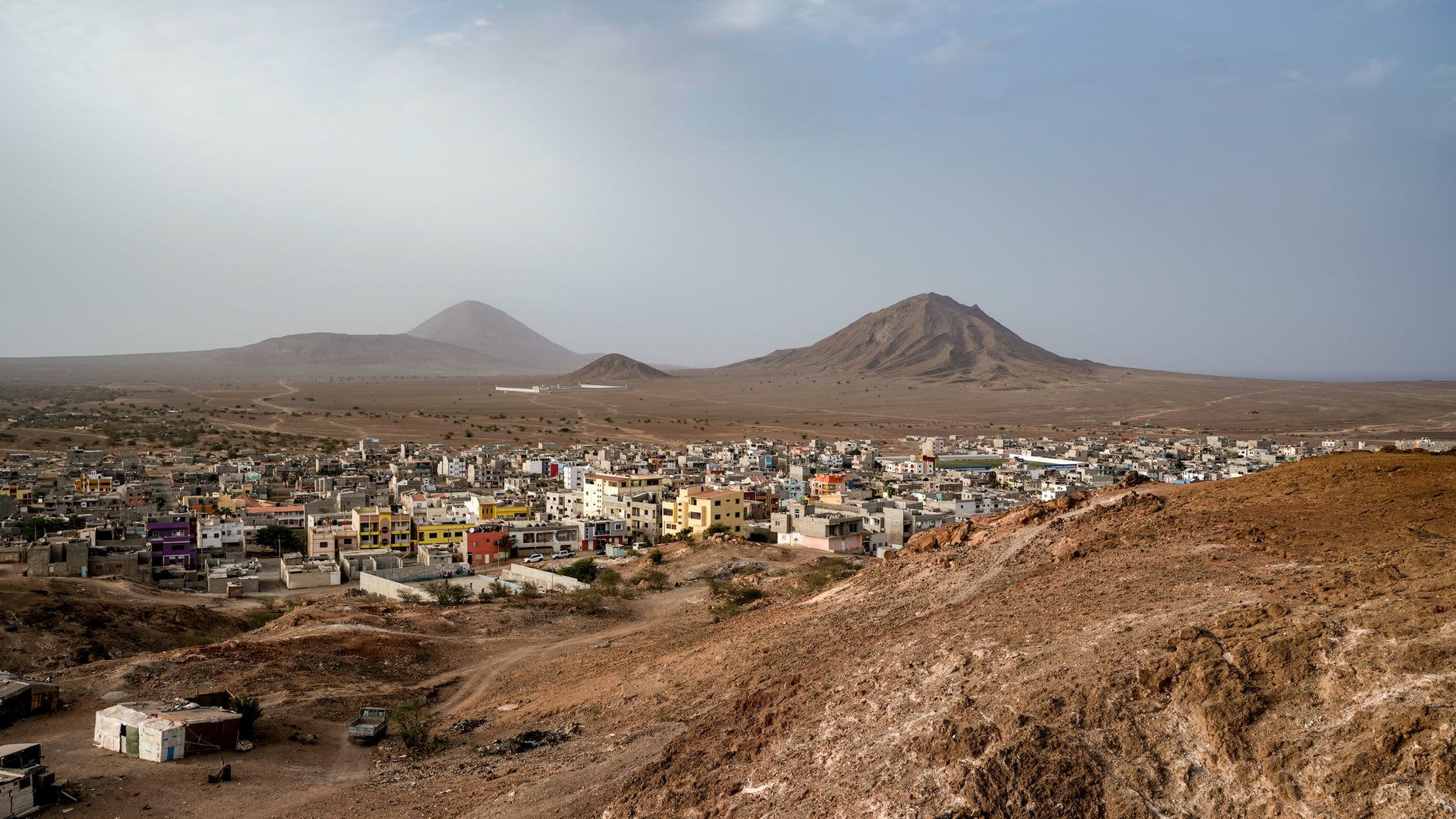
And then, at the edge of the lava fields, I found the wine. The Fogo winery — Wines of Fogo — grows Verdelho and Muscat grapes inside the caldera, in volcanic soil so mineral-rich and so extreme in its exposure that the wine it produces tastes unlike anything made anywhere else. The tasting room is a low building of stone and glass that survived the 2014 eruption in the sense that it was rebuilt afterwards. I tasted a white that was dry and intensely mineral, citrus underneath, the finish going on much longer than I expected. A glass of wine that tastes like the ground it came from, and the ground is a volcano. I bought four bottles and worked out how to carry them on the plane.
The climb to the summit is a four-to-six-hour return journey depending on your pace and the wind. I left at four in the morning with a local guide named António who had made the ascent approximately three hundred times and treated the gradient with a calm that I could not share. The first hour follows old lava flows in darkness, headlamps picking out the path. By the time the sun came up I was above the cloud layer, and the view — other islands emerging from the ocean, the caldera stretching below, the lava in shades of rust and black — was the kind of thing that makes normal adjectives feel like a form of rudeness.
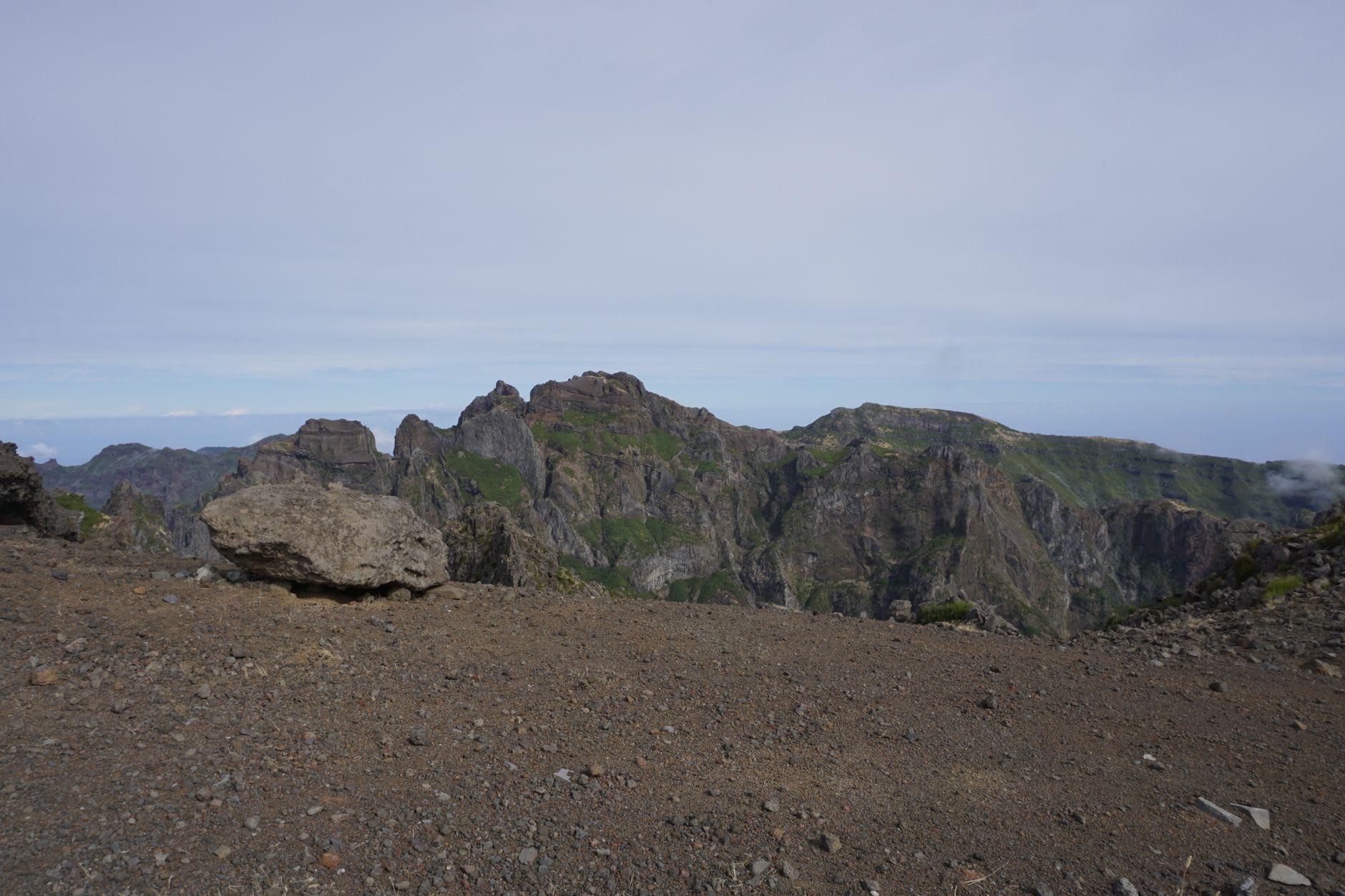
What I was not prepared for was the silence up there. Not ordinary quietness but an absolute absence of sound that felt geological in origin — the silence of a place that does not normally accommodate human presence and has not adjusted its atmosphere to account for it. Standing at the crater rim, I could hear my own breathing with the kind of clarity that is usually only possible in the second before something frightening happens. Nothing frightening happened. The volcano just sat there, doing what active volcanoes do when they are resting — waiting.
When to go: October through May for clear summit views. Morning starts are almost always better than afternoon attempts, as cloud builds through the day. The wine harvest happens in late summer, which is a good reason to visit in its own right. Avoid August and September if you need reliable summit visibility — the caldera can disappear in cloud for days at a stretch.