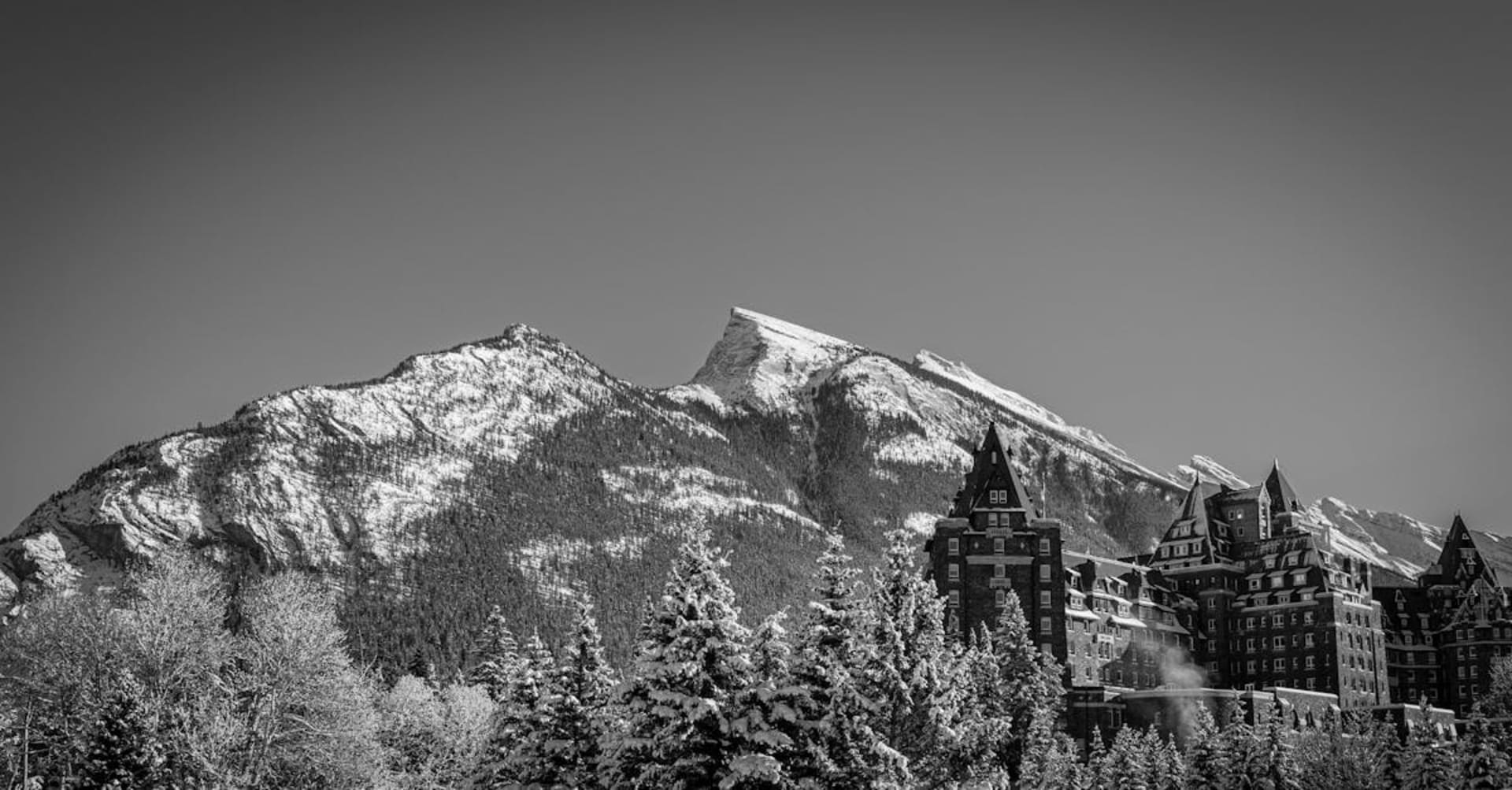
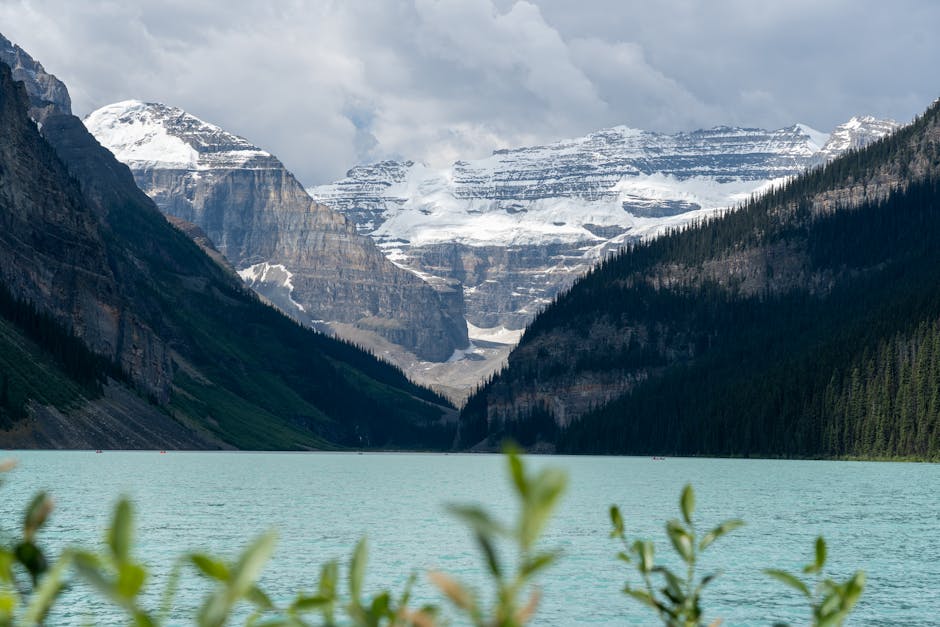
Banff National Park delivers the Canadian Rockies at their most dramatic, and I say this as someone who has seen the Alps from every conceivable angle growing up in France. Nothing in the Savoie, nothing in the Dolomites, prepares you for the colour of Lake Louise. It is a shade of glacial turquoise that looks like a rendering error in an otherwise realistic simulation — caused by rock flour suspended in meltwater, they will tell you, and the explanation does nothing to diminish the shock. The Victoria Glacier looms above the far shore, calving imperceptibly into water so cold it hurts to touch, and the whole scene has the quality of something that should not exist outside of a screensaver.
Moraine Lake is, if anything, more beautiful. Smaller, more intimate, tucked into the Valley of the Ten Peaks where the mountains crowd together like they are posing for a group portrait. The twenty-dollar bill used to feature this view, and you understand why — it is the kind of landscape that makes you suspect the tourism board has been understating things. I arrived at six in the morning to beat the crowds and had the lakeshore nearly to myself, the water perfectly still, the reflections so sharp they looked more real than the mountains themselves.
The Icefields Parkway
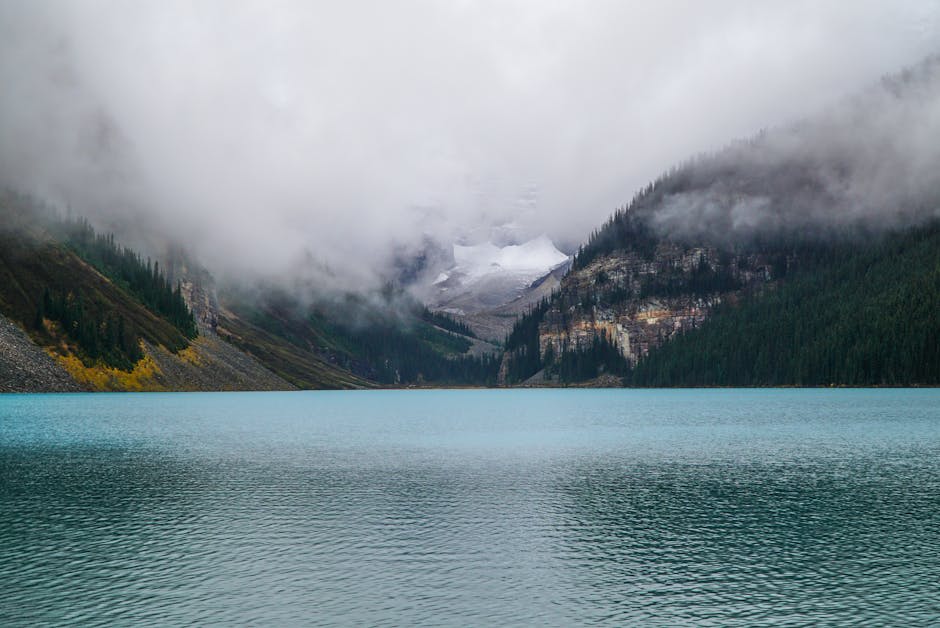
The drive from Banff to Jasper along the Icefields Parkway is regularly called one of the most beautiful roads on Earth, and it earns the title without trying. Two hundred and thirty kilometres of glacier-fed waterfalls, alpine meadows, and peaks that appear one after another like movements in a symphony that refuses to resolve. The Columbia Icefield — visible from the road, accessible by guided tour — is one of the largest ice masses south of the Arctic Circle, feeding rivers that eventually reach three separate oceans. Stop at Peyto Lake, where the viewing platform offers a turquoise panorama so vivid it borders on the absurd. Stop at the Weeping Wall. Stop everywhere. This is not a road you drive for efficiency.
The Town
The town of Banff is charming and compact, sitting at 1,400 metres in the Bow Valley with mountains visible from every street. The Banff Upper Hot Springs have been drawing visitors since the 1880s — soaking in naturally heated mineral water while staring at Mount Rundle is the kind of experience that makes you wonder why you live in a city. The restaurant scene has evolved well beyond resort-town expectations: wild game, Alberta beef, and a craft beer scene that benefits from mountain water. Elk wander the streets with a nonchalance that suggests they were here first and intend to stay.
Summer hiking ranges from easy lakeside strolls to serious scrambles above the treeline — the Sentinel Pass trail from Moraine Lake gains 800 metres of elevation and rewards you with a view that erases every complaint your legs are making. Winter brings world-class skiing at Sunshine Village and Lake Louise Resort, powder days that rival anything in the European Alps.
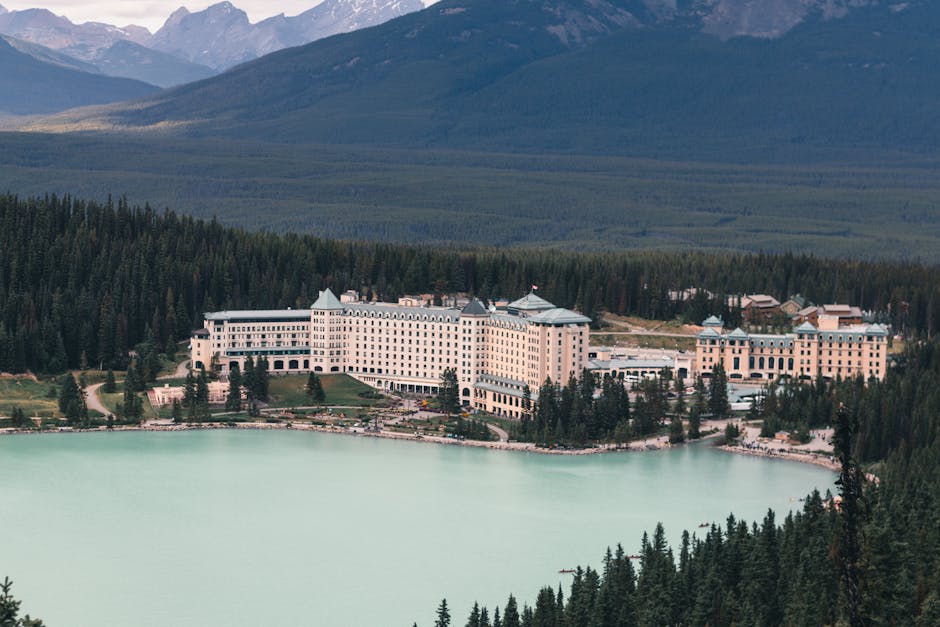
When to go: June through September for hiking. December through March for skiing. Lake Louise is most vivid in July and August. September brings golden larches in the high country and fewer crowds — possibly the best-kept secret in the Rockies.