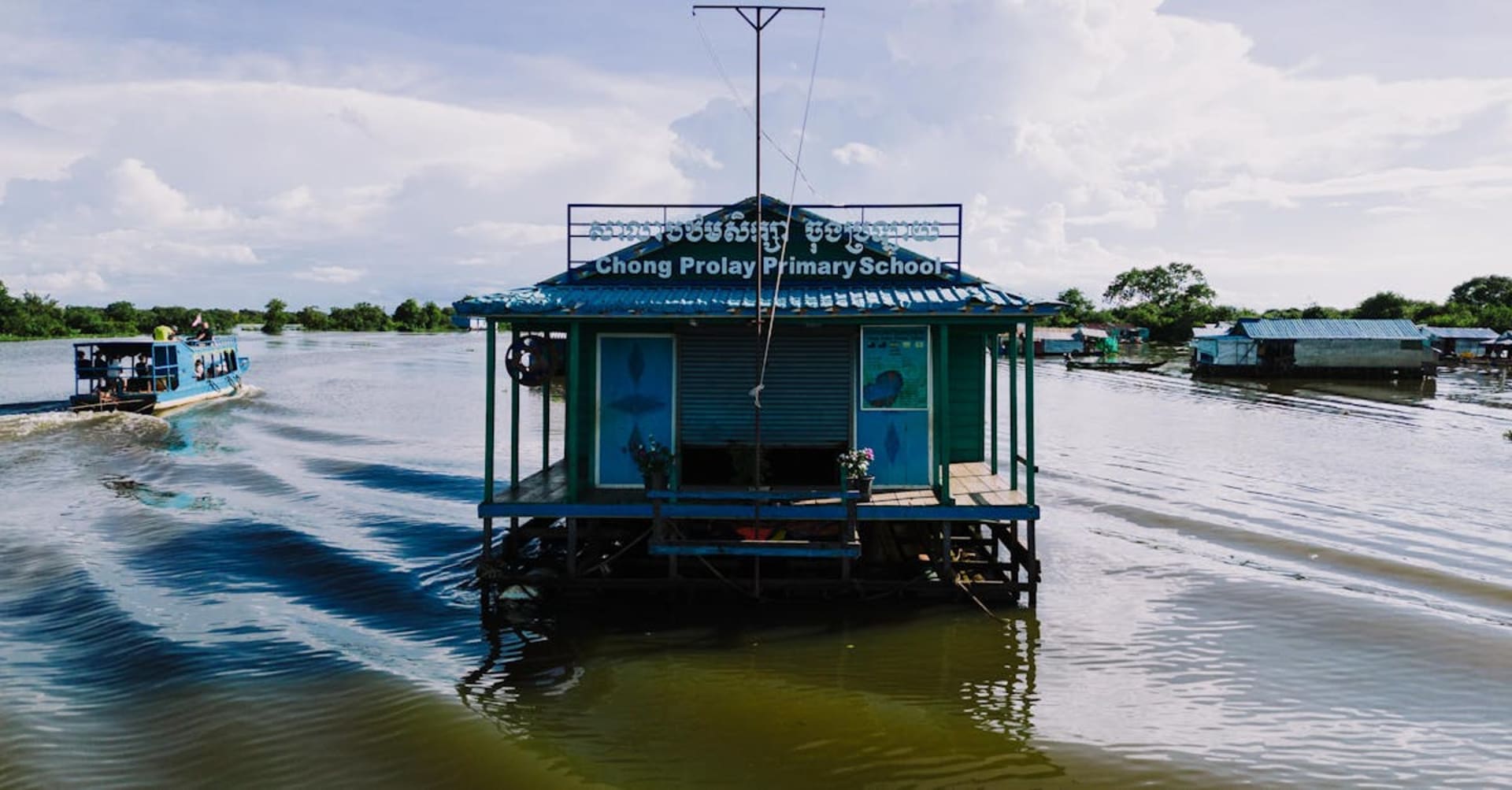
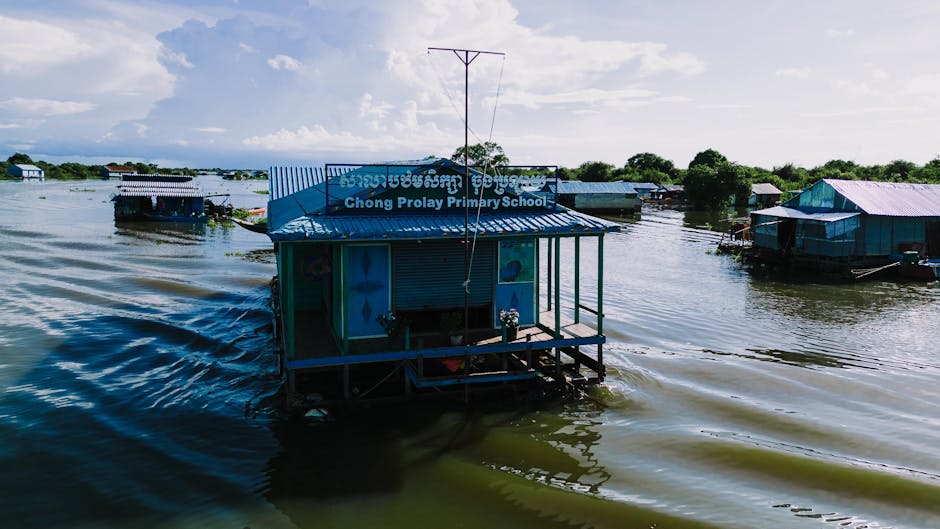
Tonle Sap is a lake that defies normal geography. During the wet season, the Mekong River reverses its flow and floods the lake to five times its dry-season size — a hydrological miracle that creates one of the richest freshwater ecosystems on Earth. The communities that live on its surface have adapted entirely: houses float, children paddle to school in tin basins, and markets bob on the current. I have seen floating villages in Vietnam and Myanmar, but nothing prepared me for the scale of Tonle Sap — this is not a village on water, it is a civilization.
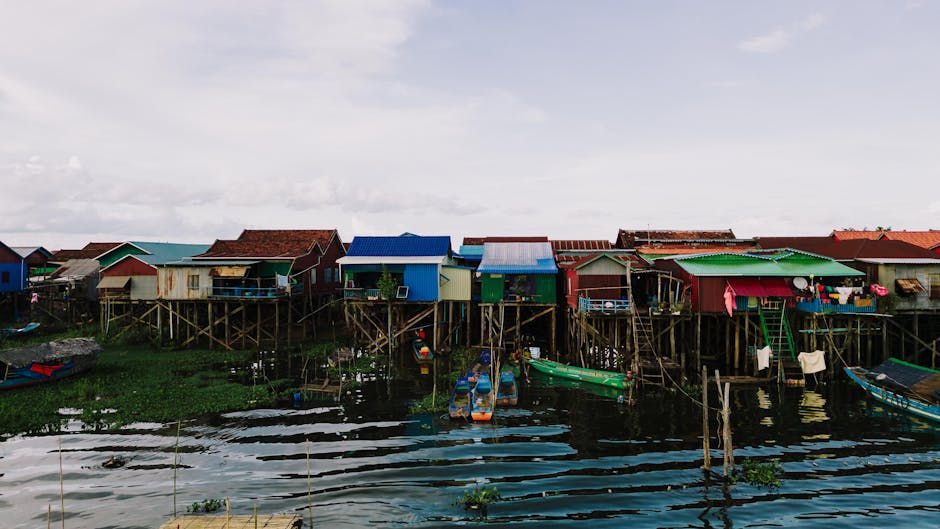
We visited Kampong Phluk from Siem Reap, gliding through a flooded mangrove forest in a small boat before emerging into a village built on ten-metre stilts. In the wet season, the water reaches the floorboards. In the dry season, the stilts stand exposed like something from a dream — or a nightmare, depending on your relationship with heights. The boatman navigated channels between the houses with the casual precision of someone driving a familiar road, and children waved from doorways that were, at that moment, at water level. A woman sold drinks from a floating shop, her inventory roped to the hull.
The birdlife is extraordinary. The Prek Toal bird sanctuary, at the northwest corner of the lake, hosts the largest breeding colonies of rare waterbirds in Southeast Asia — painted storks, spot-billed pelicans, milky storks, and several species that exist in viable numbers almost nowhere else. We went with a local guide at dawn, when the birds were most active, and the sight of hundreds of storks lifting off the treetops simultaneously — a white eruption against the grey morning sky — was one of those moments that makes the early alarm and the long boat ride feel like nothing.
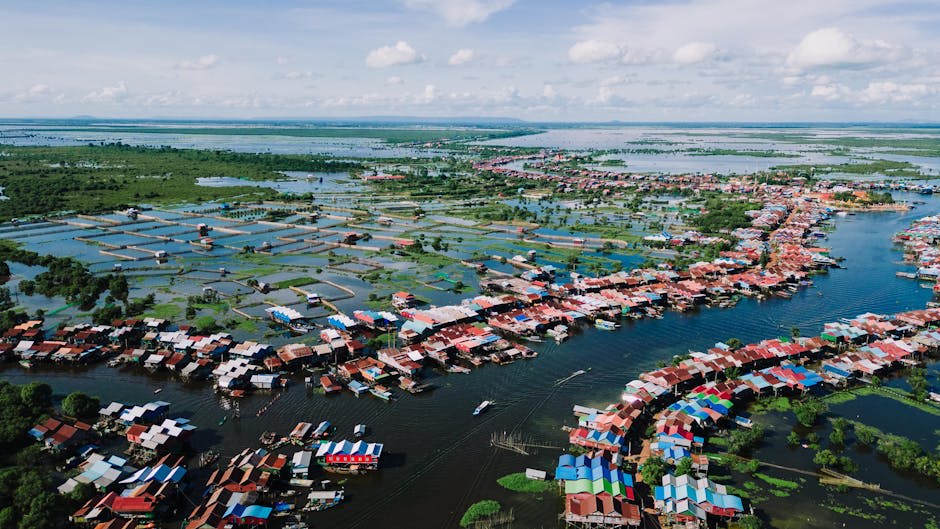
Kompong Khleang, less visited than Kampong Phluk, is a larger and more authentic floating community where tourism has not yet reshaped daily life. The houses here are permanent structures on stilts, some of them three storeys tall, and the village has its own pagoda, school, and market. We walked through during the dry season, when the lake had retreated and the stilted houses stood above dry ground littered with boats waiting for the water to return. The seasonal rhythm of Tonle Sap — flood and retreat, expansion and contraction — governs everything here, and understanding it changes how you see the entire country. Cambodia is not just a land of temples. It is a land of water.
When to go: September to November offers the highest water levels and the most dramatic floating village experience. Dry season (February to May) reveals the stilts and a different landscape entirely. Combine with Siem Reap.