
Angkor Wat
"I have seen photographs a thousand times. Nothing prepared me for the scale."
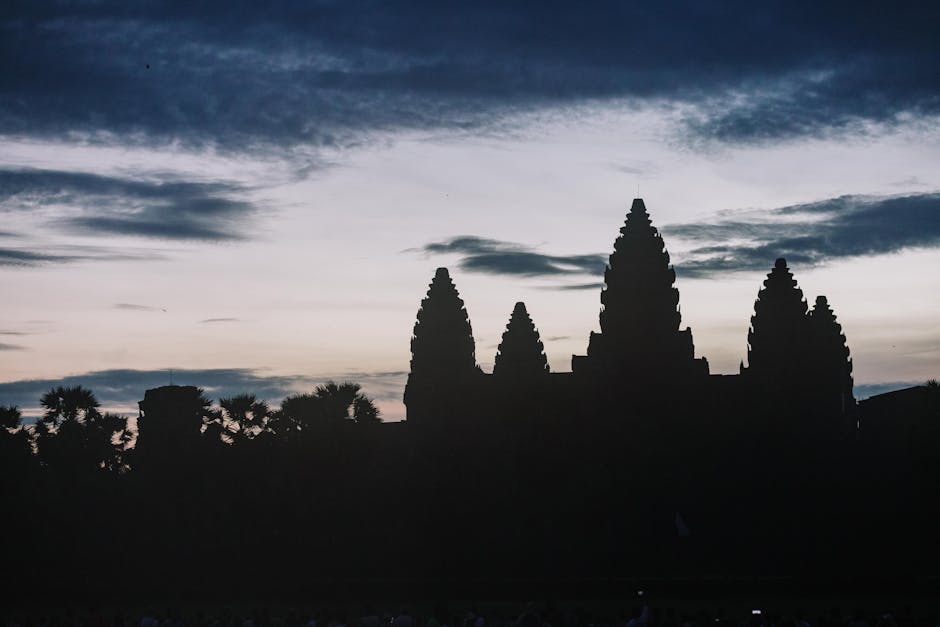
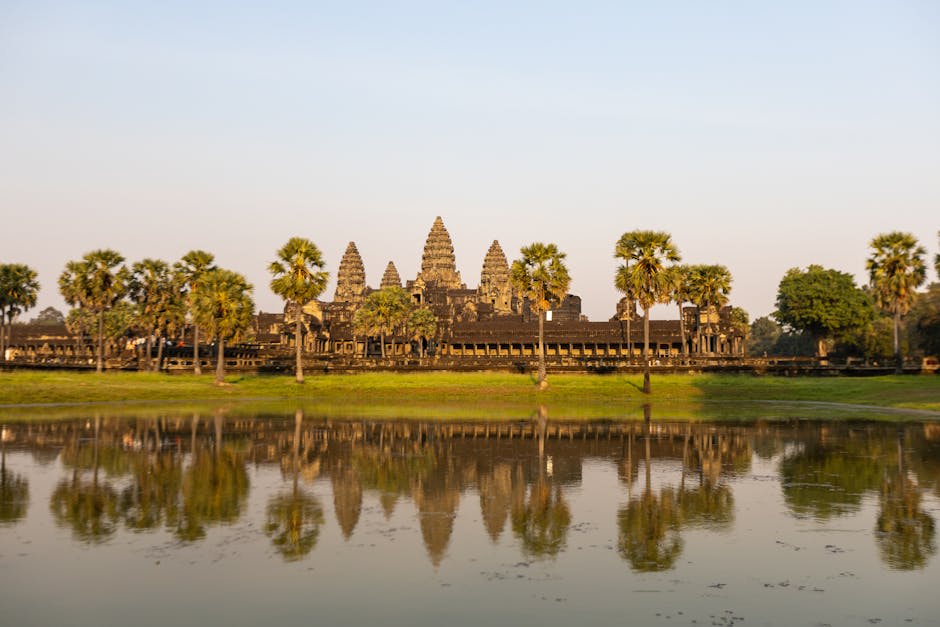
Angkor Wat is not a single temple — it is a universe expressed in sandstone. The main complex, built in the twelfth century by Suryavarman II, covers 162 hectares and is oriented to the west, so the sunrise behind its five towers is not accidental but cosmological. We arrived at five in the morning, found a spot near the reflecting pool, and watched the silhouette emerge from darkness. No photograph does it justice. The scale is beyond human, which was precisely the intention. I have stood before cathedrals in France, mosques in Morocco, pyramids that I have only read about — and nothing I have encountered in thirty-four years of living has the physical authority of Angkor Wat at first light.
Inside, the bas-reliefs stretch for nearly a kilometre — scenes from Hindu mythology carved with a precision that still astonishes. The Churning of the Ocean of Milk, rendered across forty-nine metres of gallery wall, tells the story of gods and demons pulling a serpent to churn the cosmic sea, and every figure is distinct, every muscle defined, every face carrying its own expression. I spent an hour on this single panel. Most tour groups pass it in five minutes. That is the fundamental error of Angkor — treating it as a checklist rather than a meditation.
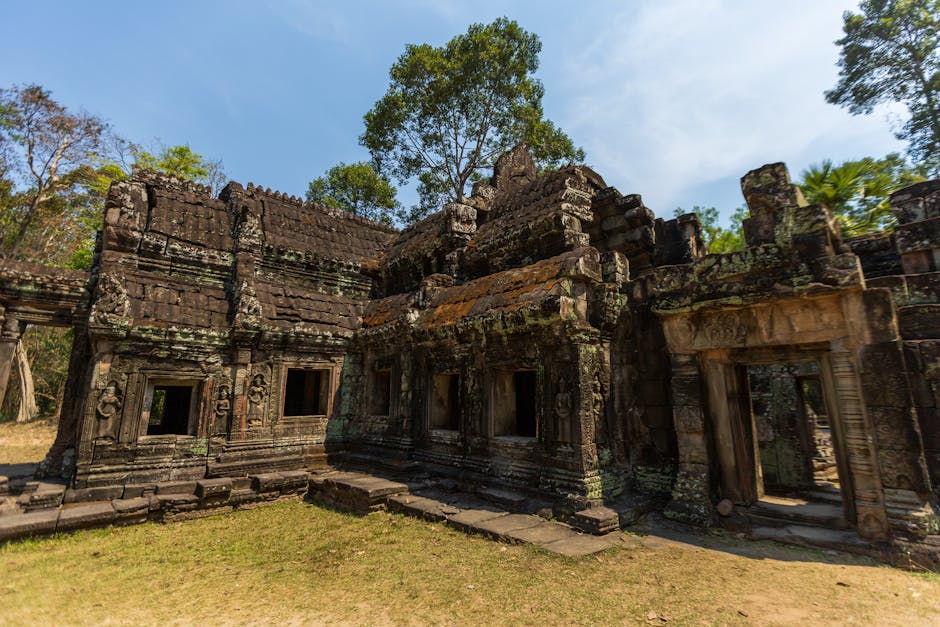
Beyond Angkor Wat itself, the archaeological park contains dozens of temples. Ta Prohm, strangled by silk-cotton trees whose roots flow over the stonework like frozen rivers, is the most photogenic and the most moving — nature and architecture locked in an embrace that neither is winning. Bayon, with its 216 stone faces smiling from every angle, produces a disorientation that feels deliberate, as though the builders wanted you to feel watched and welcomed simultaneously. Preah Khan, vast and echoing, was a university and a temple and a city within a city, and walking its corridors alone in the late afternoon I heard nothing but my own footsteps and the occasional call of a bird nesting in the collapsed roof.
A three-day pass is the minimum for doing the complex any kind of justice. The small circuit, the grand circuit, and the outlying temples each deserve a full day. Banteay Srei, forty minutes north, is carved in rose-pink sandstone with a delicacy that seems impossible at this scale — the lintels look like lacework. Koh Ker, further still, is a stepped pyramid rising from the jungle that most visitors never reach, and the solitude there is absolute. This is not a sight. It is a pilgrimage, and the deeper you go, the more it gives.
When to go: November to February is cool and dry — perfect conditions. Sunrise visits require pre-dawn starts. Wet season (June to October) brings fewer crowds and dramatic skies. Buy the three-day or seven-day pass.