Tiébélé
"The painted walls of Tiébélé aren't decoration — they're a language I can almost read."
The road south from Pô becomes a piste south of town, a red laterite track that bounces you through low bush toward the Ghana border, and for a long stretch you wonder if you have taken a wrong turn because there is nothing to indicate what lies ahead. Then the village appears: a cluster of low earthen buildings set in a slight hollow, and even from a distance something is immediately wrong with them, in the best possible sense. The walls are covered. Not painted in the decorative sense — covered, every surface, in a tight and intricate vocabulary of geometric forms: triangles arranged in chains, chevrons stacked like waves, concentric diamonds, lizard silhouettes, crocodile forms elongated to near-abstraction. The building materials are clay and dung and the natural pigments of the Sahel. The result looks, from the road, like someone has been at work here for centuries. They have.
Tiébélé is a village of the Kassena people, and the women of the community have maintained the tradition of decorating the exterior and interior walls of their homes for as long as oral memory reaches. The paintings are not static — they are renewed seasonally, after the rains soften the mud and require re-application of plaster, and the patterns evolve slowly, mother to daughter, the vocabulary changing across generations while the grammar remains intact. Visiting is arranged through a local guide system, and the guide who accompanied me through the village — a young man named Edouard whose grandmother had been one of the most prolific painters of her generation — explained the symbolism with a care that made clear this was not a rehearsed tourist script. He actually cared what I understood.
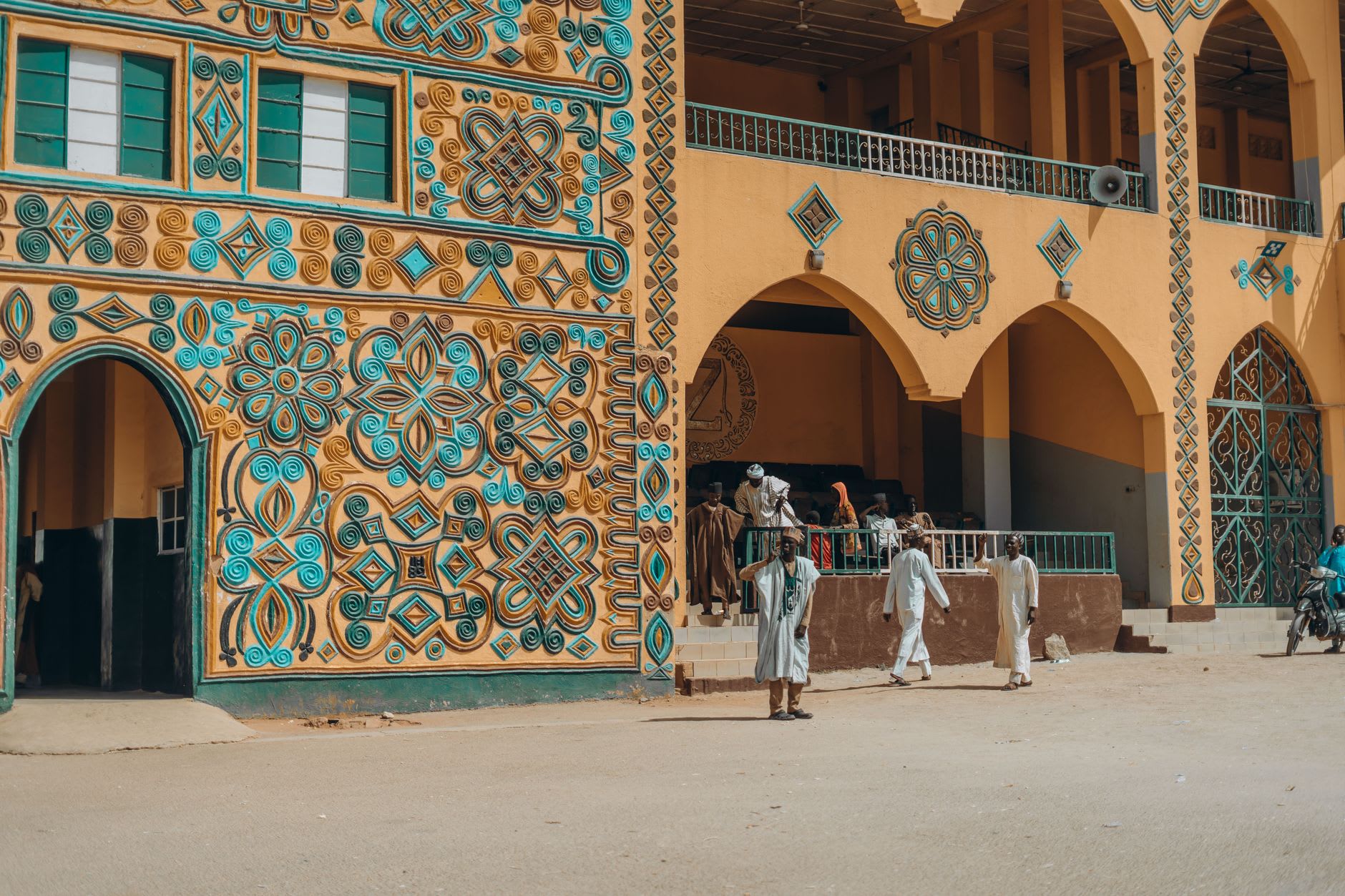
The Cour Royale — the Royal Court of the chief — is the set piece at the center of the village, its buildings more elaborate and more densely decorated than the surrounding domestic compounds. Here the walls are two and three stories of continuous pattern, the designs shifting at the thresholds between rooms, the entrances marked by particularly complex compositions. Entry to the court requires removing your shoes, and inside the first courtyard you stand in a space that feels simultaneously ancient and lived-in: there are grain storage jars propped against one wall, a grinding stone worn into a smooth hollow in the center, a chicken investigating a corner with deep philosophical concentration. The decoration is everywhere, on curved surfaces and flat ones, on the interior walls of granaries and on the low thresholds of doorways worn smooth by decades of bare feet.
The women paint in the dry season, working in the morning before the heat peaks, mixing their pigments — white kaolin, red and yellow ochre, black from charred pods — in clay pots. They work without plans or preliminary sketches, the patterns emerging from memory and from an embodied sense of proportion that no formal training could replicate. Watching this, even at second hand through Edouard’s description of his grandmother’s method, you realize you are in the presence of a knowledge system that is transmitted entirely through practice, and that the paintings are, in the most literal sense, a form of inherited intelligence made visible.
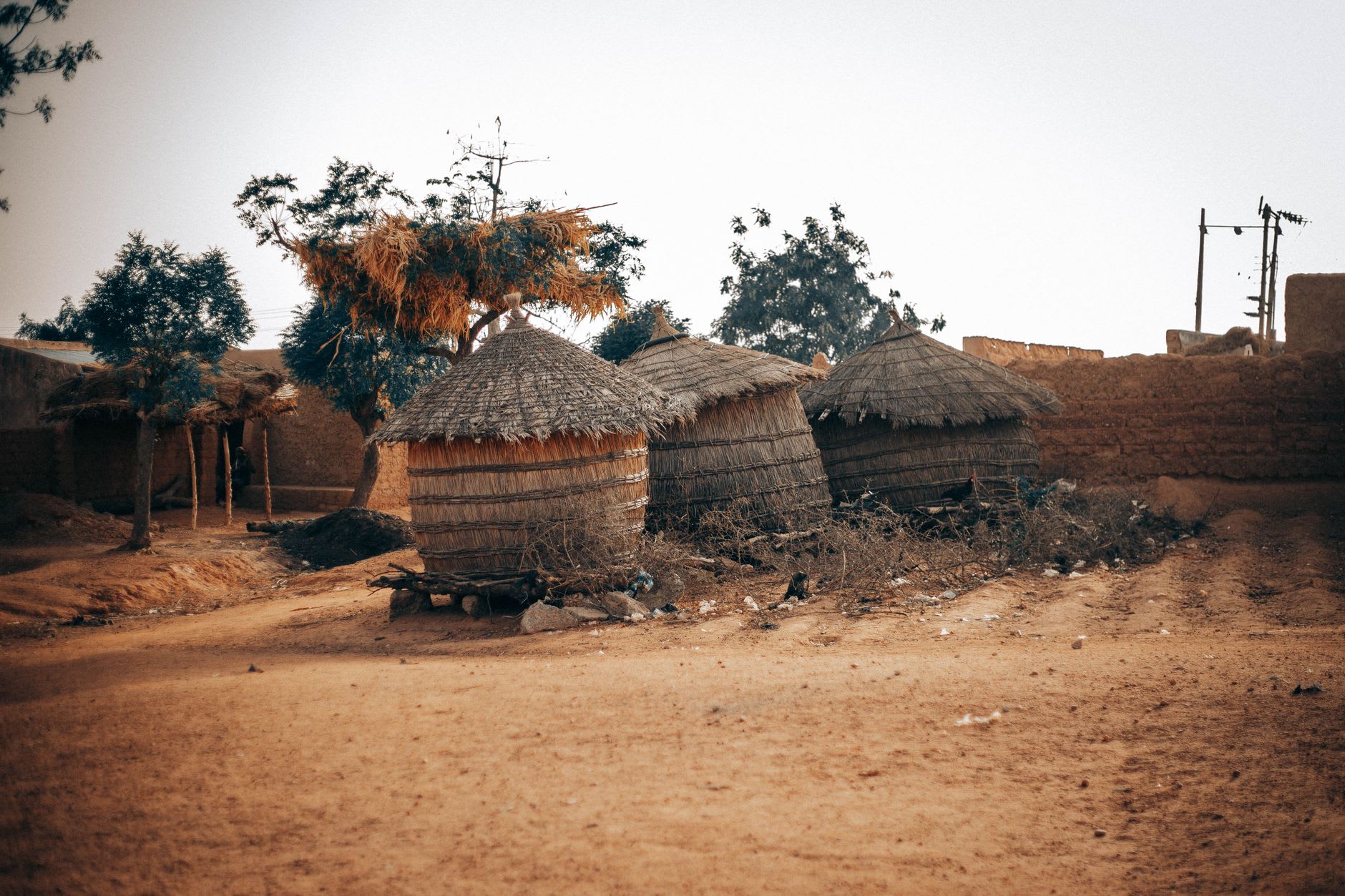
The village has a small guesthouse that allows overnight stays, and staying is worthwhile for the evening and morning light, which works differently on earthen pigment than the flat midday sun does. At dusk the ochres deepen and the whites cool and the village settles into an atmospheric hour that no photograph I took that day adequately captures, though I took many.
When to go: November through February is ideal — dry season means the paintings are at their clearest and the road from Pô is passable without difficulty. Market day in Tiébélé falls on Saturdays, which adds a layer of community life worth aligning your visit with.