Jericoacoara
"Jeri's streets are sand, which is nature's way of reminding you not to rush."
A car-free village of sand streets, windswept dunes, and lagoons perfect for kitesurf and hammock philosophy.
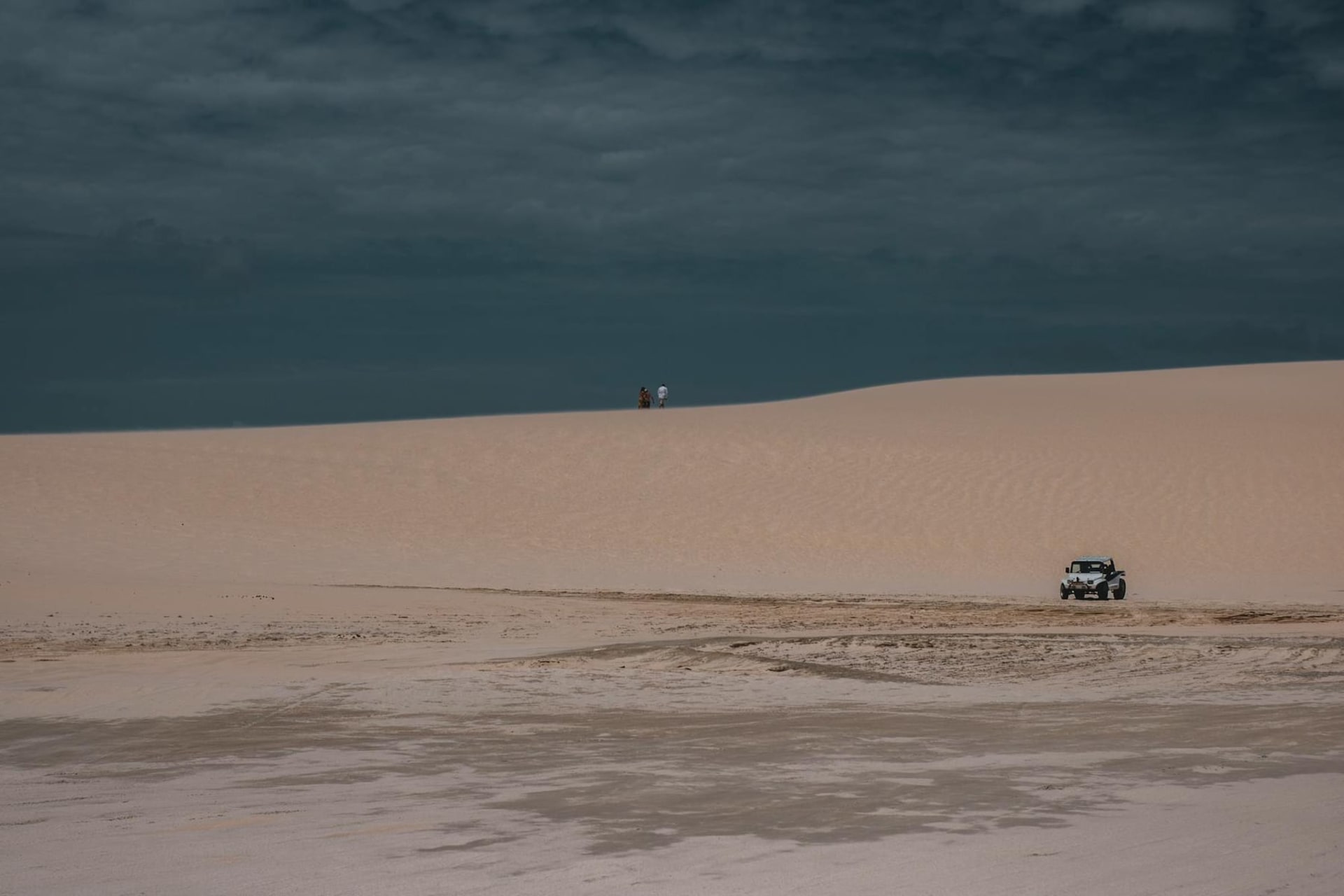
There is no paved road into Jericoacoara. The last stretch from Jijoca is forty minutes of open dune, a 4x4 lurching sideways through sand the color of raw sugar while the Atlantic wind presses flat against every window. By the time we rolled into the village proper — past the main square, past the cashew trees leaning at impossible angles — I understood that this was not a place you arrived at so much as a place that decided to let you in.
The Weight of Sand Underfoot
The streets of Jeri are loose, pale sand, and walking them rewires something in your pace. Rua São Francisco, the artery that cuts from the dunes toward the water, is full of bare feet and bicycle tires and the occasional donkey cart. Nothing hurries. Lia dropped her sandals into her bag within the first ten minutes and did not put them back on for four days. I held out until the following morning.
The smell is wind and salt and, depending on the hour, grilled fish from one of the beachfront barracas where caldeirada comes out in cast iron, the broth orange with urucum and dense with whatever came in that morning. We ate at O Pedacinho do Céu three evenings running. The moqueca there had a sweetness I could not identify until the owner said coconut milk from Ceará palms, as if that distinction were obvious and important — and maybe it is.
Lagoa do Paraíso and the Hammock Problem
The surprise was not the dune at sunset, which every photograph prepares you for. The surprise was Lagoa do Paraíso, twenty minutes east by buggy, where fresh and salt water meet in a shallow expanse so still and warm it reads as hallucinatory. Hammocks are strung from posts driven into the lagoon floor, maybe waist-deep, and you lie in them while small fish tick against your legs. I had been skeptical of hammock-in-water as a concept. I retracted every reservation immediately.
The kitesurf crowd owns the lagoon by midday — conditions are almost comically perfect, the wind constant and cross-shore — but in the early morning the water belongs to herons and the occasional local paddling out on a plank.
The Dune at Dusk
Every evening, people climb the Duna do Pôr do Sol on the village’s western edge to watch the sun go down. It sounds like a tourist ritual and it is, but the dune earns it. The light goes coral, then blood orange, then a green flash if you are lucky and looking at exactly the right moment. We were not lucky. We went back the next evening. Still no flash. We went back a third time with cold beer wrapped in newspaper. The flash did not come, but by then we had stopped caring about the flash.
When to go: July through December brings the strongest winds and the best kitesurfing conditions; the sky is clear and the northeast trade winds blow reliably. January through June is wetter and calmer — better for swimming, better for silence.