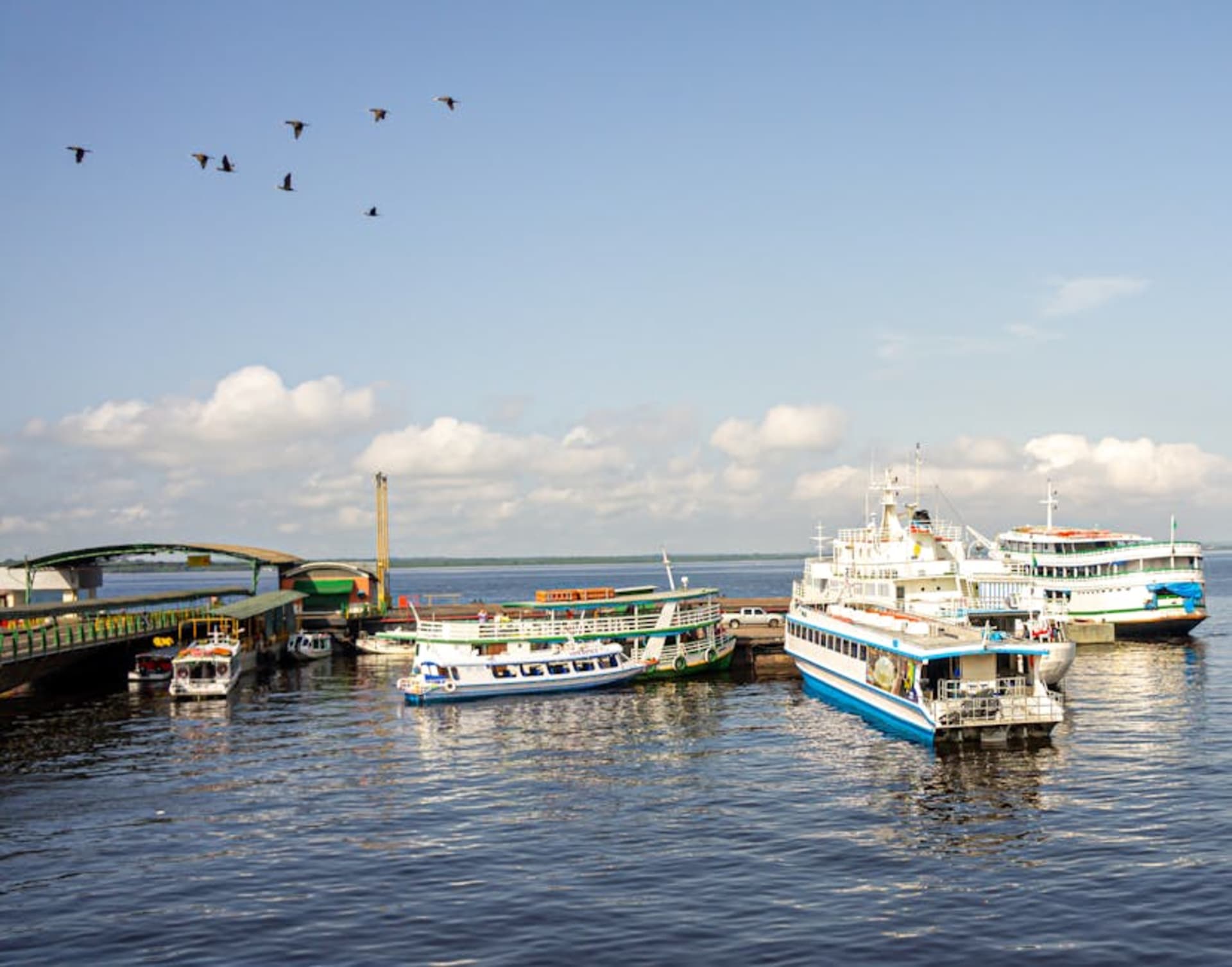
Manaus
"Manaus is where civilization tried to conquer the jungle and the jungle politely declined."
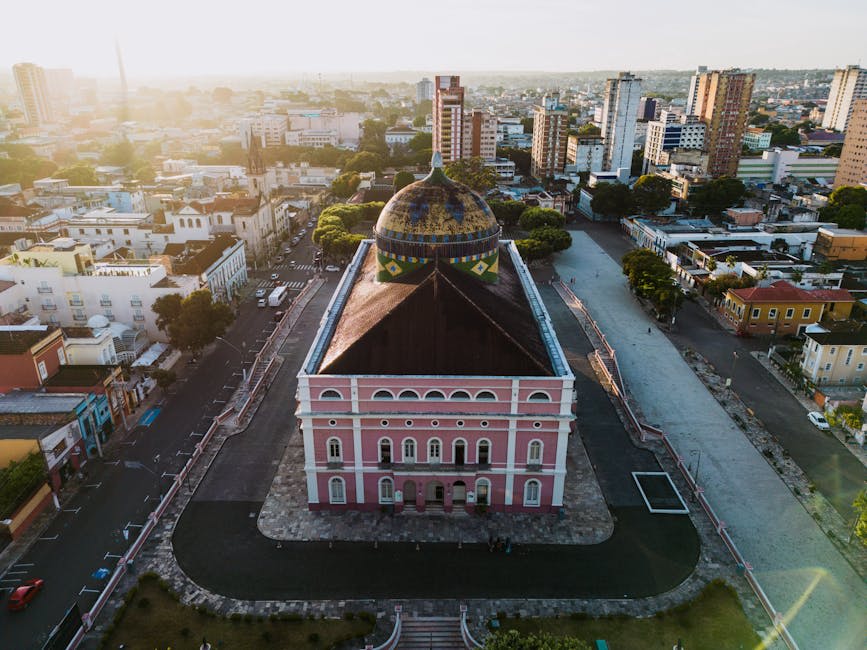
Manaus is a city of two million people in the middle of the Amazon rainforest, accessible only by plane or by boat, and that contradiction defines everything about it. It was built on rubber money in the late nineteenth century — a boom so extravagant that the barons shipped their laundry to Lisbon and built an opera house with Italian marble and French chandeliers in the middle of the jungle. The Teatro Amazonas, with its pink dome and Renaissance facade, remains the most surreal building I have encountered in South America. I attended a chamber concert there on a Tuesday evening, the ceiling painted with Parisian allegories, while the hum of the forest pressed against the walls outside.
The city itself is sprawling, loud, and not conventionally beautiful — it is a working port city, a commercial hub for the entire western Amazon. But it is the departure point for one of the most extraordinary ecosystems on the planet, and the jungle lodges accessible from Manaus offer a depth of immersion that changed how I think about travel.
The Meeting of the Waters — where the dark Rio Negro and the sandy-brown Rio Solimões flow side by side for six kilometres without mixing, before merging to form the Amazon — is one of those natural phenomena that photographs cannot capture. I took a small boat into the confluence and watched two distinct rivers, two temperatures, two colours, flowing parallel and refusing to blend. It is geology as metaphor, and it is mesmerizing.
Jungle lodges are the way to experience the Amazon properly. I spent four nights at a lodge on the Rio Juma, about three hours by boat from Manaus, and the itinerary was relentless in the best way: dawn canoe trips through flooded forest, piranha fishing (you catch them, then the cook fries them for lunch), night walks looking for caimans with a flashlight, and a dawn chorus so loud it rendered my alarm clock irrelevant. The guide, a ribeirinho named Ailton who had grown up on the river, identified birds by sound alone and could spot a sloth from a moving boat at fifty metres.
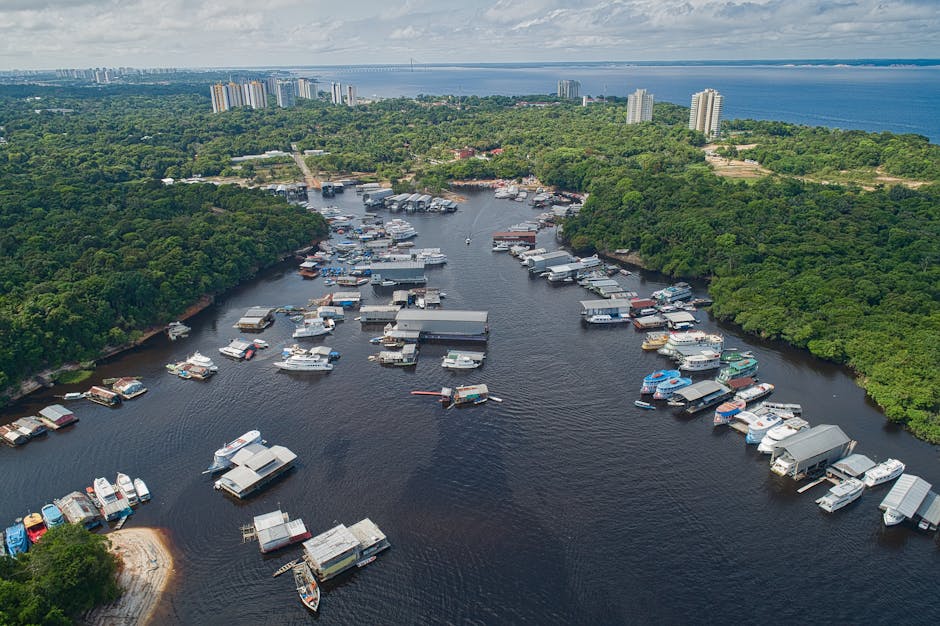
The Anavilhanas Archipelago — the world’s largest freshwater archipelago, a few hours upriver from Manaus — is the other essential excursion. During the dry season (September to February), white sand beaches emerge from the receding river, and you can swim in the warm, dark water of the Rio Negro surrounded by hundreds of forested islands. In the wet season, the forest floods up to twelve metres, and you navigate by canoe through the canopy.
The food in Manaus is unlike anywhere else in Brazil. Tacacá — a soup of jambu leaves (which numb your tongue), dried shrimp, and tucupi broth — is sold from street carts every evening. Pirarucu, the giant Amazonian fish, is served grilled, in stews, and as a dried jerky that tastes like nothing else. The Mercado Municipal Adolpho Lisboa, a cast-iron market modelled on Les Halles, is the place to eat, shop, and absorb the sheer botanical abundance of the Amazon.
When to go: June to November for dry season — easier access, exposed beaches, concentrated wildlife. The wet season (December to May) floods the forest, creating the igapó experience of canoeing through submerged trees — magical, but mosquito-heavy. The Meeting of the Waters is most dramatic from June to August.