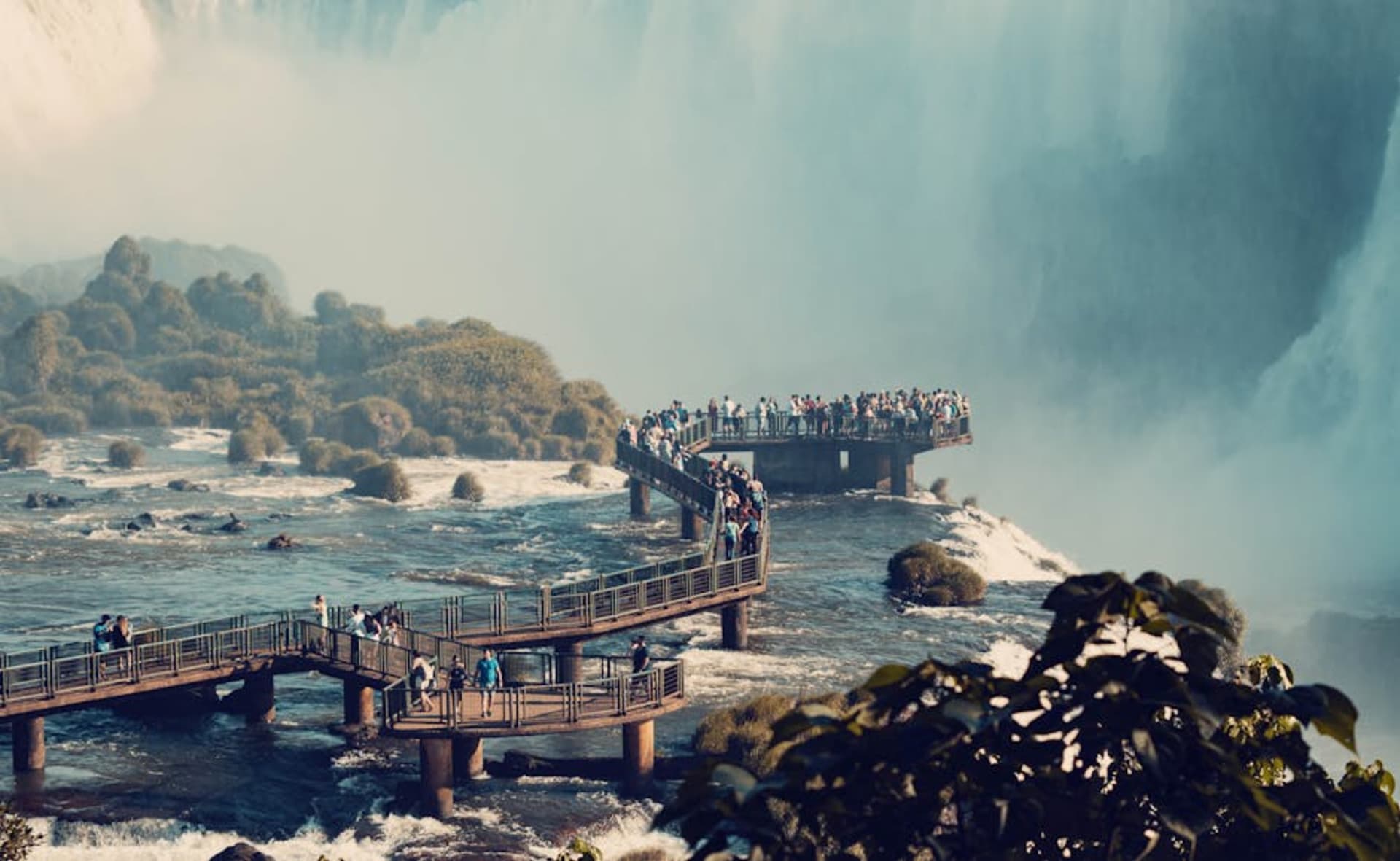
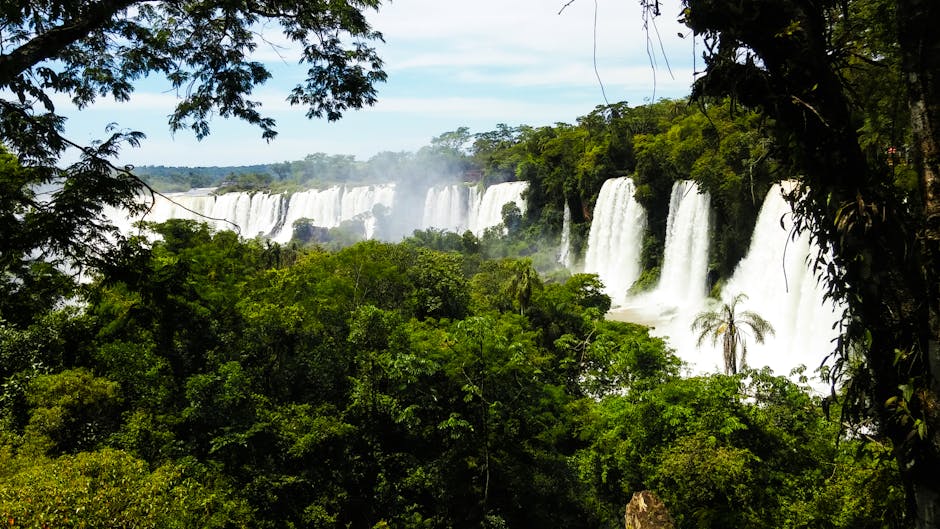
I have stood at the edge of Victoria Falls and at the rim of Niagara, and I say this without hesitation: Iguazu is the most spectacular waterfall system on the planet. It is not one waterfall but 275, spread across nearly three kilometres of the Iguazu River where Brazil meets Argentina, crashing through a horseshoe of subtropical forest in a wall of water and mist and noise that renders conversation, and thought, temporarily impossible.
The Brazilian side gives you the panoramic view — the full sweep of the falls from across the canyon, a perspective so wide you cannot fit it into a photograph or, honestly, into your memory on the first visit. I walked the main trail, a series of metal walkways that lead you progressively closer to the cascade, and at the final platform — suspended directly in front of the Devil’s Throat, where fourteen falls converge into a single roaring abyss — I was soaked to the skin within seconds. The mist creates permanent rainbows, and toucans and coatis wander the trails as if the tourists were merely a minor inconvenience.
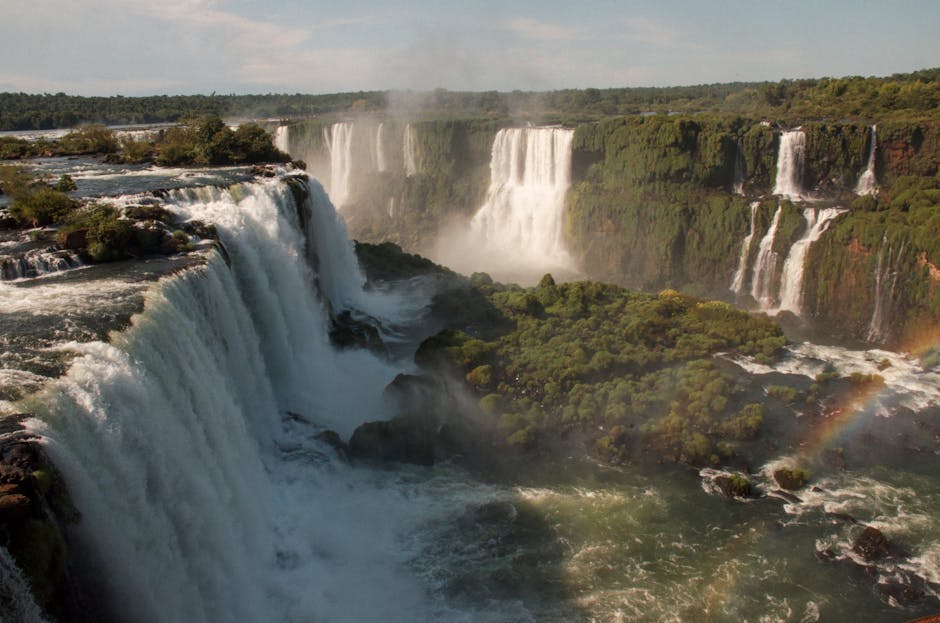
The Argentine side, across the border, offers the intimate experience — trails that take you along the top of the falls, walking above the water as it drops away beneath you. The Garganta del Diablo (Devil’s Throat) walkway on the Argentine side is a kilometre-long metal bridge over the river that ends at the very lip of the biggest cascade, where the water disappears into a churning void of mist. You feel it in your chest before you hear it. I crossed to the Argentine side on my second day, and the combination of both perspectives is essential — they are complementary, not redundant.
Foz do Iguacu, the Brazilian city nearest the falls, is functional rather than charming — a border town that exists primarily to service tourism. But the Parque das Aves (Bird Park), just outside the national park entrance, is a genuine surprise: a huge walk-through aviary set in Atlantic forest, where macaws, toucans, and harpy eagles live in enclosures large enough to feel like the wild. It is one of the few places in Brazil where you can reliably see a harpy eagle, the world’s most powerful raptor.
The Macuco Safari — a combination of jungle drive and zodiac boat ride — takes you directly into the base of the falls. The boat powers into the curtain of water, and everyone aboard screams and laughs and emerges drenched and grinning. It is not subtle, but the force of the water at close range is humbling in a way that the walkways, however spectacular, cannot replicate. I did it twice.
For those coming from Mexico or Argentina, Iguazu sits at a fascinating tri-border point where Brazil, Argentina, and Paraguay meet. The Marco das Tres Fronteiras on the Brazilian side offers a viewpoint where you can see all three countries at once. Ciudad del Este, across the Paraguayan border, is a duty-free shopping chaos that provides a surreal counterpoint to the natural wonder next door.
When to go: March to May or August to October. The water volume is highest from November to March (rainy season), making the falls most dramatic but the trails wetter and the heat more oppressive. June to August is drier but cooler, with reduced water flow. April and May hit the sweet spot — strong flow, manageable crowds, pleasant temperatures.