
Fernando de Noronha
"The most beautiful place in Brazil is the one most Brazilians have never visited."
Fernando de Noronha is Brazil’s answer to the Galapagos — a volcanic archipelago 350 kilometres off the northeast coast, with strict visitor limits, a daily environmental tax, and some of the most pristine marine environments in the Atlantic. It is expensive by Brazilian standards, difficult to reach, and worth every centavo and every connecting flight. I went expecting beautiful beaches and came back rearranged by what I saw underwater.
The archipelago is a UNESCO World Heritage site, and the restrictions are real: a maximum number of visitors at any time, mandatory environmental fees, and limited access to certain beaches and trails. This is not a resort island. There are no high-rises, no cruise ships, no all-inclusives. The accommodation is mostly pousadas — small guesthouses — and the infrastructure is deliberately modest. Pousada Maravilha is the upscale option, perched on a cliff with views that justify the price. I stayed at Pousada do Vale, simpler and friendlier, run by a couple who had moved from São Paulo and never looked back.
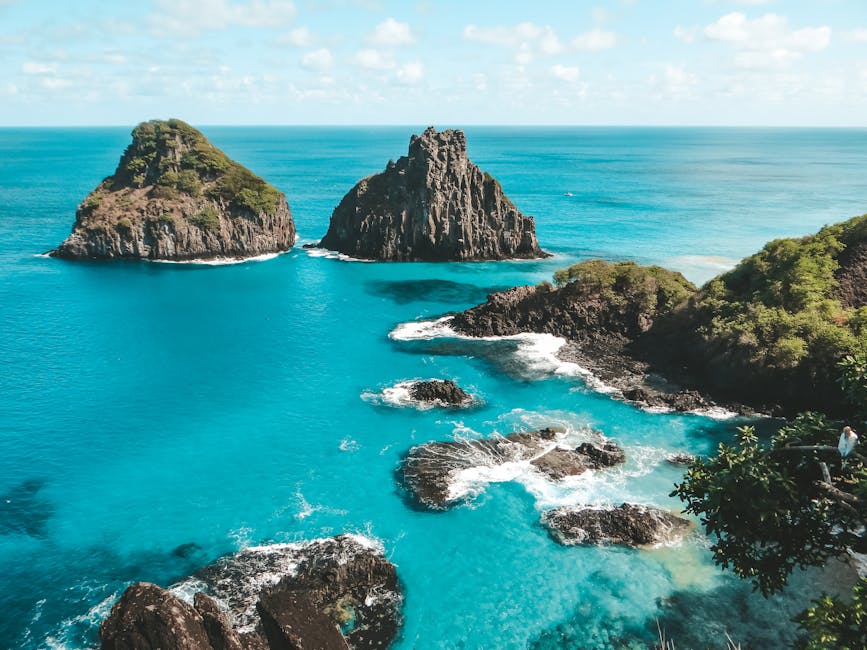
Baía do Sancho — consistently ranked among the top three beaches on the planet — is accessed by climbing down a narrow staircase cut into the cliff face between two rock walls. You emerge onto a crescent of sand backed by a hundred-foot cliff, facing water so clear that you can see the fish from the beach. I snorkelled here for three hours and saw sea turtles, reef sharks, octopus, and schools of tropical fish in such density that it felt choreographed.
The spinner dolphins are the archipelago’s signature wildlife experience. The Baía dos Golfinhos — a protected bay visible from a clifftop viewpoint — is home to the largest resident population of spinner dolphins in the world. They arrive each morning, spinning and leaping in the bay below, and you watch from above as dozens of dolphins perform acrobatics that no aquarium could replicate. You cannot swim in this bay, and that is exactly right.
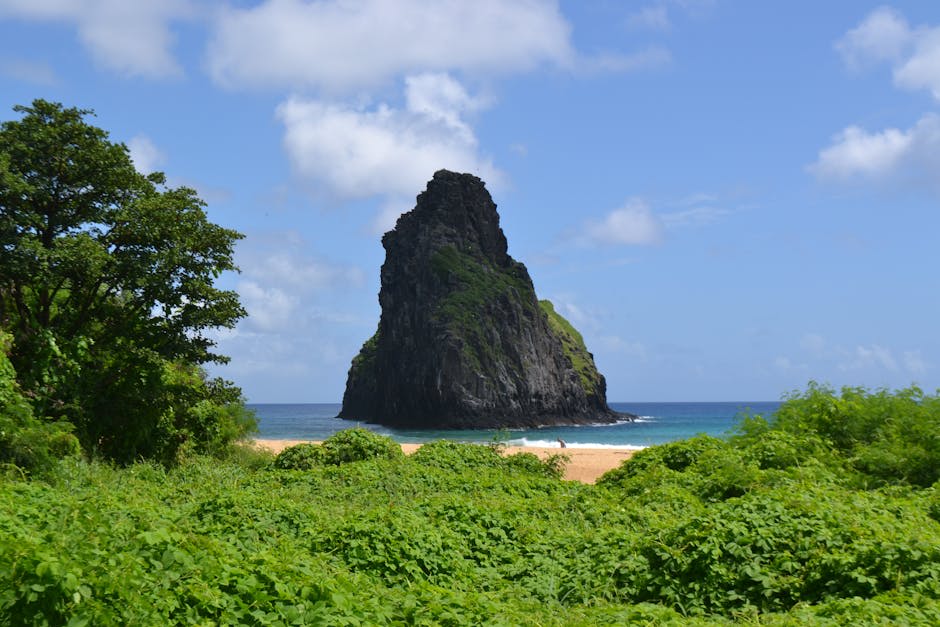
Diving and snorkelling are the main activities, and the visibility regularly exceeds thirty metres. The Corveta Ipiranga wreck dive is the highlight for certified divers — a deliberately sunk naval vessel now colonized by coral and patrolled by reef sharks. For snorkelling, the tide pools at Atalaia Beach (access limited to a few dozen people per day, by reservation) offer a natural aquarium experience that rivals anything I have seen in Southeast Asia.
The sunsets from Forte de Nossa Senhora dos Remédios — the old Portuguese fort on the island’s highest point — are the daily ritual. Everyone gathers, the sky turns impossible colours behind the Morro Dois Irmãos (yes, another Dois Irmãos — Brazil loves twin peaks), and for a few minutes the whole island goes quiet.
When to go: August to December for the best visibility and calmest seas. September and October are peak. The rainy season (March to July) brings bigger surf to the outer beaches but can reduce underwater visibility. Book accommodation and flights well in advance — capacity is genuinely limited.