Dangriga
"They don't play drums here like it's a show. They play them like it's a requirement."
The Garifuna Capital
Dangriga is the largest city in southern Belize and the cultural and spiritual center of Garifuna life in the country. The Garifuna — descendants of West African and Arawak/Carib peoples who were exiled from the Caribbean island of St. Vincent by the British in 1797 — landed on the shores of what is now Dangriga on November 19, 1802, after a long and fractured journey through Honduras. That arrival is still commemorated as Settlement Day, the most significant date on the Garifuna calendar.
The city itself is not conventionally beautiful. It sits at the mouth of the North Stann Creek river where it flows into the Caribbean, and it has the slightly rough-edged quality of a working town that gets visited rather than catered to. But there is a vitality to Dangriga that purely tourist-oriented places often lack. The market is busy and practical. The waterfront has a lived-in quality. The drum schools are real schools, not performances scheduled between boat trips.
Settlement Day and What It Actually Is
I arrived in Dangriga on the afternoon of November 18 and the town was already in motion. Canoes arrived from the south carrying Garifuna re-enactors in traditional dress — a re-creation of the original landing. Drums were beating from three different locations that I could hear simultaneously. The smell of rice and beans cooking in large pots mixed with salt air and woodsmoke.
Settlement Day itself — November 19 — begins before dawn. The re-enactment of the landing happens at sunrise at the river mouth, and then the day dissolves into processions, music, food, and the kind of collective joy that comes from a community celebrating its own survival. I have been to enough cultural festivals that feel primarily designed for my presence, and this was not one of them. It felt internal, celebratory in a direction that didn’t require an outside audience.
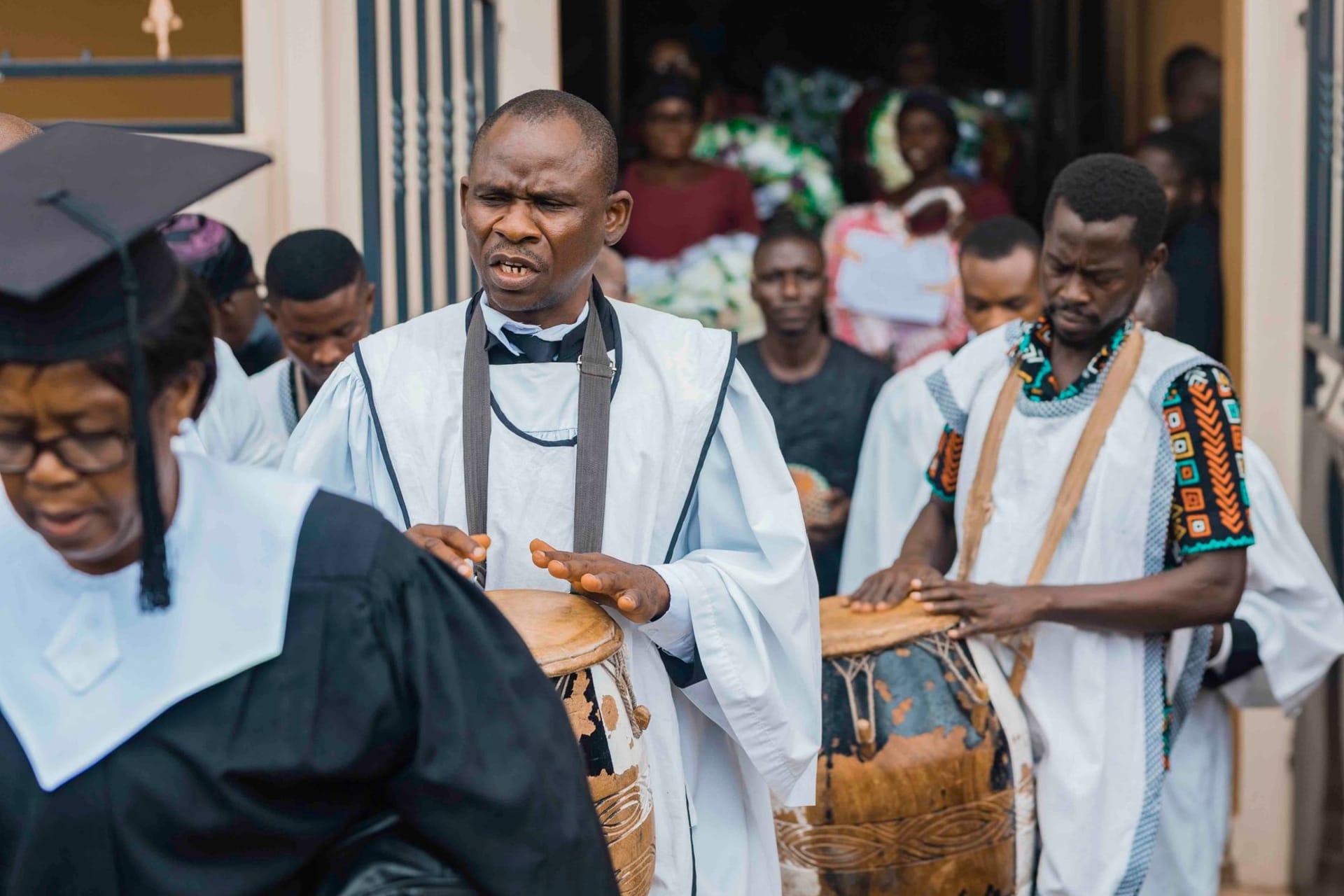
The drumming that day was constant in the way that weather is constant — always present, shifting in intensity, never quite arriving at silence. By evening, at a large outdoor event near the waterfront, the punta rock bands took over from the traditional drummers, and the dancing that followed had nothing ceremonial about it. It was just good dancing.
The Drums on Ordinary Days
You don’t have to be in Dangriga for Settlement Day to hear the drums. Several cultural organizations in the city offer drumming workshops throughout the year, and the Garifuna Cultural Centre has exhibits on the history and music of the community. But the most instructive thing is simply walking through certain neighborhoods in the evening.
I sat one night on a low wall near a house where someone was practicing. The rhythm of punta is built on an interlocking conversation between two drums — the primero and the segunda — and when you listen long enough you start to hear the pattern as a call and response rather than a uniform beat. The primero improvises. The segunda holds steady. It’s a model that feels like something beyond music.
What to Eat and Where
Dangriga’s food is Garifuna at its roots: hudut, serre, cassava-based dishes, fresh fish. The market is the best place to eat cheaply and well — vendors with heavy pots of rice and stew, women selling freshly made cassava bread from baskets. The cassava bread has a texture between a cracker and a flatbread, slightly toasted, with a faint earthiness that pairs with almost everything.
The seafront has a few more formal restaurants serving Belizean standards, and the overall price level is lower than the northern cayes. Dangriga is not a place organized around making visitors comfortable. It is a place that allows visitors to be present.
When to go: November 19 (Settlement Day) is the essential date — book accommodation months ahead as everything within range fills up. Outside of that, January through April offers reliable dry weather. The city is a practical base for exploring the Cockscomb Basin Wildlife Sanctuary (jaguar preserve) and the Mayflower Bocawina waterfalls, both within an hour’s drive.