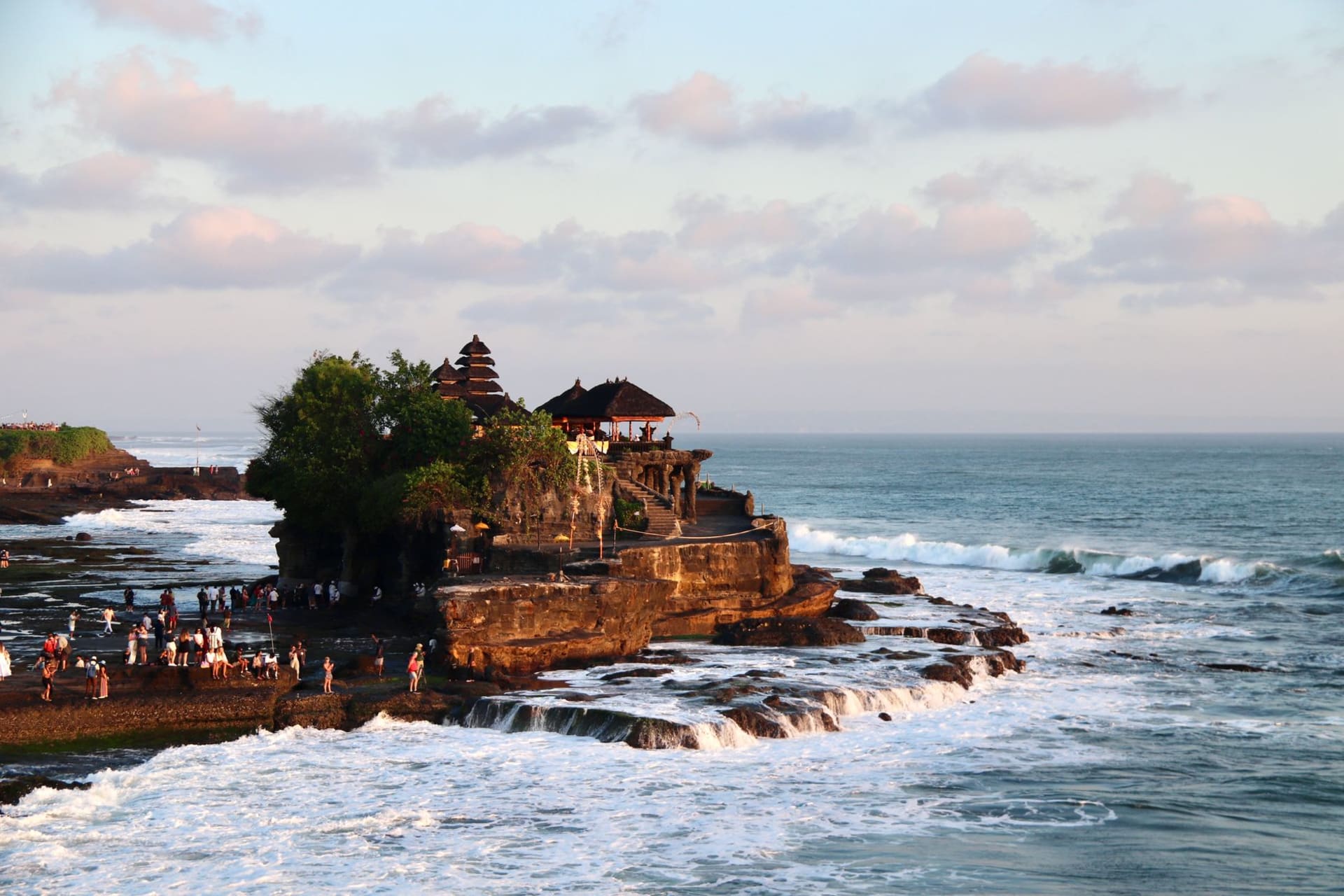
Tanah Lot
"Every photograph of Tanah Lot is taken at sunset. I went at nine in the morning and found the temple doing something entirely different."
I arrived at Tanah Lot at nine on a Tuesday morning, which is precisely not when anyone goes. The car park was half-empty. The souvenir stalls along the approach path were open but unstaffed, their batik cloth hanging limp in the salt air. A dog slept across the entrance walkway. And then the path opened up and the temple was there — Pura Tanah Lot, a tiered Balinese shrine rising from a black offshore rock at the western coast, waves breaking around its base in slow heavy surges, the sea the colour of bottle glass in the morning light. Without the sunset crowds, the scale of the thing was easier to see. The rock is not large. The temple on top of it is not elaborate. But there is something about the combination of the offshore position, the constant assault of the ocean, and the steadiness of the stone and the shrine together that produces an impression of absolute rightness — this temple in exactly this location, sea spray on the stone, incense smoke visible even from where I stood on the mainland cliff.
Tanah Lot is one of seven sea temples positioned around Bali’s coast by the Hindu priest Nirartha in the sixteenth century, each one said to guard the island from evil spirits rising from the sea, each one positioned so that the sunset visible from its location is considered sacred. The sunset viewing tradition is correspondingly ancient, though the current version — hundreds of tourists with cameras arranged along the clifftop — is a more recent innovation. The priests who maintain the temple arrive twice daily for ceremonies that happen whether or not anyone is watching, and at low tide, pilgrims wade across the exposed rock platform to receive blessings from the temple’s sea snakes, holy serpents that supposedly inhabit the rock cave below.
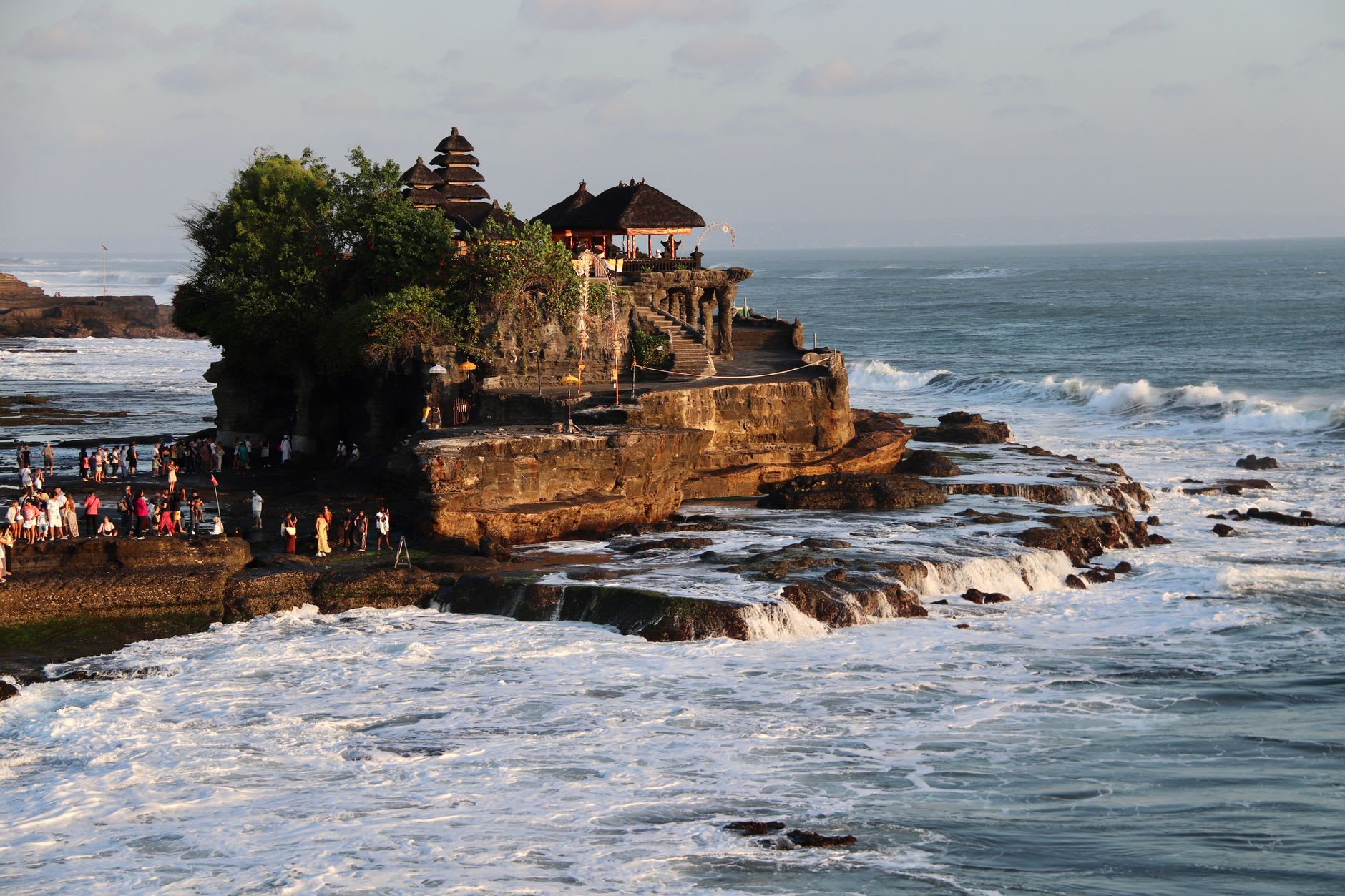
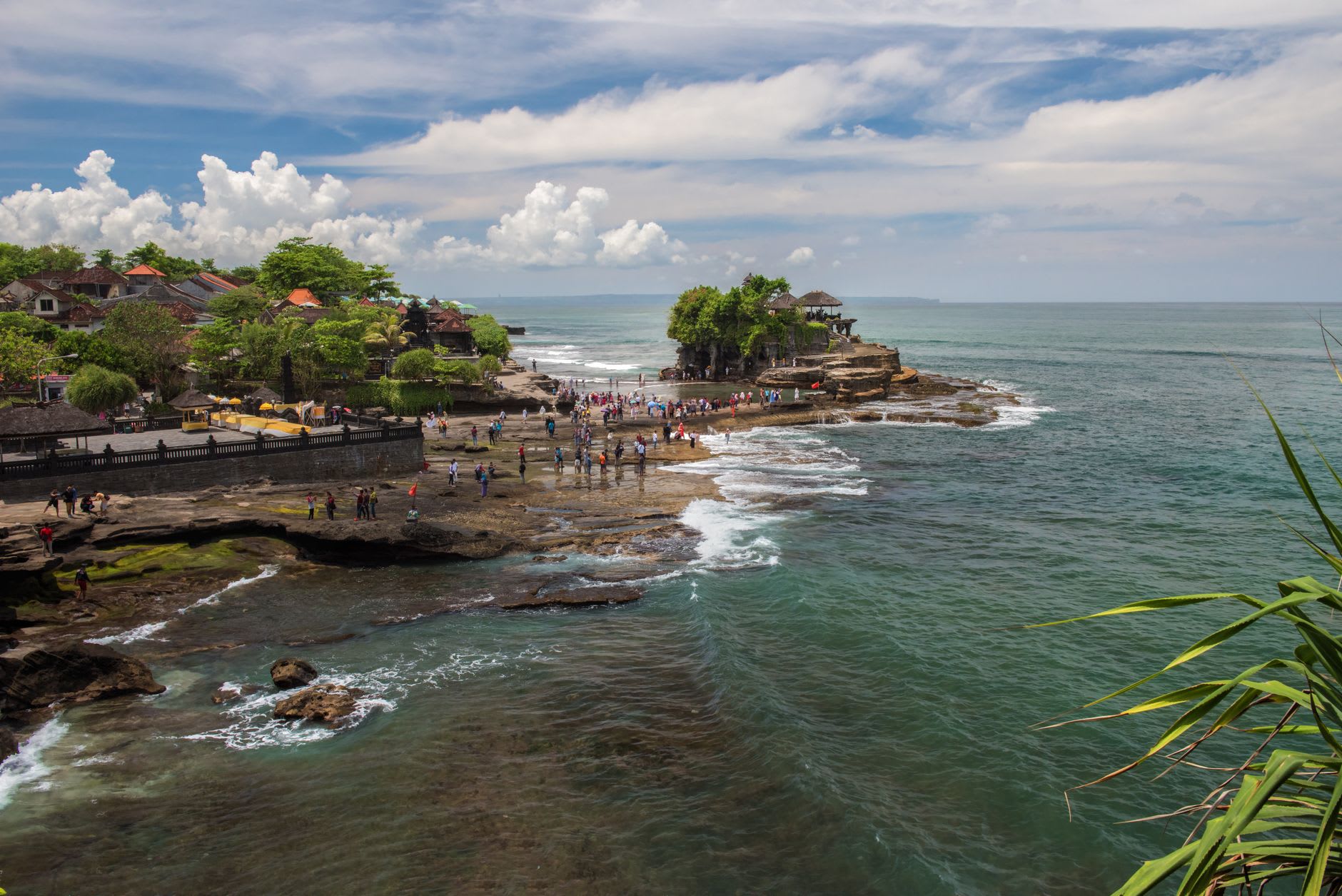
At low tide I watched a family of Balinese pilgrims make the crossing — a grandmother, two middle-aged women, and several children — removing sandals and lifting sarongs as they stepped across the wet rock platform toward the temple gate. A priest emerged from the compound and spoke with them briefly, then disappeared inside. The children waited with the formal patience of children in a religious context, understanding without being told that this was serious. I sat on the cliff edge above and watched the whole transaction from a respectful distance and felt that I was seeing something that was not for me but that I was lucky to observe.
The coastal walk north from Tanah Lot, following the cliff edge through rice paddies that abut directly to the sea cliffs, is how you decompress after the entrance approach. The paddies here are actively farmed, and the paths between them are public, and if you walk far enough you will eventually pass through a village where the ceremony preparations are underway — offerings being assembled on the roadside, women in temple dress carrying things somewhere with purpose. The tourist Tanah Lot and the actual western Bali that surrounds it exist in parallel layers, each one present simultaneously, separated only by attention.
The sunsets are real. I went back the second evening and watched the sun drop toward the temple and the sea and it was as theatrical as advertised, the sky doing every orange-to-red variation it had in the repertoire, the temple becoming a silhouette, the assembled photographers creating their composite image simultaneously. It is a manufactured experience in the sense that everyone has come for the same thing at the same time, and it is a genuine one in the sense that the sky was actually doing that and it was actually beautiful. Both things can be true.
When to go: Any time of year in the morning gives you the temple with a fraction of the visitors. Sunset is the famous viewing time and is genuinely spectacular — arrive by four PM to find a good position on the cliff, especially between May and August. Low tide, which allows the rock platform crossing, varies by month; check the tide table for the days you intend to visit if the pilgrimage route interests you.