
Guerrero Negro
"I crossed a giant steel whale sculpture at the state line and thought, correctly, that I had entered a different Mexico."
A flat, windswept salt town on the 28th parallel where gray whales fill a lagoon of the same brine that fills the trucks rolling out of the world's largest saltworks.
Guerrero Negro announces itself long before you arrive: a towering steel gray whale straddling the highway, marking the exact border between Baja California and Baja California Sur. The town itself is not pretty. It was built around Exportadora de Sal, the largest saline evaporation operation on earth, and the landscape reflects that — flat, dusty, functional, ringed by ponds that shift from turquoise to shrimp-pink depending on the salinity and the season. I will admit I almost drove through without stopping. I am glad I didn’t.
What Guerrero Negro protects, just west of the salt flats, is Ojo de Liebre — the lagoon Americans call Scammon’s, after the nineteenth-century whaler who nearly hunted the gray whale to extinction here. The irony is not lost on anyone who takes a panga out today. The whales that survived that slaughter, and their descendants, now approach small tourist boats with what can only be described as curiosity, sometimes affection. I had a mother push her calf toward our skiff for nearly ten minutes, angling it so we could touch its rubbery, barnacled skin. The guide, a local named Efraín who has run these waters for two decades, was more moved by it than I was, which told me everything about how genuine the moment was.
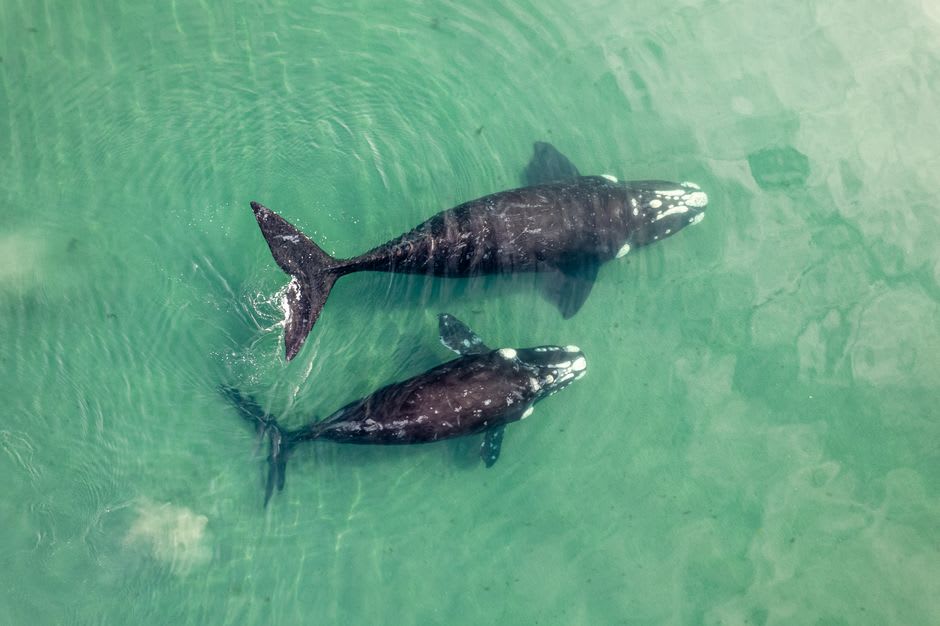
The town has almost no reason to exist beyond salt and whales, and that honesty is part of its appeal. There is a modest strip of taco stands, a couple of no-frills motels catering to whale-watching season, and an eerie stillness at night broken only by wind moving across open desert. I stayed at a small posada where the owner, half-Danish, half-Mexican — her grandfather came for the saltworks in the 1950s and never left — made me the best machaca I have had in Baja, and told me stories about the flamingos that show up in the salt ponds some winters, a wash of improbable pink against all that white.
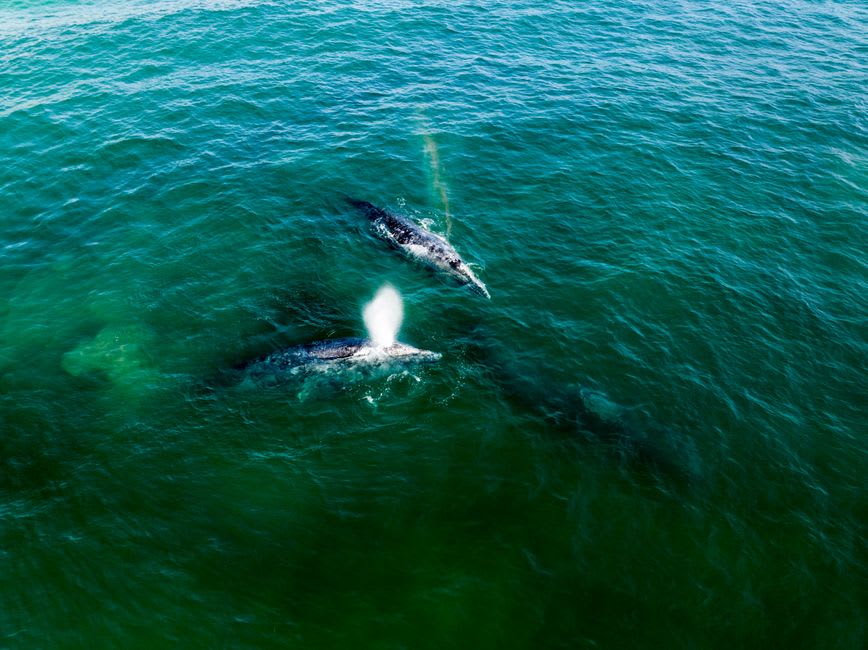
When to go: Late December through early April for whale watching in Ojo de Liebre, with January and February the calmest and busiest weeks. The rest of the year the town has little draw beyond a fuel stop and a strange, flat beauty.