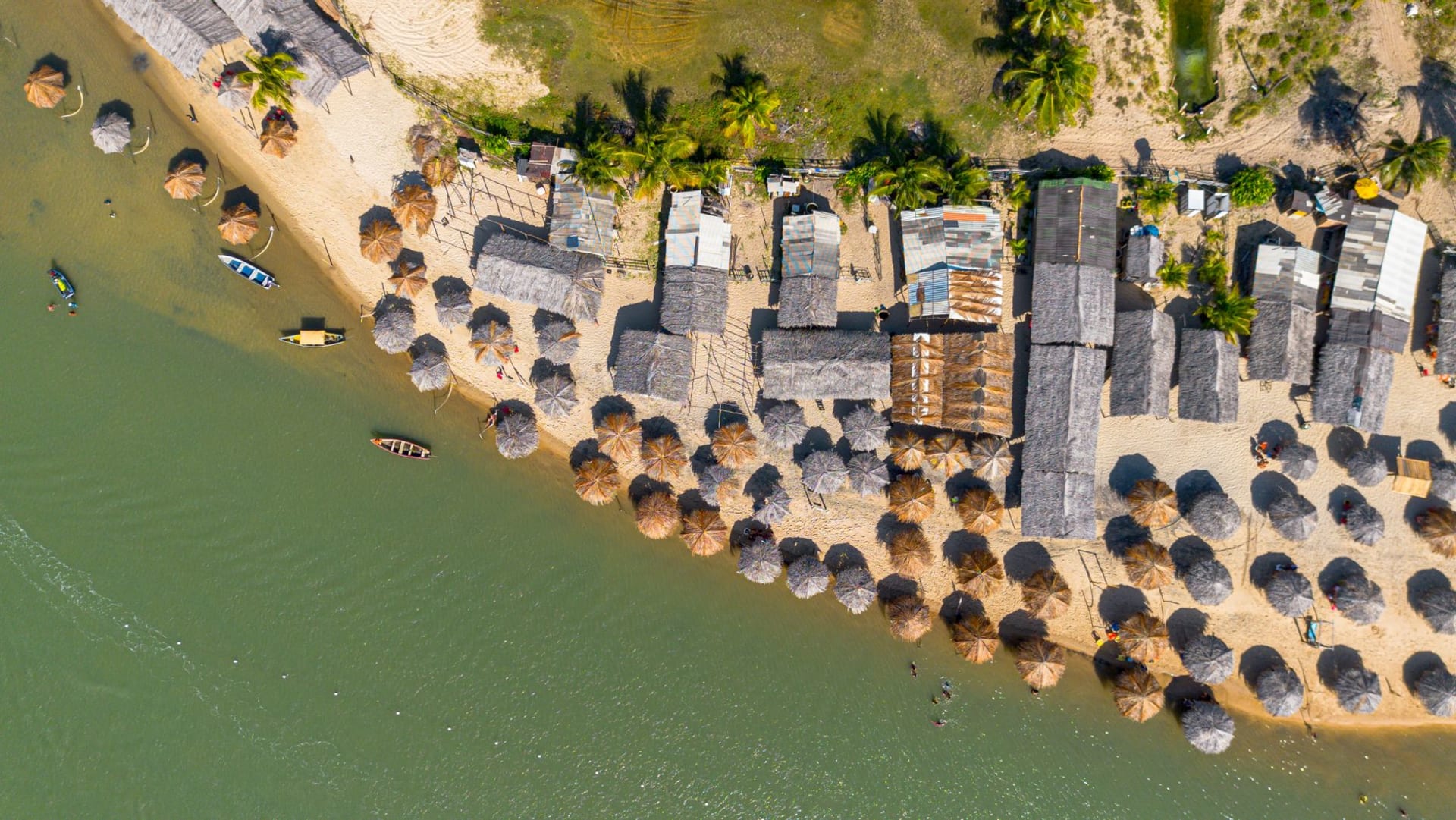
Boipeba
"Boipeba feels like the island Morro de São Paulo was before someone had the idea of numbered beaches."
You get to Boipeba from Morro de São Paulo by boat — a twenty-minute crossing through mangrove channels that requires either waiting for the right tide or negotiating with a fisherman who knows the timing. The arrival is low-key in a way that immediately signals the kind of island this is: a sandy track, a few pousadas with hand-painted signs, a square with a church that looks like it might have been built by someone who had heard a description of a church but had never actually seen one. No ATMs. Intermittent electricity in some places. Spotty cell signal. These are not complaints.

The island has three villages: Velha Boipeba, Moreré, and Cova da Onça. Between them run dirt paths through coconut groves and secondary Atlantic rainforest, negotiable on foot or by horse-drawn cart — the carts are not an attraction but a functional transport system, which makes them more interesting. Moreré is the one with the famous tidal pools: at low tide, the reef shelf extends for hundreds of meters and the water sits in natural basins at exactly body temperature, lit from below by white sand. I spent a full day in those pools, moving slowly from one to the next, eating coconut rice from a tin I had bought in the village. The sun was brutal. The water was not.
The food on Boipeba is simpler than in Salvador, simpler than in Morro, and sometimes better for it. One evening I ate at a restaurant that was essentially someone’s front room with four tables: fresh fish grilled over charcoal, farofa made with toasted manioc flour and more butter than was strictly necessary, fried plantains, a small salad of cucumber and tomato dressed with salt and lime. A beer from a cooler. I ate slowly and watched the square and felt absolutely no need to be anywhere else.

The appeal of Boipeba is the absence of the apparatus of tourism that you feel elsewhere in the archipelago. No zip lines. No party boats. No cocktail bars with fairy lights and electronic music. The people who come here are either Brazilians escaping the Morro crowds or foreigners who did their research. Both groups tend to be pleasingly relaxed.
When to go: Any time outside of the Brazilian high season (December through February) is good. The rains fall mostly April through June — the forest goes very green and the tracks become muddy. September through November has the best combination of dry weather, clear water, and empty beaches. Bring cash — the one ATM in the village is unreliable.