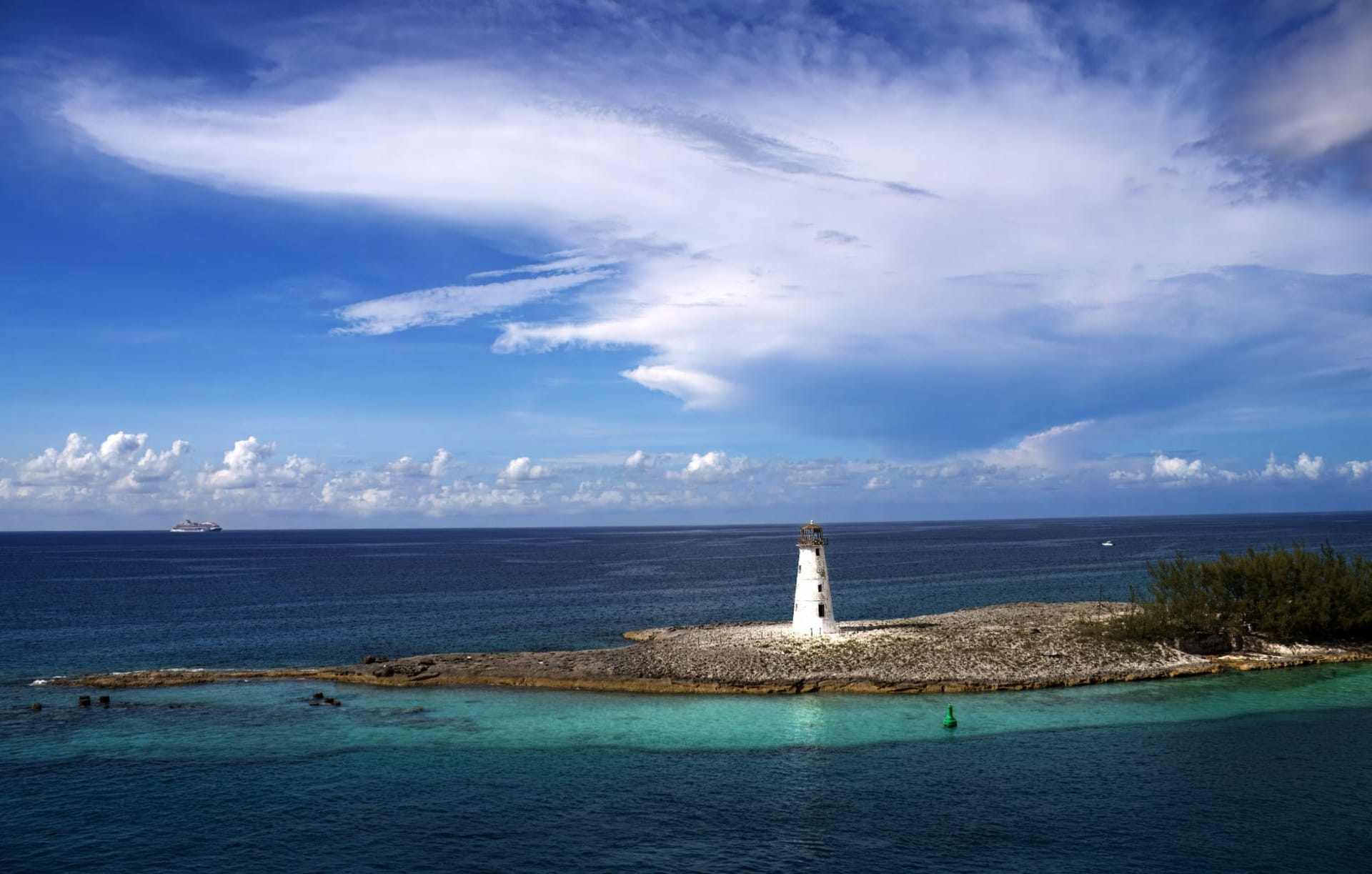
Nassau
"The whole city performs for tourists on Bay Street. The real Nassau is cracking conch at Potter's Cay at seven in the morning."
I walked off the plane with the resigned posture of someone expecting to spend a day in a transit city. I had a ferry to catch the next morning, and Nassau was just the logistics between me and the Out Islands. Then the taxi driver said — without asking, just as a statement of fact — “you want to eat first, right?” and deposited me at Potter’s Cay instead of the hotel. Thirty minutes later I was standing at the edge of Nassau’s working harbor watching a man slice open a conch with the efficiency of someone who has done it ten thousand times. He handed me a plate of cracked conch with scotch bonnet pepper sauce and a cold Kalik, the local beer, and the city’s fishing boats moved around us in full chaotic bloom: ice being loaded, boxes being hauled, a rooster walking the dock with the assurance of a senior employee.

Potter’s Cay exists under the Paradise Island bridge, technically in the shadow of the resort strip, and is the most honest place in Nassau. Women sell vegetables and island spices from wooden stalls, fishermen argue about catches and prices, and the conch vendors operate with a kind of patient theater — cracking the shells with a sharp knife, extracting the animal, slicing it thin, and drowning it in lime and hot pepper while you watch. The conch here tastes of the sea in a way that no restaurant in the hotel district manages. It was alive this morning; that is the variable no kitchen can replicate with refrigeration.

Bay Street in the early morning, before the cruise ships disgorge their thousands, has a faded grandeur worth pausing in. The colonial buildings are painted in those particular British Caribbean pastels — blush pink, pale yellow, seafoam — and their wrought-iron balconies overhang the street at angles that suggest they were built when a certain leisurely life was expected of the climate. The Queen’s Staircase, sixty-six steps cut by hand from limestone in the 1790s, climbs to Fort Fincastle with a shade so complete the air drops several degrees. By nine in the morning the souvenir sellers will have set up along the walls and the cruise-ship haze will have settled over the whole street. Come earlier. The Fish Fry at Arawak Cay, a ten-minute walk west of the center, is where the night ends and sometimes the morning begins — a row of open-air shacks serving conch chowder thick with thyme and tomato, johnnycake on the side, the Bahamas’ dense, slightly sweet cornmeal bread that eats like fuel. The difference between the Fish Fry and the resort restaurants is not only the price but the confidence: nobody here needs to explain the johnnycake or apologize for the spice level.
When to go: December through April for reliable dry-season weather and the clearest harbor light. January brings Junkanoo — the all-night street parade of costumed dancers that runs from Boxing Day into the early hours, a spectacle that is both the most Bahamian thing Nassau does and the reason the city feels like it is saving something for itself. Avoid September, the peak of hurricane season.