A plateau of giant ice caves and karst above the Salzkammergut lake district, most visitors never venture above the postcard town.
The gondola from Obertraun rises so fast that Hallstatt disappears below you before you’ve had time to look back. One moment the Hallstätter See is a mirror between green flanks, the next you’re above the treeline and the plateau opens like a cracked palm — grey limestone pavement, snowfields in June, the air thinning into something that tastes faintly of iron and cold stone.
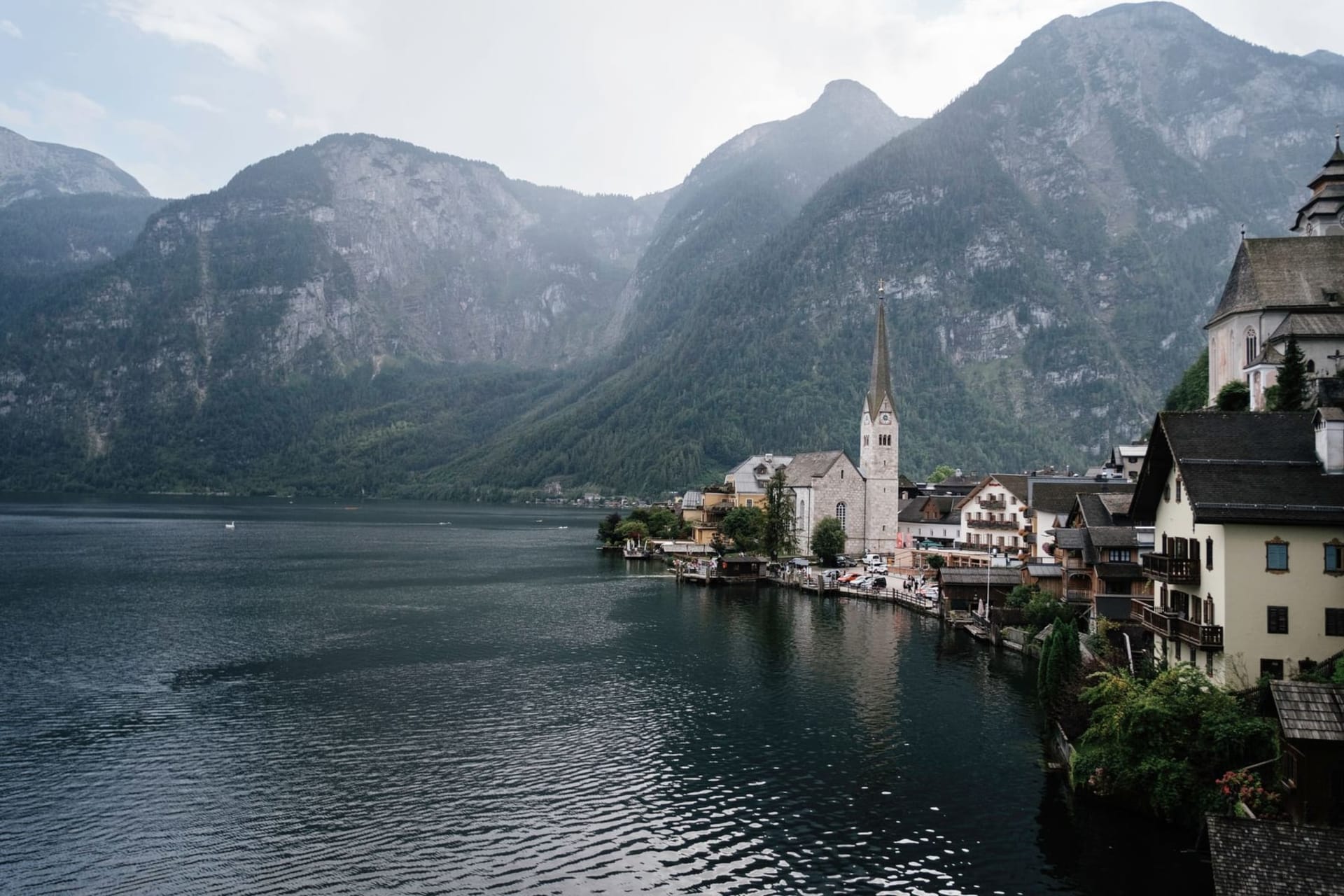
Everyone in Hallstatt is photographing the lakefront. The pastel houses. The church spire reflected perfectly in still water. I did it too, the first morning, standing at 7am in the exact spot the tour groups would occupy by nine. But the real Dachstein is not at lake level. It never was.
Inside the Mammoth Cave
The Dachstein Mammoth Cave — Mammuthöhle — opens in the cliff face at 1,450 metres and runs for kilometres into the karst. The guided tour takes you through chambers where your breath instantly clouds and the temperature sits at a permanent two degrees. What I wasn’t prepared for was the scale. The ice formations inside the Giant Ice Cave next door — the Rieseneishöhle — reach heights of fifteen metres, translucent blue-green where the light catches them, opaque white where the mass thickens. Lia pressed her palm flat against one wall and pulled it back fast, as if the cold were alive.
The caves were first explored in the 1910s and parts still feel that way — iron ladders bolted directly into limestone, passages so low you duck without being told to. The guides speak in German first, English after, and there’s something right about that ordering up here.
The Karst Plateau Above
What surprised me entirely was the plateau itself, the Gjaidalm level, reachable on foot from the upper gondola station at the Schönbergalm. Most visitors ride the cable car up, walk to the cave entrance, and descend. Walk twenty minutes further onto the open karst and you find nothing — in the best sense. Limestone pavement dissolved into sharp grikes, a few hardy sedge plants, the occasional cairn. The Hoher Dachstein summit at 2,995 metres stands to the south, carrying a small glacier that by afternoon glows an unlikely pale gold.
I sat on a flat rock at the edge of the cliff and ate a Jausenbrot I’d bought at the Bäckerei Höll in Hallstatt that morning — dark rye, caraway, a hard local cheese whose name I never caught. Below, tiny boats crossed the lake. None of them looked up.
Getting Up There
The gondola departs from Obertraun, a short bus ride from Hallstatt on the 542 line. Cave tickets are purchased separately at the plateau; budget half a day if you want both caves and time on the karst.
When to go: Mid-May through October, when both gondola and cave tours operate. July and August bring the largest crowds to the caves themselves; a Tuesday morning in early June is close to solitude.