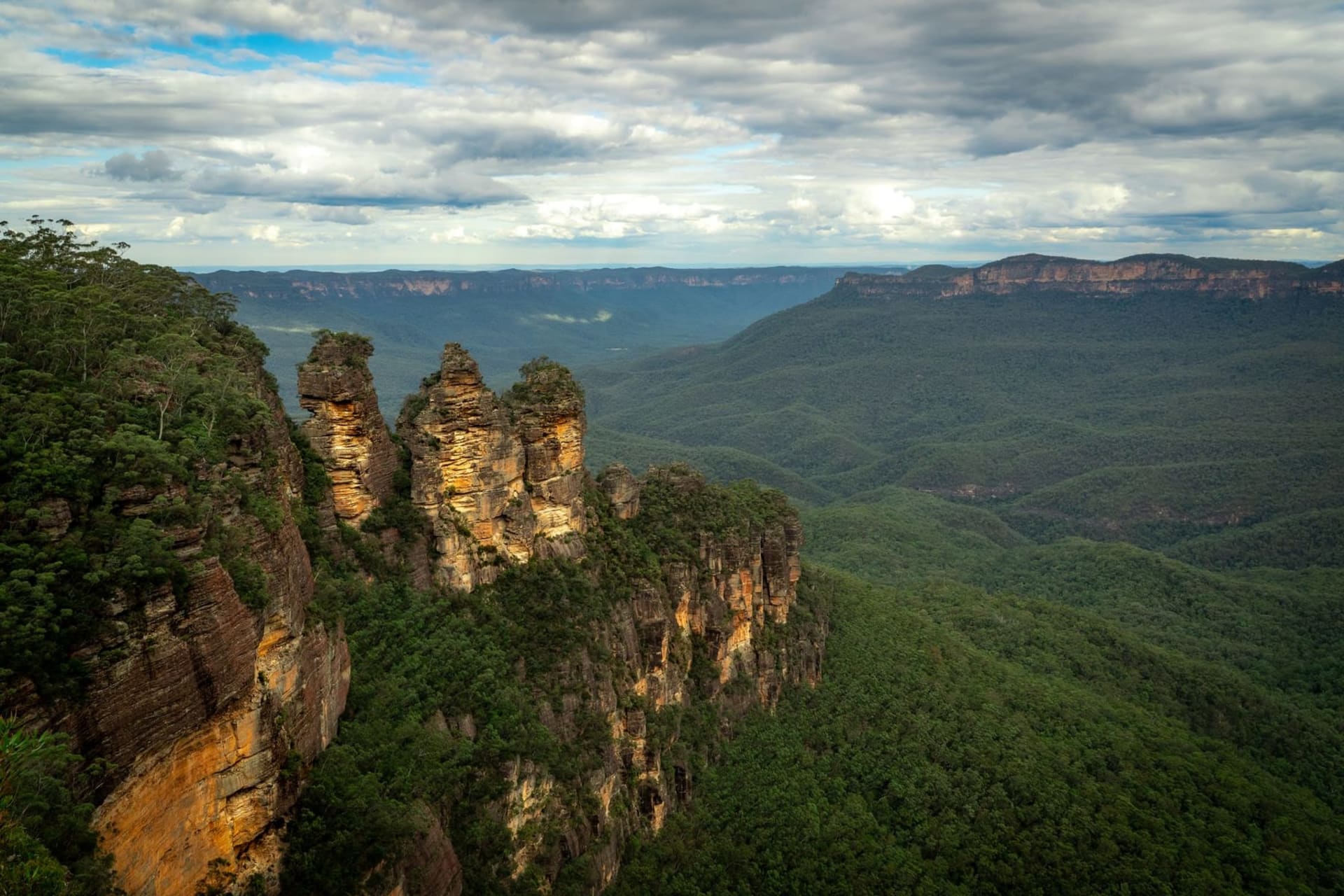
Eucalyptus oil turns the gorge air blue — sandstone escarpments, Aboriginal art, and the Three Sisters at dusk.
I had been told the mountains were blue but I assumed it was the kind of thing people say to sell a place — a slight exaggeration, a poetic licence taken with a landscape that was probably just green. Then Lia and I stood at Echo Point in Katoomba, an hour and a half west of Sydney on the Blue Mountains Line, and looked out across the Jamison Valley. The blue was real. Not a tint, not a suggestion — a genuine blue haze sitting over eighty kilometres of eucalyptus forest, generated by the oil those trees exhale into the heat of the afternoon. The vapour scatters light the same way the atmosphere scatters blue from the sun. The colour is physics. It is also breathtaking.
Echo Point and the Three Sisters
The Three Sisters stand at the rim of the escarpment at the end of Echo Point Road, three sandstone columns that drop 922 metres into the valley floor. They look older than they have any right to look — worn and orange and absolute, the kind of geological fact that makes everything around it feel temporary. At dusk, when the setting sun hits them from the west and the valley fills with shadow while the peaks stay lit, the contrast between the glowing rock and the blue void below them is almost operatic.

The Darug and Gundungurra peoples have lived in this country for at least 22,000 years, and the escarpment holds that presence — in the ochre stencils of hands and animals on the rock overhangs at Red Hands Cave in Glenbrook, in the carved figures at Murphys Glen, in the simple fact that this landscape was not discovered by anyone. It was already known. I thought about this standing at the lookout, listening to the tourists around me gasp at the view, wondering if the land registers a difference between a gasp of recognition and one of first encounter.
The Descent into the Valley
The Giant Stairway drops 800 steps from Echo Point down to the valley floor — a descent through clifftop heath into subtropical rainforest, the air cooling and thickening as you go, the sandstone walls narrowing around you. At the bottom, the Federal Pass trail runs along the base of the escarpment through a forest that has the compressed, mineral smell of somewhere that never fully dries out. Tree ferns the height of streetlamps. Moss on everything. The sound of the valley — birds I could not name, water somewhere below, the distant hiss of the Katoomba Cascades.
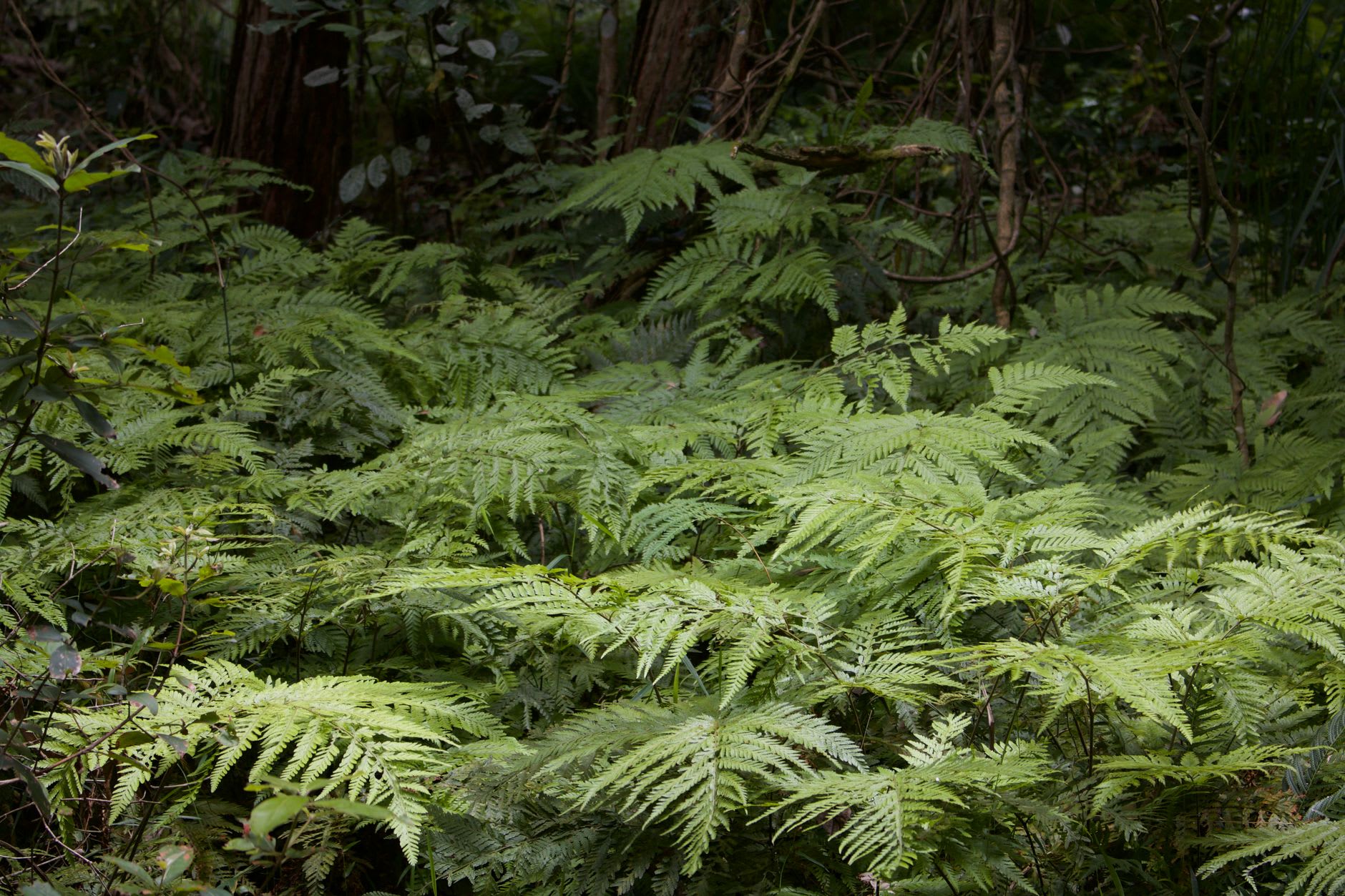
What I had not expected — the thing that genuinely stopped me mid-trail — was the silence between sounds. Up on the rim, Katoomba is a small town with traffic and coffee shops and the particular noise of tourism. Down in the valley, those sounds disappear completely. I stood still for a moment and heard nothing human, and the absence felt like something being given back.
The Scenic Railway, the steepest passenger railway in the world at a 52-degree gradient, hauls you back up the cliff in less than two minutes. Lia laughed the entire way. I held the handrail and pretended I was not.
Katoomba’s Particular Atmosphere
Katoomba itself rewards an evening. The main strip on Katoomba Street has the slightly faded elegance of a town that was once a grand resort destination and has since relaxed into something more honest — art deco shopfronts, secondhand bookshops, cafes with mismatched furniture. We ate at the Hominy Bakery on Katoomba Street, where the pies are made with seriousness and the coffee comes in mugs that have clearly been dropped many times and survived. Outside, the temperature dropped sharply after sunset, and the blue that had been visible all afternoon dissolved into an ordinary dark.
The Carrington Hotel, which opened in 1883 and has not entirely shaken the nineteenth century, serves a cold-weather beer in a bar panelled in dark timber. I drank a Tooheys and tried to imagine the original guests arriving by steam train from Sydney, the mountains still largely unmapped, the valley below entirely intact. Some places hold their history better than others. The Blue Mountains holds it in the air itself.
When to go: March through May for the sharpest air, the clearest views, and the first autumn colour on the non-native trees that line Katoomba Street. September through November brings wildflowers across the heath. Avoid school holidays if possible — Echo Point at peak hour is a different experience to Echo Point at dusk with a handful of people.