
Melbourne
"The coffee alone would justify the trip, but the laneways, the food, and the people make you want to stay."
Melbourne is a city that rewards those who look twice. Its best qualities are not arranged along grand boulevards or mounted on pedestals — they are tucked behind unmarked doors, painted onto the walls of narrow laneways, and served in small cups by baristas who treat coffee extraction as a matter of genuine consequence. The central grid of streets, laid out in the 1830s, is threaded with a network of lanes and arcades that form a parallel city within the city, and it is in these compressed spaces that Melbourne’s character concentrates into something unmistakable.
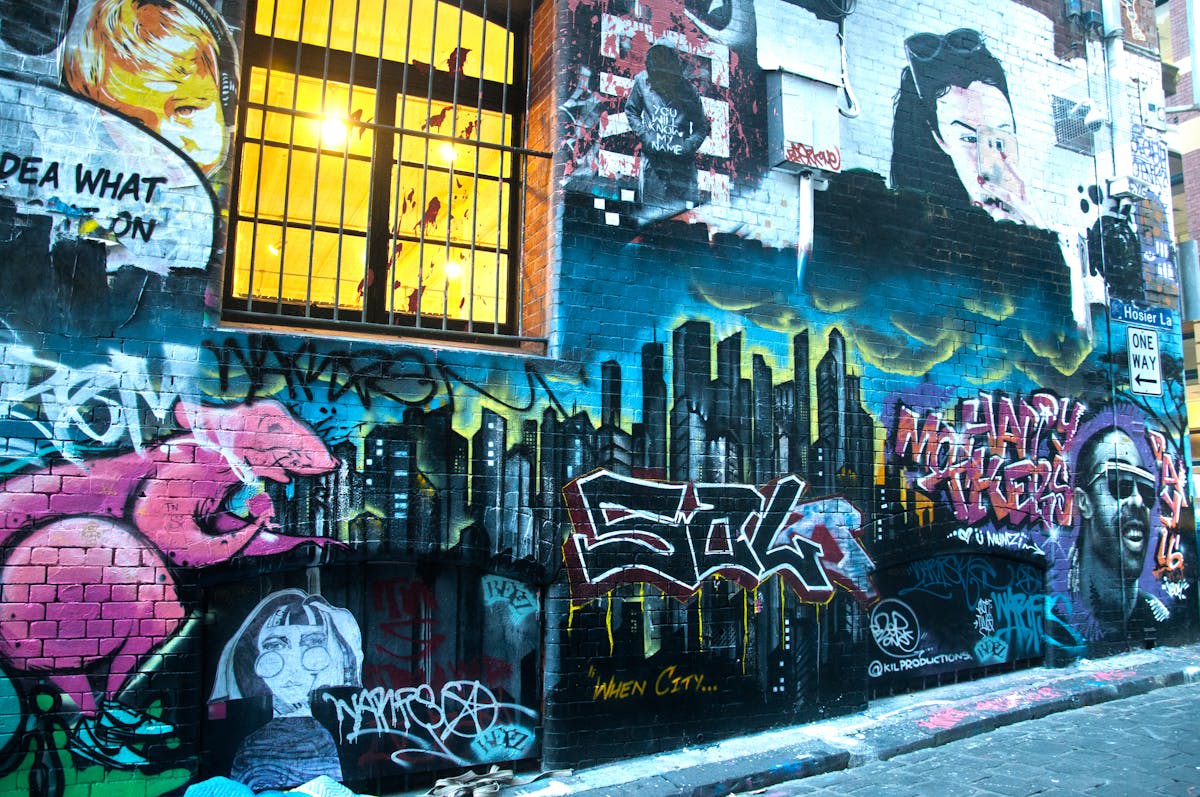
Hosier Lane is the most famous of them, its walls layered with street art that changes by the week — stencils, paste-ups, murals that range from the politically furious to the absurdly whimsical. But Hosier is merely the introduction. AC/DC Lane, Degraves Street, Centre Place, Blender Lane — each has its own texture, its own roster of cafes and studios and record shops. The laneway culture is not curated in the sterile sense; it is organic, competitive, and constantly evolving, a reflection of a city that values creative restlessness over preservation for its own sake.
The coffee deserves its reputation. Melbourne’s cafe culture is not a marketing exercise — it is an obsession embedded in the daily rhythm of the city. The flat white was arguably perfected here, and the standard of extraction across even the most unassuming neighbourhood cafe is remarkably high. Ordering a long black in Melbourne is an act of trust that is almost never betrayed. The cafe is also a social institution: a place for laptop workers, first dates, and the slow Saturday morning that stretches into afternoon without apology.
Queen Victoria Market anchors the northern edge of the city centre, a sprawling covered market where fruit vendors shout prices, deli counters display salumi and cheeses that reflect Melbourne’s deep Italian and Greek heritage, and the night market in summer transforms the space into a street food carnival. It is chaotic in the best way — a place where the multicultural reality of the city is not theorised but tasted.
Sport in Melbourne is not a pastime; it is a civic religion. The Melbourne Cricket Ground — the MCG, spoken of with the familiarity of a family member — holds a hundred thousand people and hosts Australian Rules football with an intensity that borders on the devotional. On a winter Saturday afternoon, the city empties into the ground, and the roar that rises from the stands when a goal is kicked carries across the Yarra River and into the surrounding parklands. The Australian Open in January brings tennis to Melbourne Park, and the Spring Racing Carnival turns the city into a theatre of fashion and spectacle.
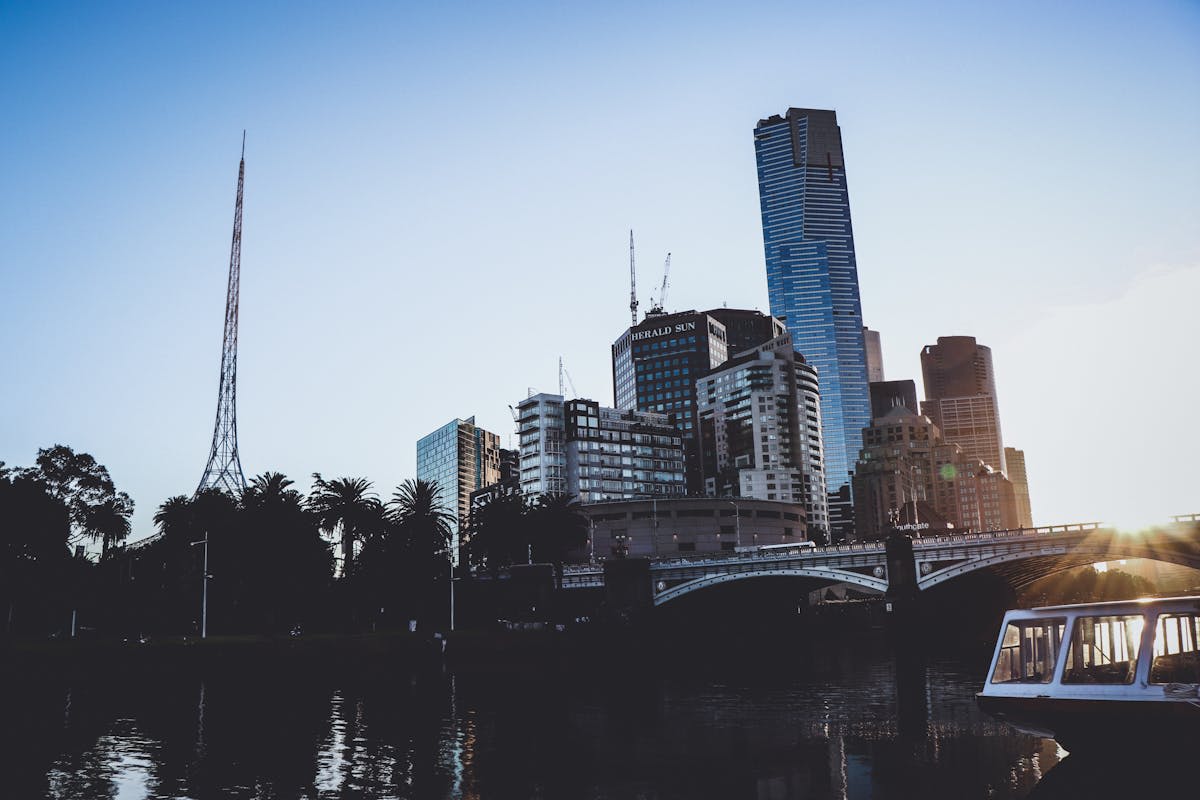
The Yarra River curves through the city with a certain brown-watered modesty, but its banks have been reclaimed as a promenade of restaurants, bars, and arts venues. Southbank stretches along the southern shore, and on warm evenings the riverside fills with diners and walkers moving between the Arts Centre spire and the Crown complex. Rooftop bars have proliferated across the CBD — hidden above office buildings and accessed via service elevators — offering skyline views and cocktails mixed with the quiet satisfaction of having found the entrance.
The food is Melbourne’s strongest argument in any conversation about Australian cities. Vietnamese pho in Richmond, Ethiopian injera in Footscray, Cantonese dumplings in Box Hill, Greek souvlaki on Lonsdale Street, and modern Australian tasting menus in the inner suburbs that draw on the entire continent’s produce — the diversity is not performative but deeply rooted in successive waves of migration that have made this one of the most genuinely multicultural food cities on the planet.
Beyond the city limits, the Great Ocean Road begins its dramatic coastal run southwest, winding past surf breaks and rainforest gullies to the Twelve Apostles — limestone stacks rising from the Southern Ocean in a formation that manages to be both geological and theatrical. It is close enough for a long day trip and compelling enough to warrant an overnight stay.
When to go: March through May for autumn colour and the best restaurant season, when new menus launch and the weather is crisp without being cold. December through February is warm and event-heavy, anchored by the Australian Open. Melbourne’s weather is famously fickle — four seasons in a single day is a genuine possibility — so layering is not optional. The Great Ocean Road is best enjoyed in autumn or spring when the light is softer and the tourist coaches thinner.