Byron Bay
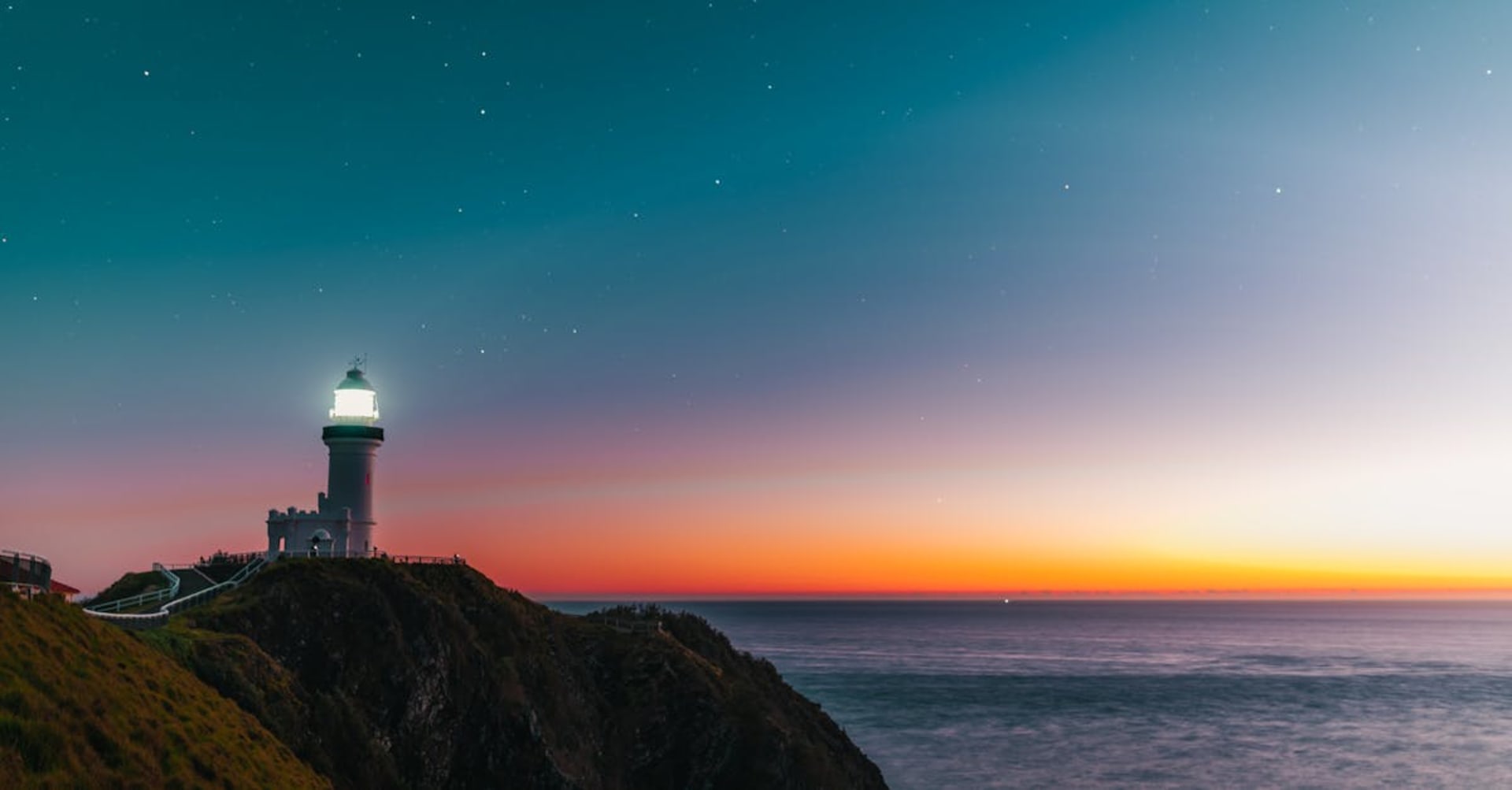
"Standing at the lighthouse watching the first sunrise to hit Australia — a small thing that felt enormous."
There is a walk that begins in the dark. It starts from the Captain Cook car park and winds up the headland through pandanus and coastal scrub, the path underfoot worn smooth by a million early risers chasing the same thing. The Cape Byron Lighthouse stands at the continent’s most easterly point, a white tower against whatever the sky is doing that morning, and when the sun breaks the Pacific horizon, the light catches the lighthouse before it catches anything else on the Australian mainland. The panorama unfolds in every direction — Tallow Beach sweeping south in a long golden arc, the hinterland rising green and ridged to the west, and below, the dark shapes of dolphins threading through the morning swell.
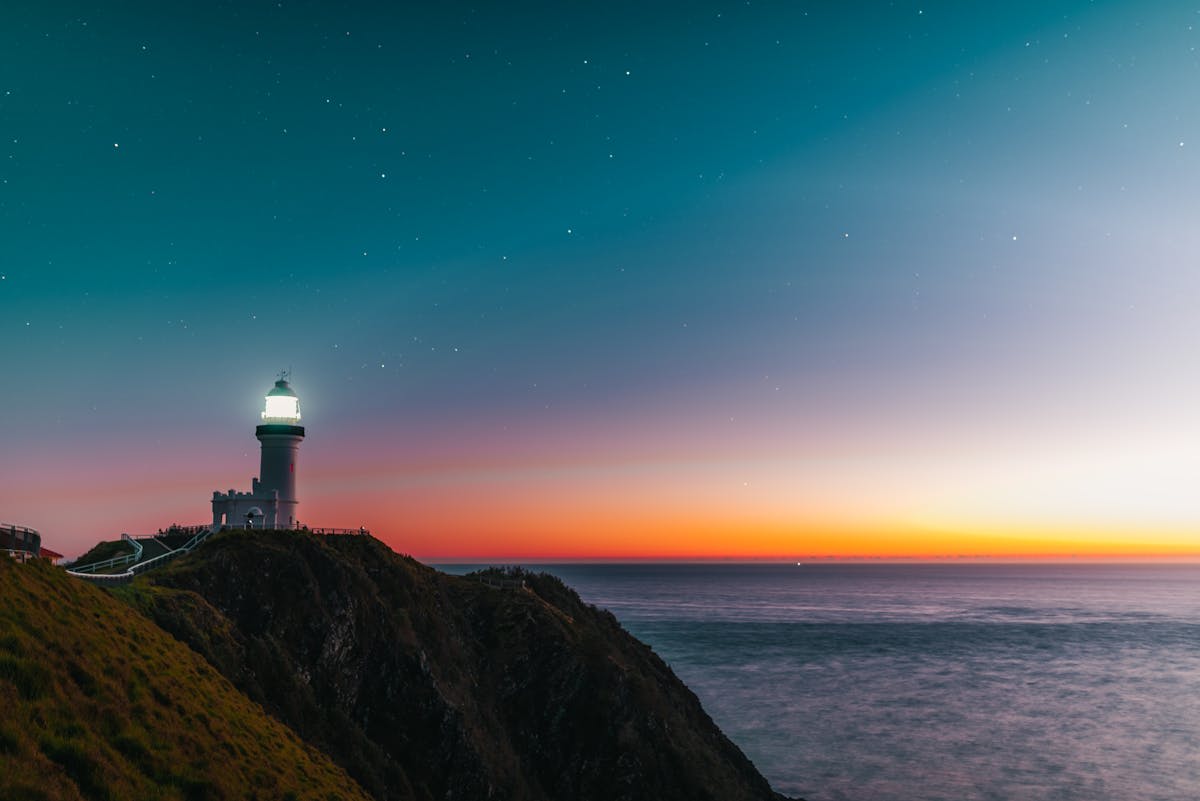
The lighthouse walk loops down past rock platforms where sea spray catches the early light and through rainforest pockets that feel entirely separate from the beaches below. During migration season, between June and November, humpback whales pass so close to the headland that binoculars become optional. Dolphins are near-permanent residents, surfing the breaks at The Pass and Wategos with the kind of ease that makes human surfers look like they are trying too hard.
Wategos Beach sits tucked into the northern side of the headland — a sheltered crescent of sand that draws a quieter crowd. The waves are gentler here, the water impossibly clear, and the surrounding Norfolk pines give the whole scene a slightly Mediterranean quality that Byron’s main beach, with its backpacker energy and consistent breaks, does not share. Surfers who know the area tend to gravitate toward The Pass, where long right-hand point breaks peel toward the rocks and the lineup carries a certain unspoken etiquette built over decades.
The town itself occupies an interesting tension. Byron Bay is simultaneously a surf town, a wellness destination, a food region, and a place where tie-dye and luxury coexist without apparent friction. Yoga studios and sound-healing centres line the same streets as surf shops and vintage clothing stores. The Thursday morning farmers market at the Butler Street Reserve is one of the best in the country — stalls selling sourdough, organic turmeric, local macadamias, and produce from the volcanic soil of the hinterland, all while buskers play and barefoot children weave between the legs of shoppers.
That hinterland deserves more than a passing mention. A twenty-minute drive from the coast delivers an entirely different world. Bangalow is a small town of heritage shopfronts, excellent cafes, and a Saturday market with the kind of handmade pottery and artisan cheese that Byron’s wellness set craves. Further west, Nimbin wears its counterculture history with cheerful defiance — murals on every wall, a hemp embassy on the main street, and a community that has been living alternatively since the 1973 Aquarius Festival put it on the map. Between these towns, the roads wind through rolling green hills dotted with Brahman cattle, past Minyon Falls plunging into subtropical rainforest, and through villages where the pace has nothing to do with the coast.
Back in Byron, the wellness industry is not merely a feature but a foundation. Retreats offering everything from Ayurvedic cleansing to silent meditation fill the properties around the town. Crystal shops are plentiful and unapologetic. The food scene reflects this sensibility — plant-based menus, cold-pressed everything, and restaurants like The Farm, a working agricultural property where the produce travels from paddock to plate within sight of your table. Yet Byron is not precious about it. The pubs are full on weekends, the live music is loud and good, and the main beach at sunset fills with people who are simply there to watch the sky change colour.
There is a quality to Byron Bay that resists easy description. It is a place where a retired surfer and a tech entrepreneur and a yoga teacher can share a table at a farmers market stall and none of them seem out of place. The dolphins keep surfing. The lighthouse keeps catching the first light. The town keeps walking its peculiar line between hedonism and healing, and somehow it holds.
When to go: September through November brings whale migration, spring wildflowers, warm days, and manageable crowds — the sweet spot. Summer (December through February) is hot, busy, and expensive; book months ahead for the Christmas period. March through May offers autumn warmth, smaller swells, and thinning crowds. Winter (June through August) is mild, uncrowded, and excellent for whale watching from the headland. Accommodation books out for any holiday period regardless of season.