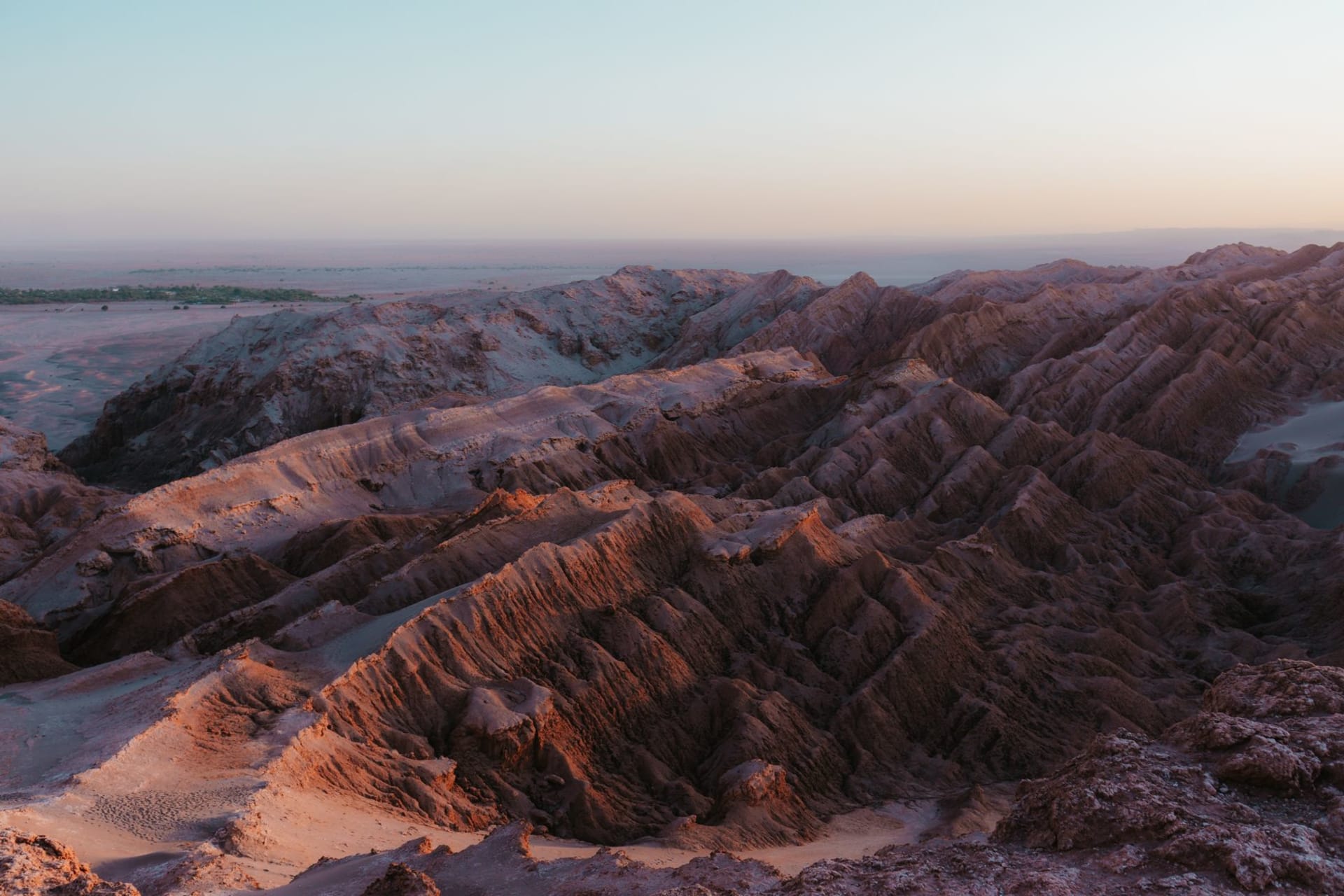
Valle de la Muerte
"The name is not hyperbole. At 2pm in January, I believed it completely."
Every guidebook pairs Valle de la Muerte with Valle de la Luna as though they are the same excursion. They are not. The Valle de la Luna is about light and silence and salt formations that make you feel philosophical. The Valle de la Muerte is about pure, confrontational geology — a valley of dark volcanic rock and ochre sand where the terrain is violent and the colors are not subtle. The name, mispronounced by many visitors who hear Moon Valley instead of Death Valley, fits. A miner named it. He was not wrong.
I went in the afternoon, when the sun was still high and the heat had accumulated in the rock walls. The temperature was well above 30 degrees — hot in a desert that averages dry air and glaring sun, hot in a way that compounds. My boots sank into sand that was fine and red-orange and hot through the soles. The rock formations around me were dark, almost black in places, contrasting with the sand in a way that felt theatrical, like someone had arranged the colors deliberately. Erosion has carved channels and fins and spires out of the volcanic material, and the terrain changes character every fifty meters.
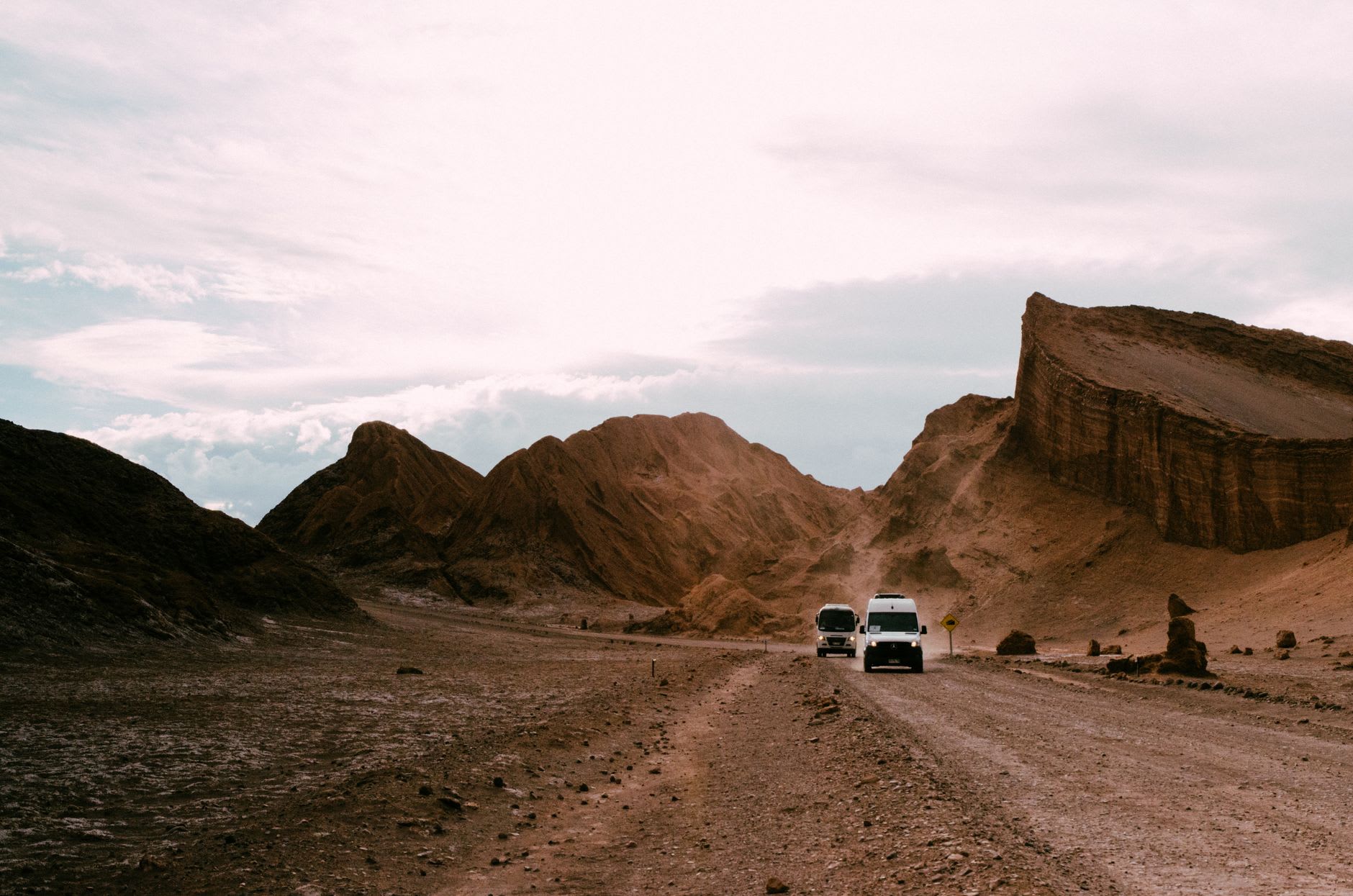
The main dune — a crescent of red sand maybe sixty meters high that rises above the valley floor — is where the sandboarding happens. I rented a board from a kid at the entrance for a few hundred pesos, received approximately thirty seconds of instruction, and spent the next hour going down the dune face at increasing speeds and walking back up in thickening heat. The sand is finer than most beach sand, with the specific quality that lets boards accelerate sharply, and the run from the top to the bottom takes about eight seconds of controlled falling. On the third descent I stopped steering and just went, and the speed was enough to make me yelp, which made a Chilean family watching from the side laugh with the specific delight of people who had already eaten it on the same slope.
Coming down from the dune, I sat in what shade I could find — the thin shadow of a rock fin — and ate the sandwich I had brought, which had the slightly stale, slightly compressed quality of food that has spent two hours in a backpack in the desert. It was one of those meals that exists outside normal quality assessment, because the circumstances made it necessary and therefore good. The wind picked up around four o’clock and the sand started moving, swirling across the valley floor in thin streams, getting into everything.
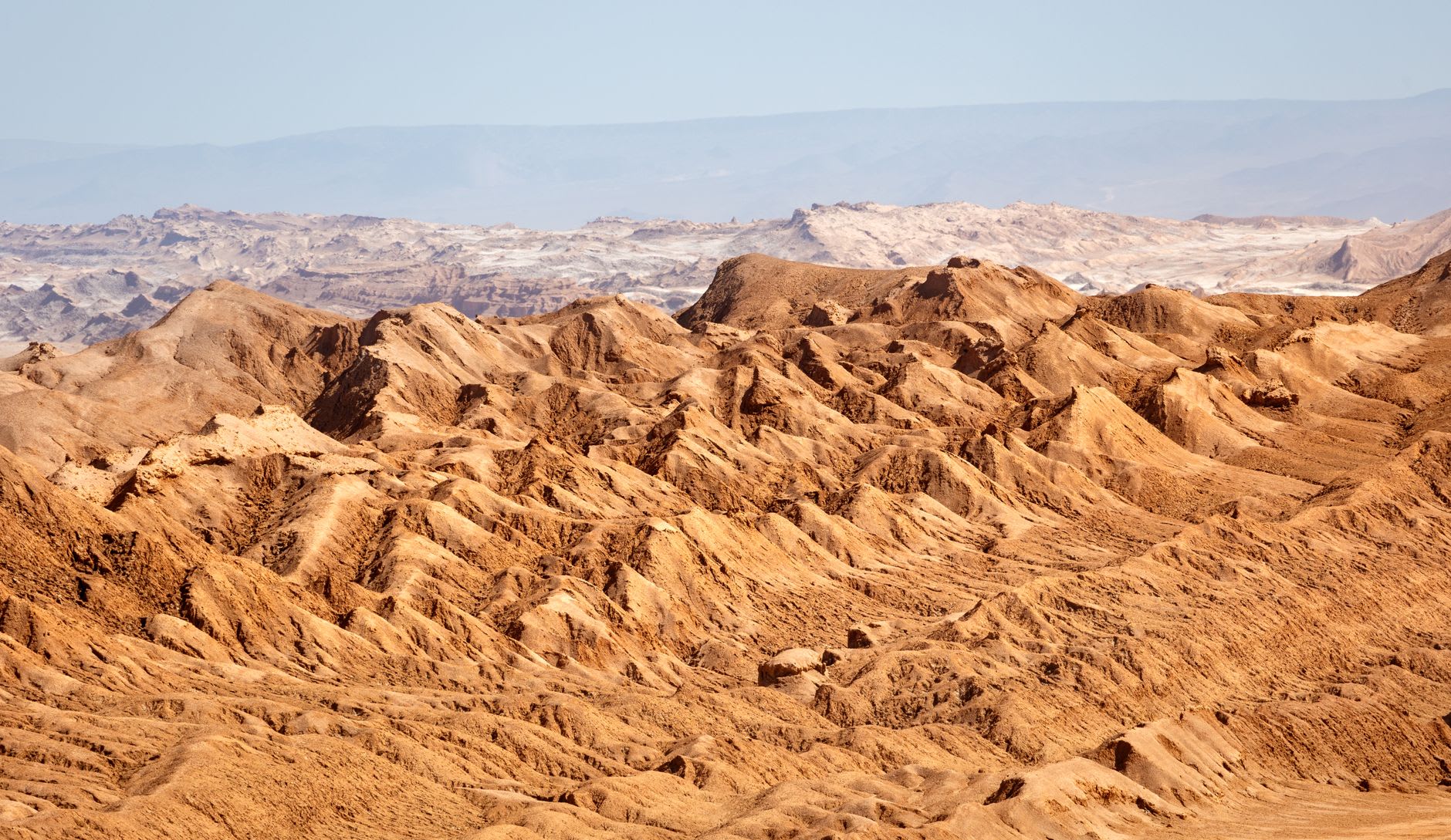
The valley connects with Valle de la Luna at its eastern end, and you can do a full circuit if you start early enough. But Valle de la Muerte deserves its own afternoon rather than being rushed through on the way somewhere more photogenic. Its intensity — the heat, the dark rock, the red sand, the physical demand of the dune — earns its own attention. You arrive hot and tired and slightly sand-coated, and that is exactly the right condition.
When to go: September through November and March through May. Midday in midsummer is genuinely punishing. A late afternoon visit — arriving around 3pm — lets you hit the dune in warmth and catch the colors shifting as the sun drops. Bring water, more than you think you need, and sunglasses with actual UV protection.