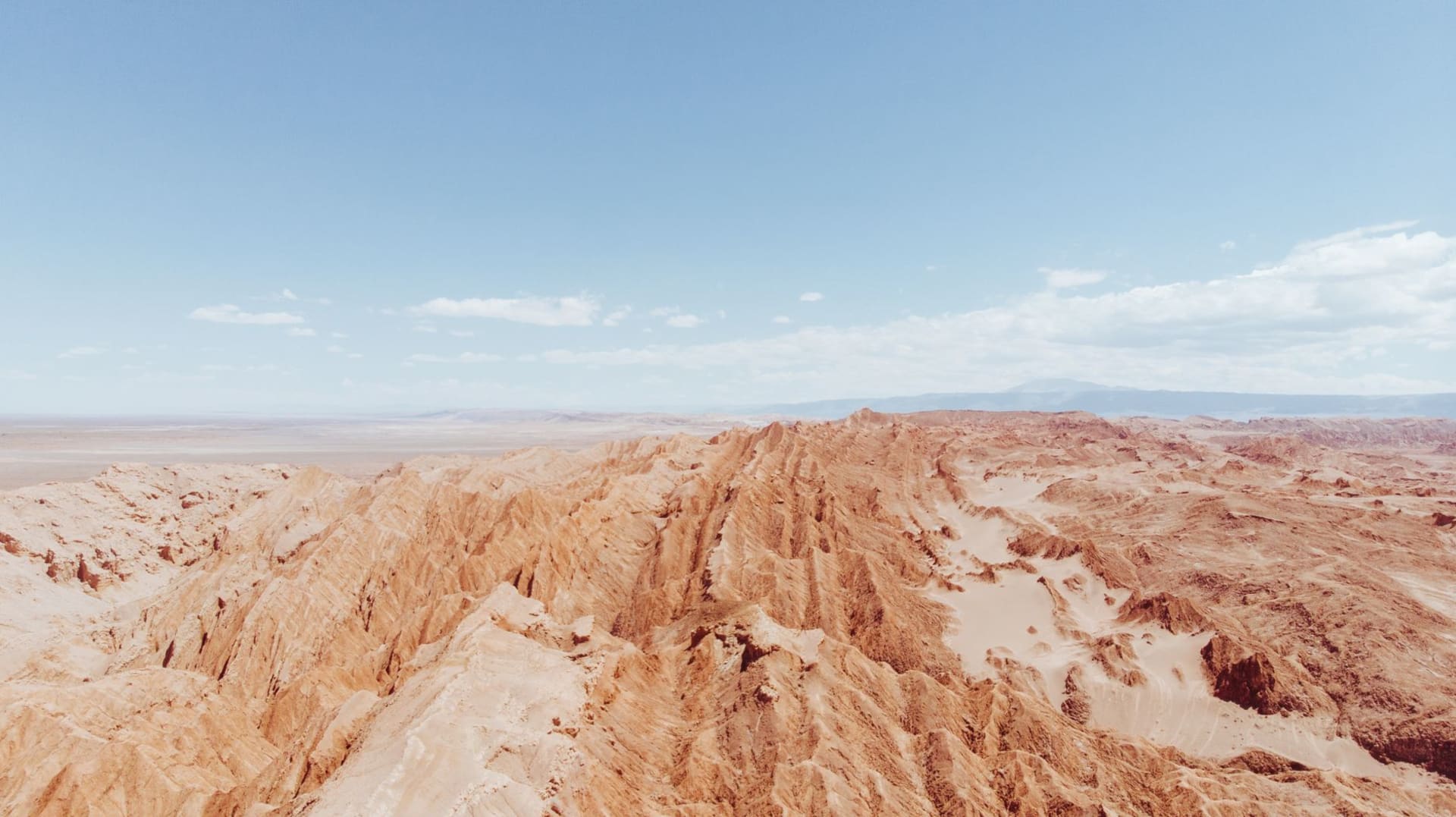
San Pedro de Atacama
"Every town looks better at 2,400 meters. San Pedro looks extraordinary."
The first thing I understood about San Pedro de Atacama is that you don’t arrive here — you surface. The overnight bus from Calama spits you out into air that feels thinner than what you left behind, into streets of compacted dust and walls the color of dried earth, into a light so flat and relentless it shows you everything at once. My eyes took a full minute to adjust. Not to darkness, but to that specific quality of Atacama sun, which makes no attempt at subtlety and illuminates every crack in every mud-brick wall with the same democratic intensity.
The town is smaller than its reputation suggests. The main drag, Caracoles, is a procession of tour agencies, gear shops, and restaurants where the menus run from simple Chilean to aspirational international. But the quality is higher than you’d expect at the edge of nowhere, and the local stews come to the table still steaming. I ate at a corner place with plastic chairs and a chalkboard menu — cazuela de vacuno, slow-cooked beef with potato and corn — and scraped the bowl clean, because at altitude, the body wants dense and warm.
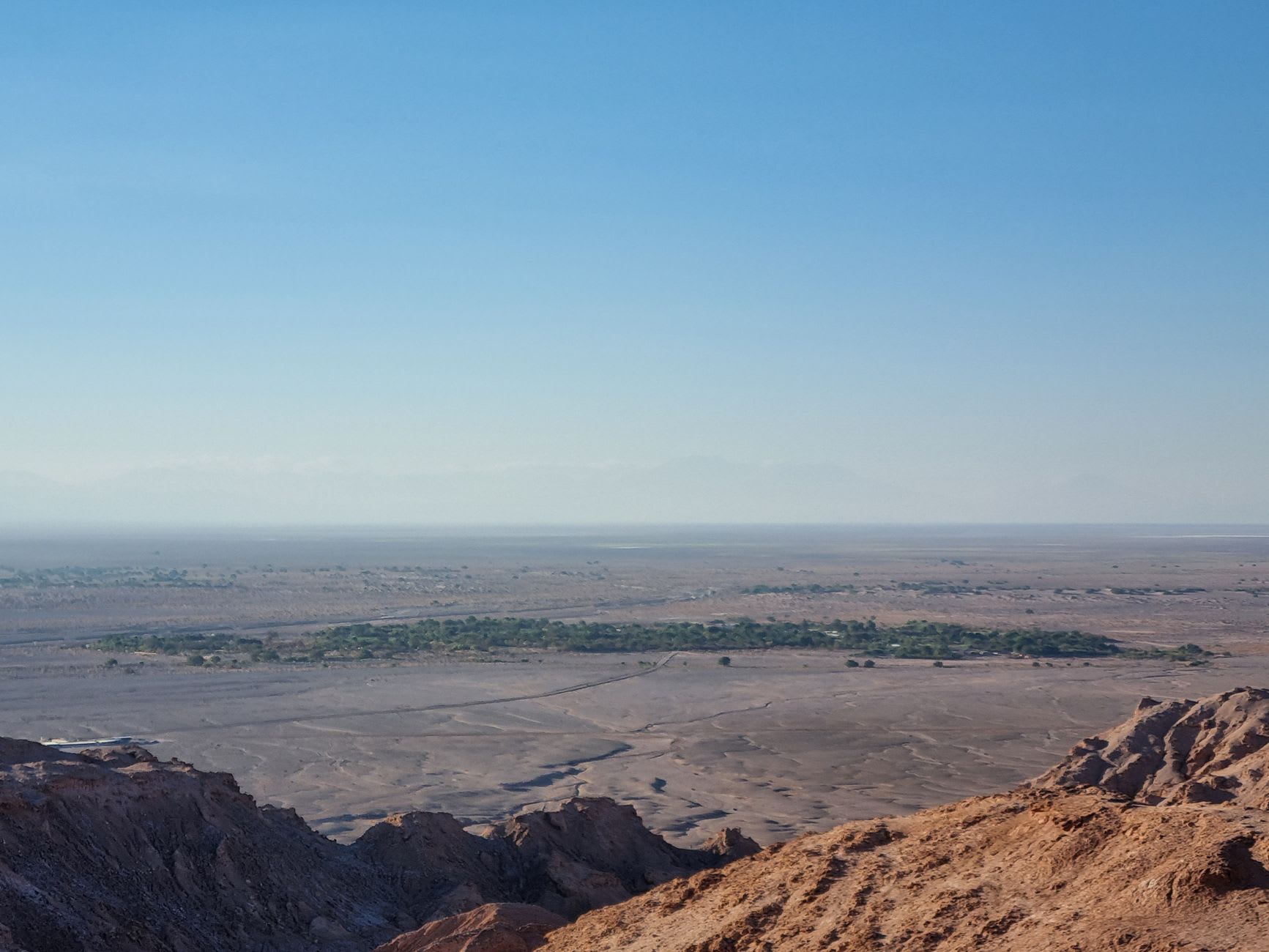
What San Pedro does better than any desert town I know is organize the chaos of departure. Every morning, white vans leave for geysers, salt flats, flamingo lagoons, lunar valleys. The logistics are seamless in a way that feels almost miraculous given the dusty context. But the town itself rewards the hours between excursions. The church on the plaza, built from adobe and cactus wood with walls half a meter thick, holds a specific kind of colonial stillness. The Museo Arqueológico Gustavo Le Paige, small and slightly old-fashioned, holds mummies and pre-Incan ceramics with the quiet authority of a place that takes its mission seriously.
The evenings are when San Pedro finds its best self. The tour buses are gone, the dust settles, and something loosens in the atmosphere. The restaurants fill with the cosmopolitan crowd of long-term travelers — Italians arguing over wine, Chileans on holiday from Santiago, lone hikers with sunburned forearms studying maps. I sat outside on a warm night in April with a pisco sour and watched the sky go from orange to deep indigo to full star-blazing black in about forty minutes. The Milky Way was visible before I finished my drink. That is the thing about San Pedro: the real spectacle is always just above.

The hotels range from basic backpacker casas to genuinely beautiful boutique properties with cactus gardens and outdoor tubs under the stars. If you can afford the latter, spend the money. Lying in warm water at 2,400 meters watching the cosmos turn overhead is not something you forget. The stargazing tour operators in town are also legitimately excellent — the telescopes they carry out to the desert on clear nights resolve the Andromeda galaxy and the rings of Saturn with the kind of clarity that makes urban astronomy feel like a different hobby entirely.
When to go: March through May and September through November are the sweet spots — warm days, cold nights, no crowds. January and February bring altiplano rains that can close roads to higher elevations. June through August are cold but offer uncrowded skies and off-season prices.