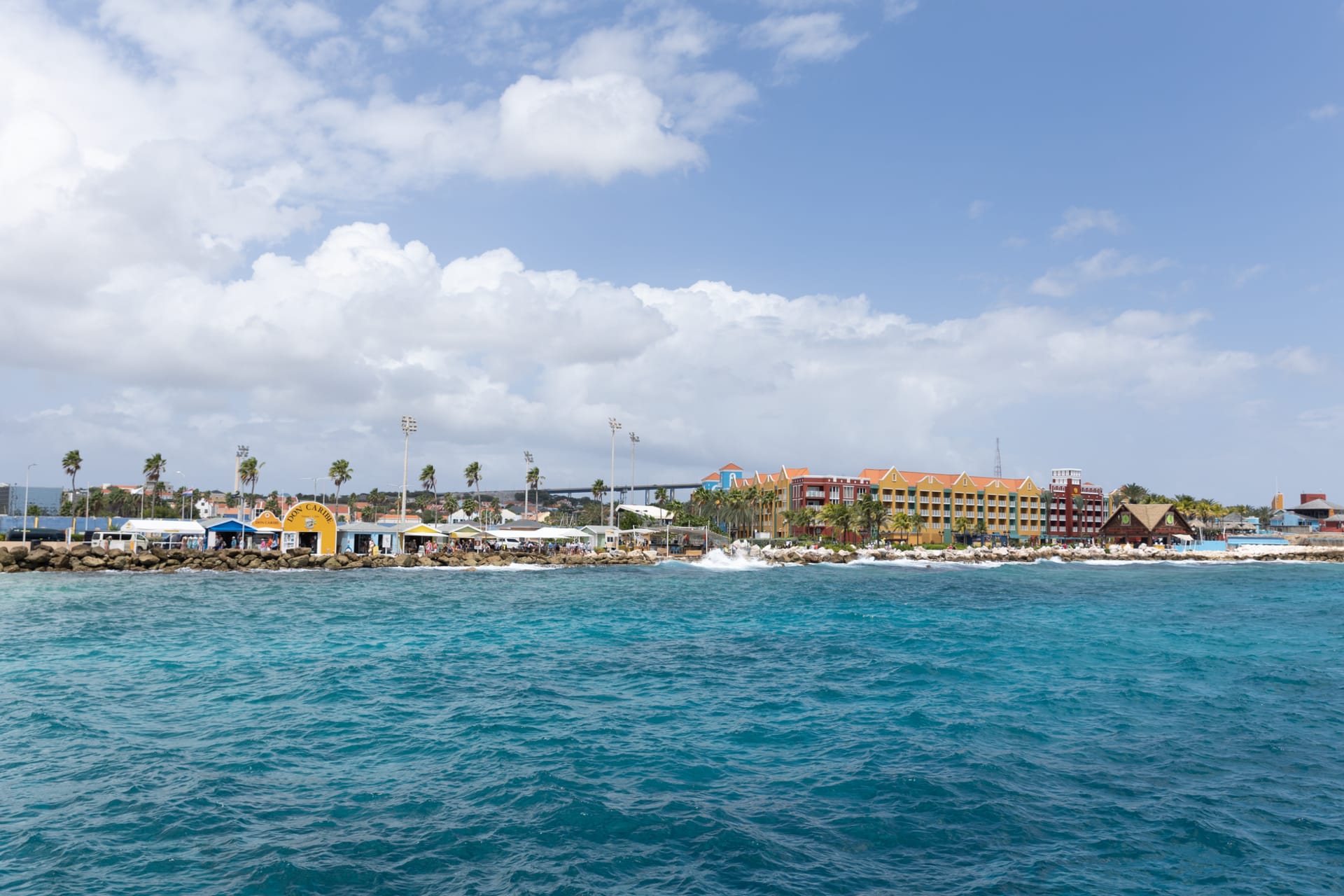
Oranjestad
"The cruise crowds flood in at nine and out by four, and for a few hours on either side, this city actually breathes."
I discovered Oranjestad’s rhythm accidentally. I’d arrived too early for anything to open and sat on a bench in the main square, drinking terrible coffee from a paper cup I’d bought at a gas station, watching the street fill up. The buildings are Dutch colonial — gabled facades in mango yellow and coral pink and washed-out ochre, the architecture you’d see in Curaçao or Bonaire, transported here and gently faded by a century of trade-wind salt. At seven in the morning, the city belongs to the people who live in it: women in scrubs heading to the hospital, a man hosing down the tiles outside his hardware store, schoolchildren in ironed uniforms moving in pairs.
The cruise ships change everything. By nine, sometimes eight-thirty, they’ve docked and the main streets transform. Caya G.F. Betico Croes — the main shopping drag — becomes a current of people in matching group T-shirts looking for jewelry, liquor, and souvenir flamingos. I don’t blame them. The shopping infrastructure exists to serve them and does so efficiently. But the Oranjestad I came for is a side street away: the fruit and vegetable market near the harbor, the narrow lanes behind the main street where the architecture hasn’t been renovated for retail yet.
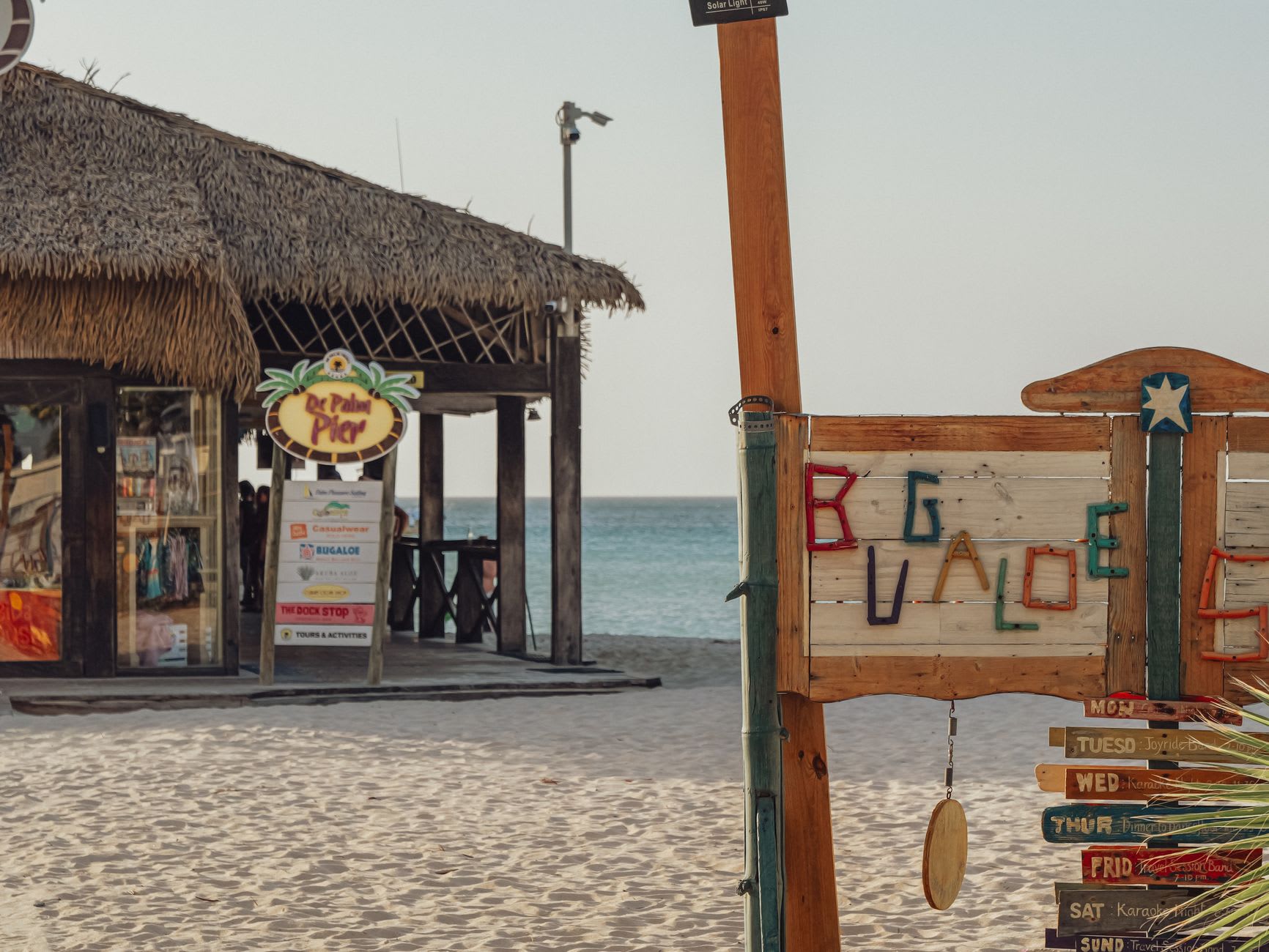
The Wilhelmina Park sits along the waterfront, named after the Dutch queen who visited in the 1940s, and it’s where I found the city’s most honest food. Not inside a restaurant — at the small roadside stands that operate on the edges of the park, where pastechi come fresh from the fryer at temperatures that should carry a warning label. I burned the roof of my mouth on my first one and bought a second immediately. The filling was chicken and raisins and something faintly sweet, wrapped in a pastry shell that shattered. I ate standing up, watching the harbor. A food vendor nearby was selling keshi yena — the Aruban dish that should be on every menu but isn’t, a whole Gouda rind filled with spiced meat, baked until the cheese becomes almost architectural. I ate it with a plastic fork on a styrofoam plate and it was one of the better meals of my Caribbean experience.
The Aruba Historical Museum, in the old Fort Zoutman — the oldest building on the island, dating to 1796 — is small but earnest, with displays on Arawak prehistory, the colonial period, and the twentieth-century oil economy that reshaped the island’s identity. I spent an hour there on a Thursday afternoon when I had it almost to myself. The building itself matters — four thick walls of coral stone, improbably cool inside against the midday heat.
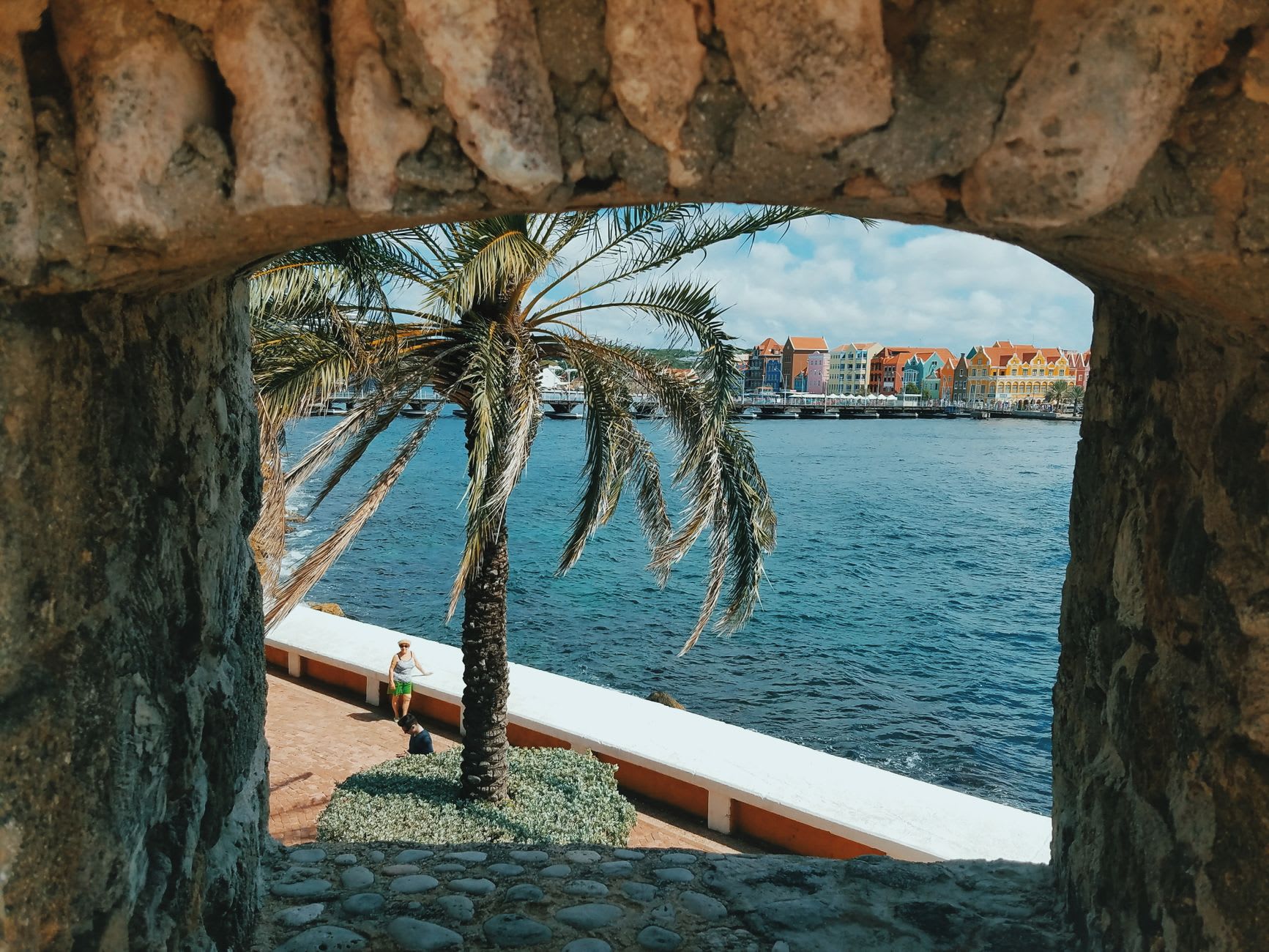
After four o’clock, when the last tender boats carry the cruise passengers back to their ships, the city changes register again. The restaurants that actually feed local people — the ones without laminated photo menus posted outside — begin to fill. I ate dinner twice at a place on a back street whose name I never caught, ordering by pointing at what arrived at neighboring tables. Fish with funchi — a cornmeal porridge with an almost creamy texture when done right — and something called stoba that turned out to be a goat stew of notable depth.
When to go: Oranjestad rewards early mornings and late afternoons on any day of the week, but especially on days when multiple cruise ships dock simultaneously — those are the days the side streets are clearest and the local life most visible. The Wednesday night market runs year-round and draws more islanders than tourists.