A vast white salt flat straddling the Jujuy-Salta border at 3,450 meters, where the sky doubles itself on a mirror of crystallized salt.
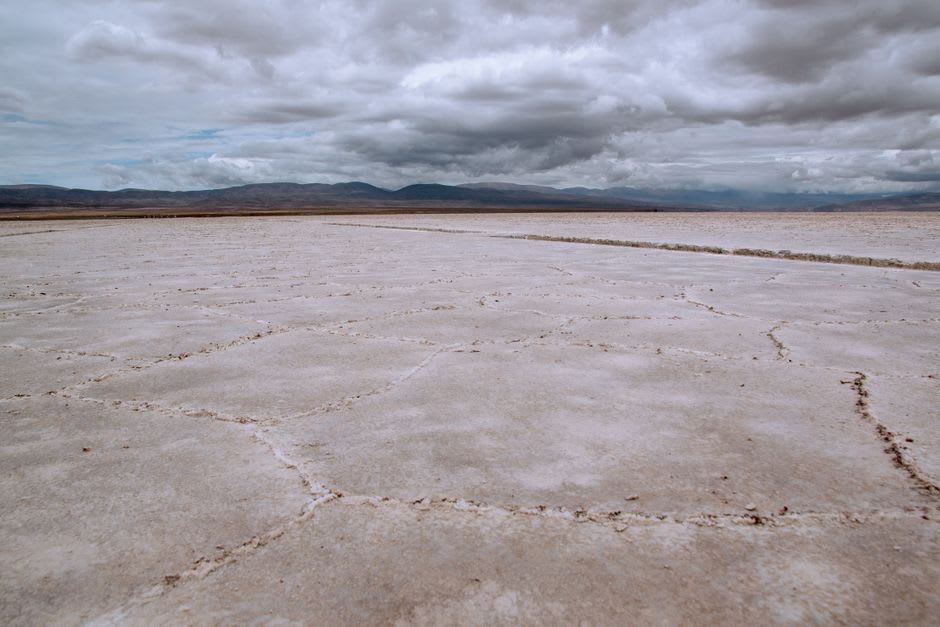
Salinas Grandes announces itself before you even see it — a whiteness on the horizon that doesn’t look like snow and doesn’t look like anything else you’ve catalogued before. We drove up from Purmamarca over the Abra de Potrerillos pass, and at 3,450 meters the road simply stops climbing and the world turns flat and blinding: 212 square kilometers of crystallized salt crust, laid down by an ancient lake that evaporated millennia ago and left behind a surface that cracks into near-perfect hexagons if you look down at your feet.
Standing on the Mirror
The light here does something to your depth perception that I wasn’t prepared for. With no reference points — no trees, no buildings, nothing but white extending to a ring of distant Andean peaks — distances collapse and expand unpredictably. Lia set a water bottle down about ten meters away to test it, and by eye it looked either two meters off or fifty. Tour groups and photographers exploit this constantly, taking the classic forced-perspective shots where someone appears to stand in a tiny toy dinosaur’s palm. We tried it. It’s a cliché precisely because it’s irresistible.
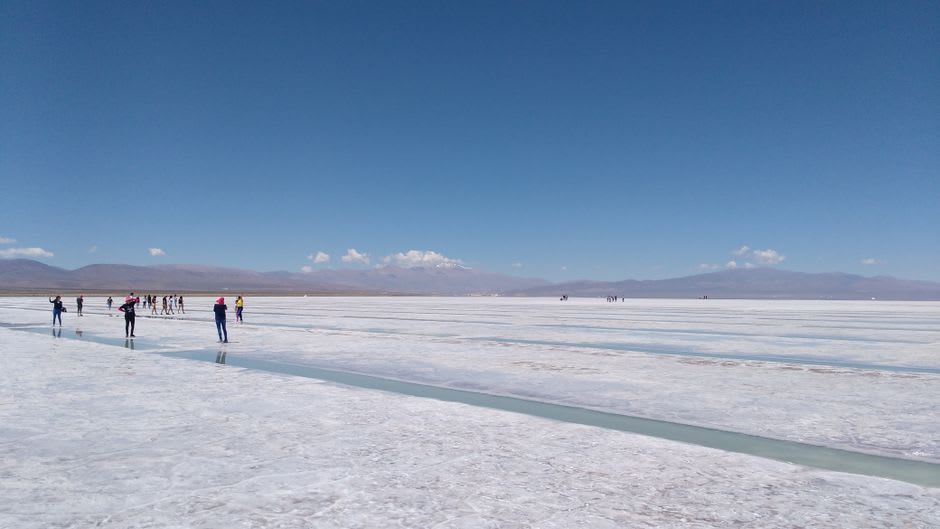
The Working Salt Flat
What surprised me is that Salinas Grandes isn’t purely a photo backdrop — it’s an active salt operation, and cooperatives of local families still cut blocks of salt by hand from shallow pools they maintain across the flat. We stopped at one of the small stalls run by these cooperatives, where an artisan carved little salt figurines and llamas while we waited, the whole scene lit with that impossibly sharp high-altitude light that makes even a roadside stall look cinematic.
The altitude makes itself known quickly if you’re not acclimatized — we’d already spent a few days around Purmamarca and Tilcara before coming up, and I’d still recommend that sequencing to anyone. Arriving here directly from sea level is asking for a headache to go with your photographs.
When to go: Year-round, though the dry season (April to November) keeps the surface hard and walkable. Aim for late morning to early afternoon, when the sun is high enough to eliminate shadows and the white intensifies to something close to blinding.
Keep exploring
More from Argentina
 argentina
 Salta
Colonial elegance in Argentina's northwest — red-rock canyons, empanadas, and Andean folk traditions.
Explore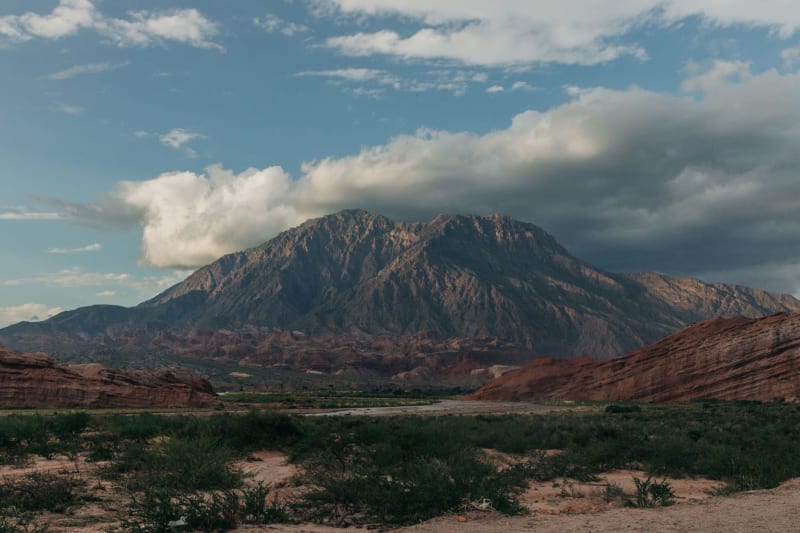 argentina
 Salta City
La Linda, they call it — this northwestern city of colonial churches and empanadas framed by Andean hills.
Explore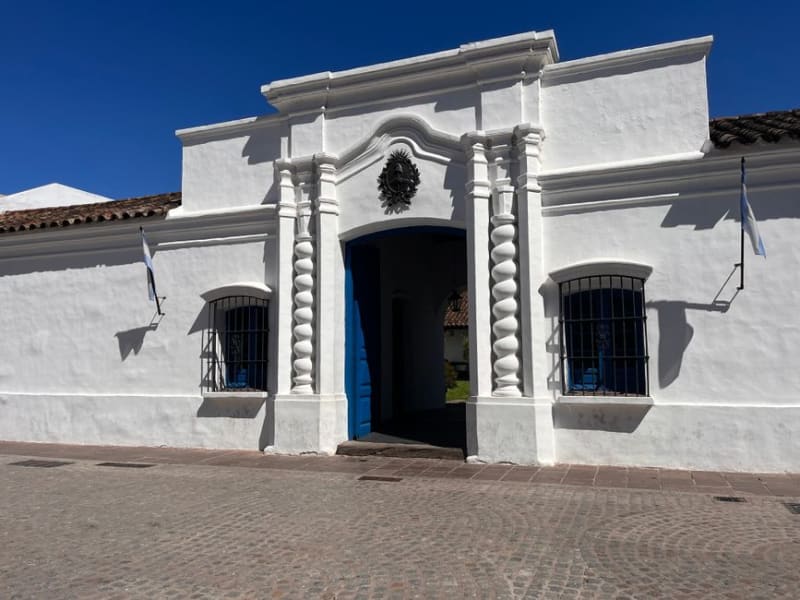 argentina
 San Antonio de Areco
A pampas town frozen somewhere in the nineteenth century, home to Argentina's finest silversmiths and its most authentic gaucho culture.
Explore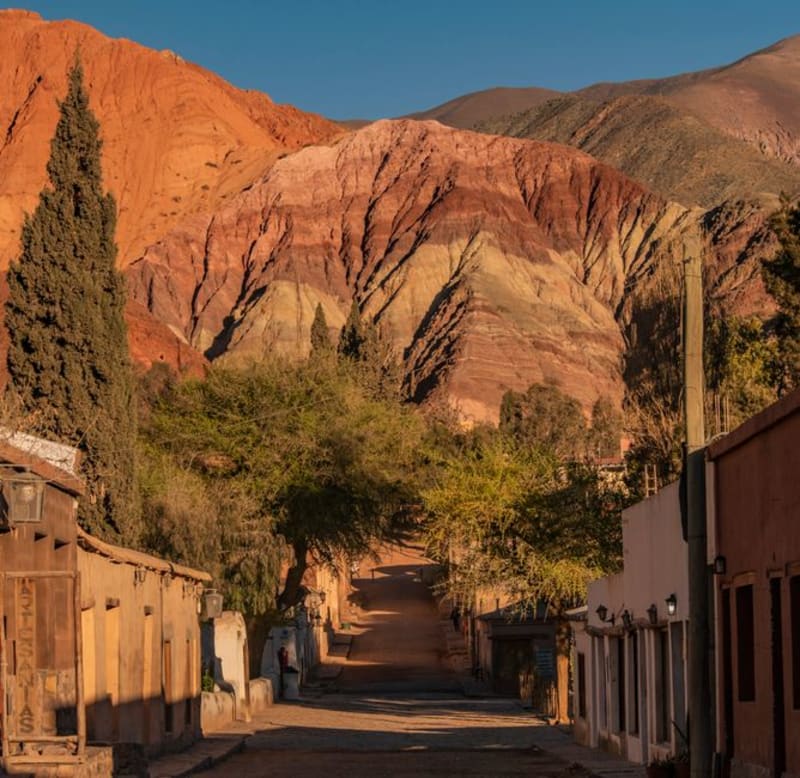 argentina
 San Antonio de los Cobres
A high-altitude Puna railway town at 3,775 meters, where copper mining history meets one of the loneliest, most beautiful plateaus in Argentina.
Explore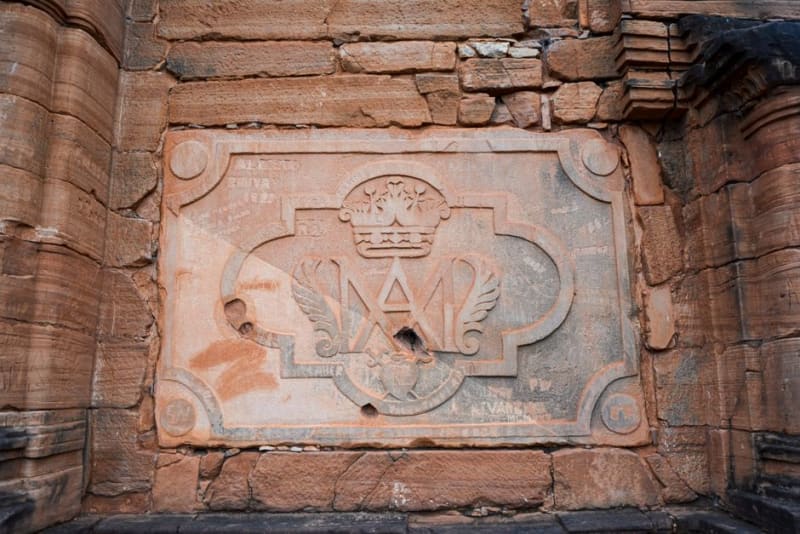 argentina
 San Ignacio Miní
The best-preserved Jesuit-Guaraní mission ruins in Argentina, a UNESCO site swallowed by red earth and jungle in Misiones.
Explore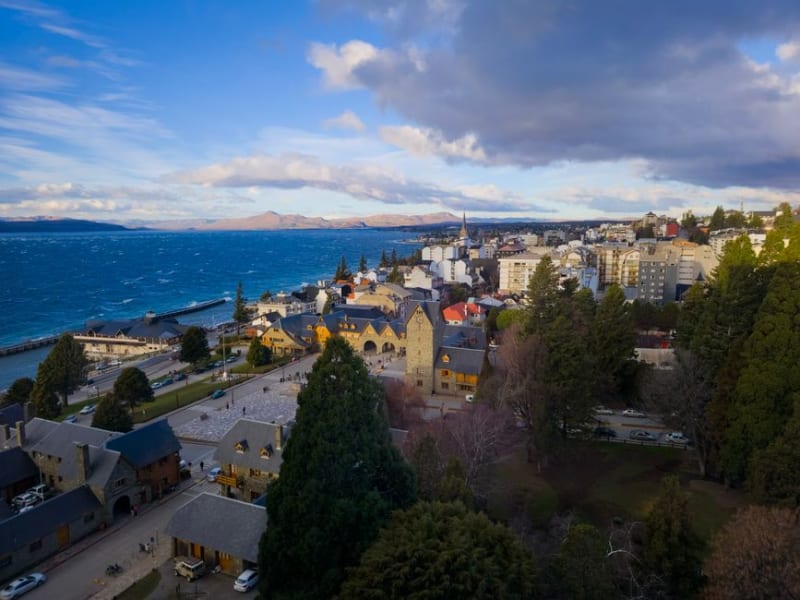 argentina
 San Juan City
A wine city rebuilt from rubble at the foot of the Andes, quieter and more sincere than its famous neighbor Mendoza.
Explore