
Luján
"Luján is a town built to hold three million pilgrims twice a year, and eighty thousand every other day."
A pilgrimage town on the pampas built entirely around a neo-Gothic basilica and Argentina's patron saint.
We drove out to Luján on a weekday, deliberately avoiding the two big pilgrimage dates that draw millions of people on foot from Buenos Aires, and even on an ordinary Wednesday the basilica dominates the town in a way I wasn’t prepared for. Everything in Luján — the streets, the souvenir stalls, the hotels, the rhythm of the day — organizes itself around one building.
The Basílica
The Basílica de Nuestra Señora de Luján is a genuinely enormous neo-Gothic structure, its twin spires visible from well outside town, built over more than three decades starting in 1890 to house a small terracotta statue of the Virgin that, according to the story every local told us slightly differently, refused to be moved from this spot by a stalled ox cart in the 1600s. Whatever you make of the legend, the devotion it generates now is not in question — the basilica holds the largest annual pilgrimage in Latin America, when over a million people walk here overnight from the capital every October.

Inside, the scale keeps surprising you — vaulted ceilings, stained glass that floods the nave with color by mid-morning, and a steady, quiet stream of people at the small statue itself, some of them clearly having walked a very long way to get there.
The Gaucho Museum and the Town
A short walk from the plaza, the Complejo Museográfico Enrique Udaondo houses a serious gaucho and colonial history collection inside a former Jesuit residence and cabildo — old carriages, silver mate sets, and a room dedicated to the Malvinas that put a somber weight on the visit. Lia lingered over a display of nineteenth-century recado saddles longer than I expected her to.
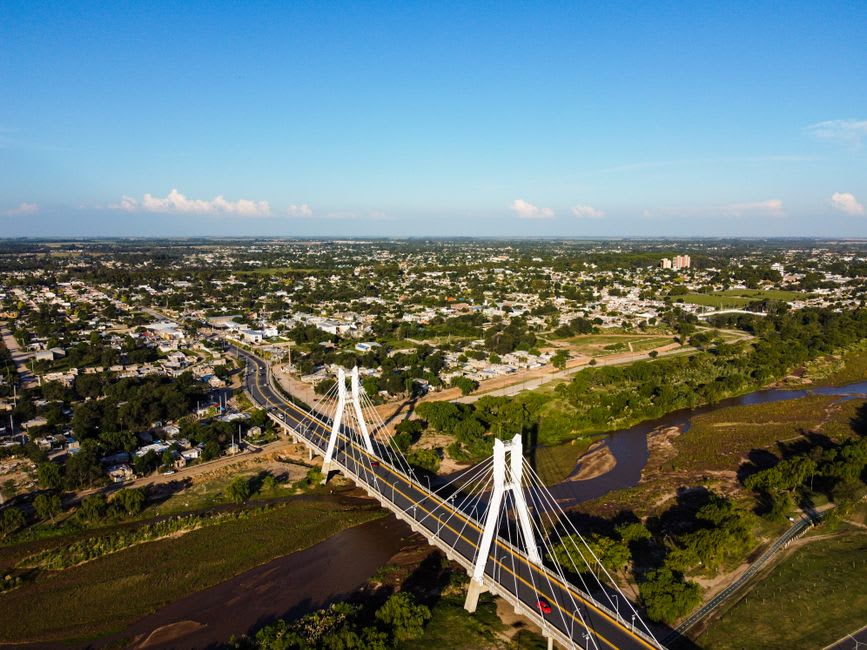
Outside the basilica’s shadow, Luján is a modest, unpretentious river town, and the zoo and amusement park on its outskirts felt like a strange but very Argentine footnote to a place otherwise defined by faith.
When to go: Any weekday morning for a quiet visit to the basilica and museum. Avoid the first Saturday of October and the pilgrimage to the Virgen de Luján in early May unless you specifically want to witness the crowds — they’re extraordinary, but not the town’s typical rhythm.