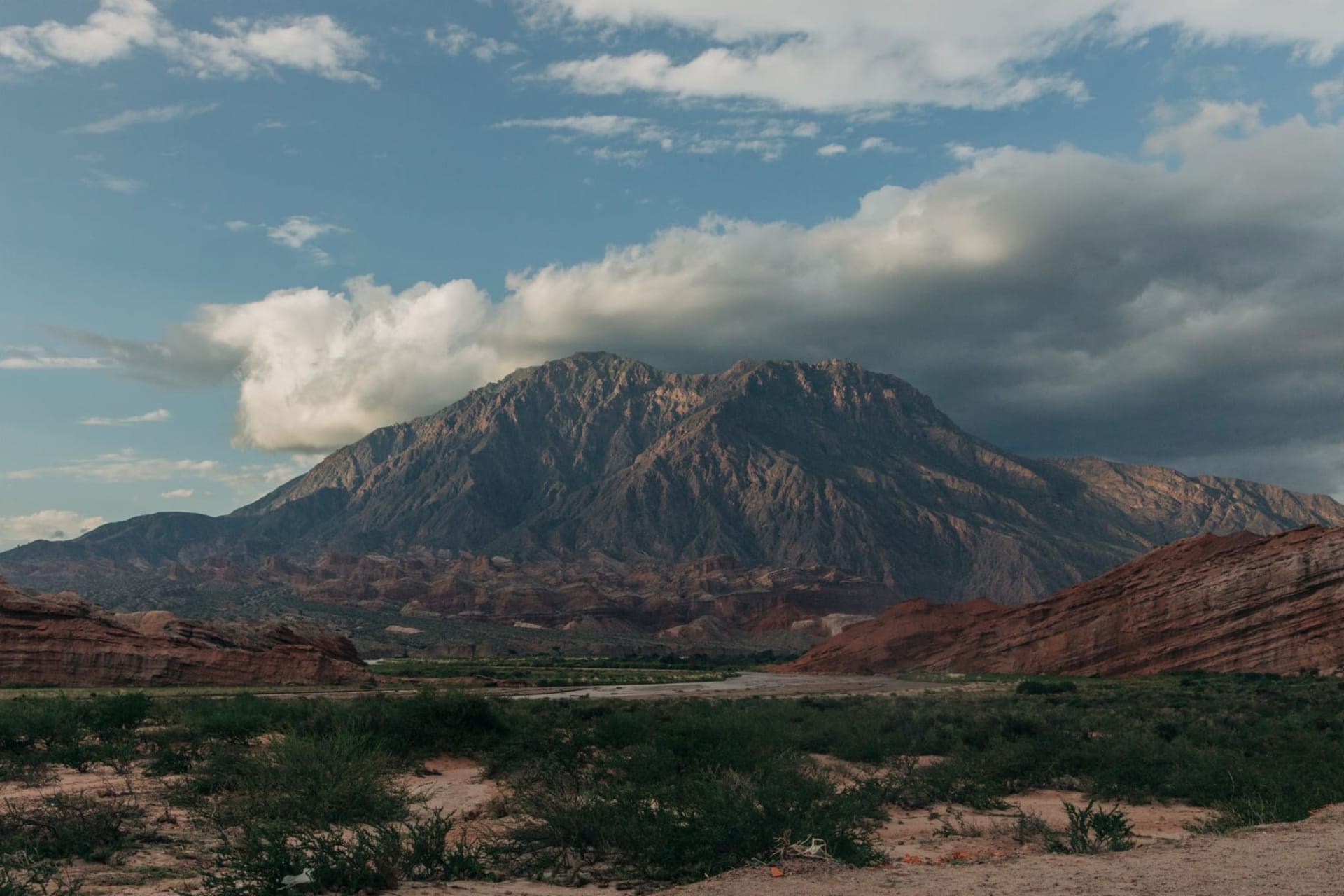
A high-altitude wine town in the Calchaquí Valleys ringed by rust-red rock formations and torrontés vineyards.
There is a particular quality to the light in Cafayate that I have not encountered anywhere else in Argentina. It arrives sharp and almost violet at 1,683 meters, bouncing off the ochre canyon walls until everything — the white church on Plaza 20 de Febrero, the dust on the road out toward Quebrada de las Conchas, the skin of a freshly poured torrontés — seems lit from within. Mendoza makes wine the world writes about. Cafayate makes wine you drink standing in a vineyard at noon, slightly stunned by the altitude and the silence.
The Plaza and What Happens Around It
The town organizes itself modestly around its central square. On the plaza’s south side, the Museo de la Vid y el Vino occupies a colonial building that smells of old wood and fermentation, and the exhibits are better than they have any right to be — hand-drawn maps of the valley’s irrigation channels, antique presses, glass cases full of the particular vocabulary of a wine culture that predates the bodegas by centuries. I spent an hour there when I expected to spend twenty minutes.
Two blocks north, on Calle Rivadavia, the peñas start filling up around ten in the evening. A woman played chacarera on a bombo drum the night Lia and I wandered in, and the beat was so insistent, so grounded in the earth of the place, that it felt less like music and more like the valley itself making noise.
Into the Quebrada
The road north toward Salta cuts through the Quebrada de las Conchas, fifty kilometers of geological theater — the Anfiteatro, the Tres Cruces, El Sapo — formations the color of dried blood and burnt clay. We drove it in a rented Fiat at sunrise, which is the only sensible time, when the shadows are long and every rock face catches the light at a different angle. I had seen photographs. The photographs are insufficient.
What surprised me was the smell: dry dust and wild herbs, something like rosemary but sharper, rising from the scrub as the temperature climbed. No one had mentioned the smell.
The Wine Itself
Torrontés is the grape that belongs here the way no other grape belongs anywhere — floral and dry, with a finish that the altitude seems to stretch out. At Bodega Nanni, a small family operation on Silverio Chavarría, they let me taste directly from the tank. It tasted like the valley looked: pale gold, a little wild, hard to describe without sounding exaggerated.
When to go: April through June offers the harvest atmosphere and cooling temperatures without the summer rains; September and October bring the vines back to life and the canyon light turns extraordinary in the long late-afternoon hours.