A whitewashed colonial adobe town in the Calchaquí Valley, reached by one of the most scenic mountain roads in Salta.
Getting to Cachi is half the reason to go. We drove the Cuesta del Obispo out from Salta, a mountain road that climbs through cloud forest, over a high pass at nearly 3,400 meters, and down into the Parque Nacional Los Cardones — a valley studded with cardón cacti, some four centuries old, standing like sentries against a backdrop of bare red peaks. Lia counted cactus shapes out loud for a solid twenty minutes, the way you do on a long drive when the scenery refuses to get boring.
A Town That Time Genuinely Left Alone
Cachi itself, once you arrive, is a small colonial town of whitewashed adobe buildings at 2,280 meters, built around a plaza shaded by centuries-old pisonay trees. The Iglesia San José, with its thick adobe walls and cactus-wood roof beams, anchors one side of the square, and inside, the simplicity of the whitewashed nave felt more honest to me than some of the gilded churches further south. Next door, the small archaeology museum houses pre-Columbian pottery from the Calchaquí culture that once controlled this valley, displayed with a kind of modesty that matched the town around it.
The Valley Beyond
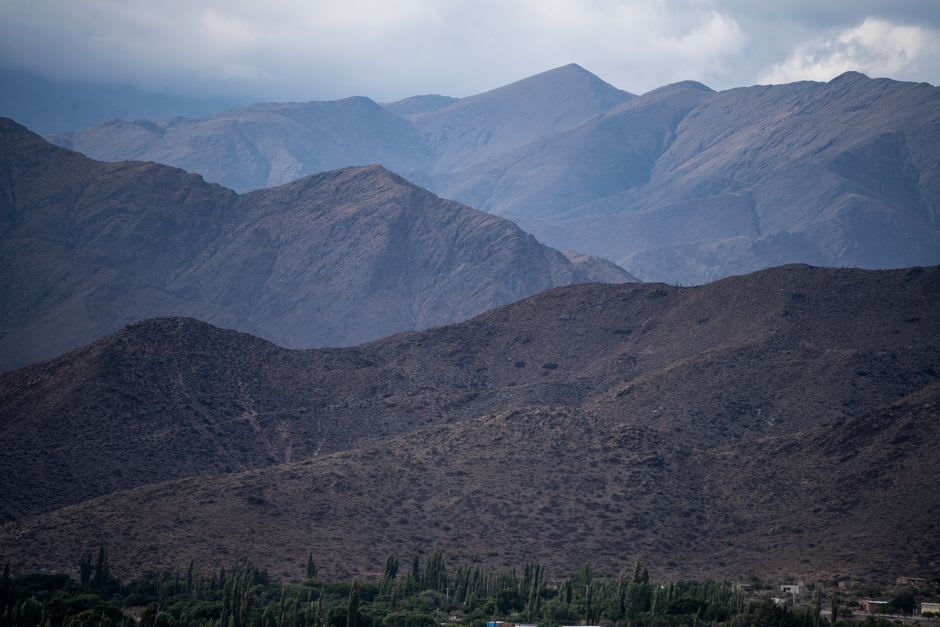
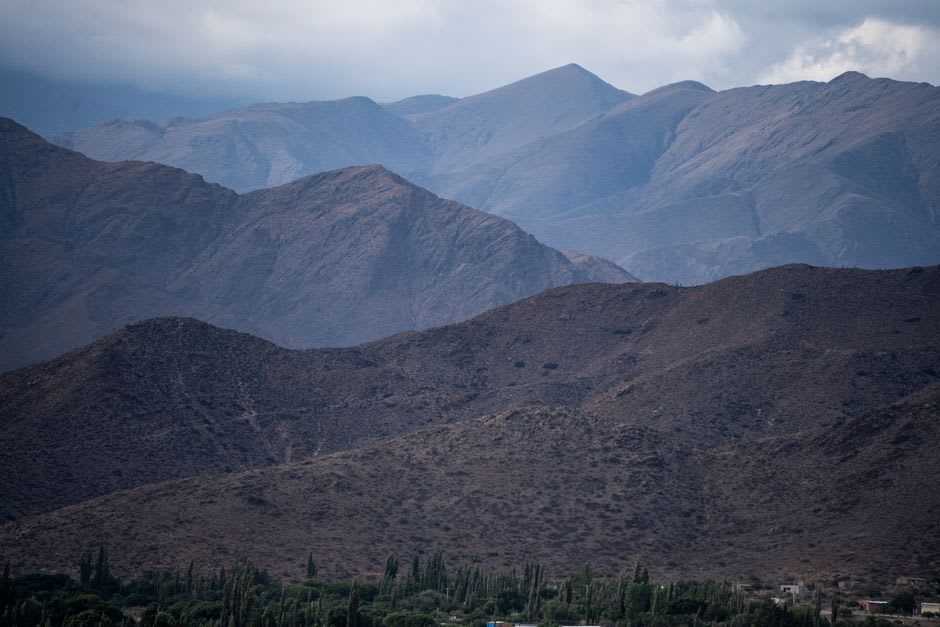
Late afternoon, we walked out past the edge of town toward the cemetery, which sits on a low rise with a clean view back over the rooftops toward the Nevado de Cachi, a snow-capped peak over 6,000 meters that dominates the valley on clear days. The light at that hour turned the adobe walls a deep gold, and a few local kids were flying a kite from the same rise, entirely unconcerned with the view the rest of us had traveled hours to see.
The pace of the place is deliberate almost to the point of stillness — restaurants operate on their own schedule regardless of posted hours, and everyone seems fine with that. After the intensity of Salta city, it was exactly the register I needed.
When to go: April through November, avoiding the summer rains that can complicate the Cuesta del Obispo road. Winter (June to August) brings cold nights but the clearest views of the Nevado de Cachi.
Keep exploring
More from Argentina
 argentina
 Cafayate
A high-altitude wine town in the Calchaquí Valleys ringed by rust-red rock formations and torrontés vineyards.
Explore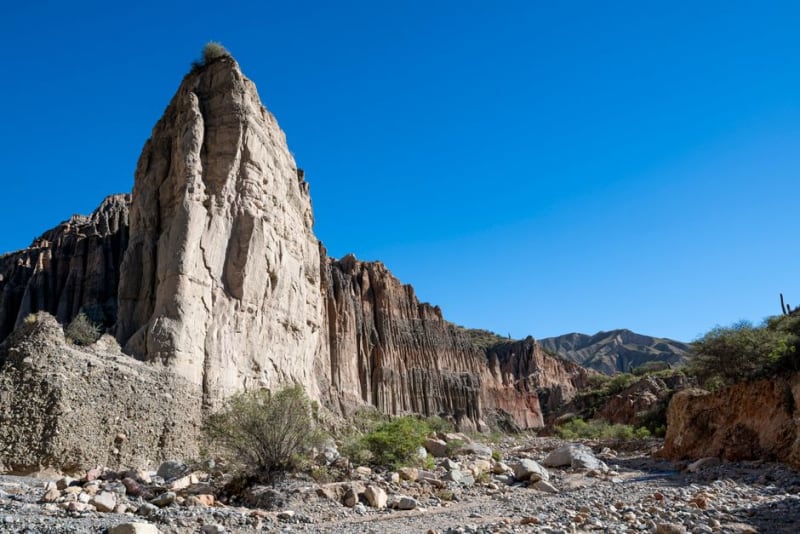 argentina
 Calingasta
A remote Andean valley in San Juan province strung with adobe villages, colonial ruins, and irrigation canals older than the republic.
Explore argentina
 Capilla del Monte
A Cordoba sierra town famous for UFO sightings and mystic tourism, sitting at the base of Cerro Uritorco.
Explore argentina
 Catamarca City
An Andean valley capital where centuries-old weaving traditions are still practiced in workshops a short walk from the cathedral.
Explore argentina
 Cerro Catedral
South America's largest ski resort, rising above Bariloche with jagged cathedral-spire peaks and lake views.
Explore argentina
 Cerro Uritorco
The tallest peak in Cordoba's sierras, a popular hike above Capilla del Monte wrapped in decades of mystic lore.
Explore