Lubango
"I put on a sweater in Angola, and somehow that changed everything I thought I knew about the country."
I arrived in Lubango at dusk and the first thing I noticed was that I was cold. Not uncomfortable — just genuinely, unexpectedly cool, the kind of cool that makes you reach for a layer you weren’t sure you’d packed. At 1,700 metres above sea level, Lubango sits on the Huíla Plateau in the south of the country, and the altitude does to the temperature what it does everywhere: it makes it behave like a different latitude entirely. After weeks on Angola’s coast, where the heat is a constant negotiating partner, the coolness here felt like a small revelation.
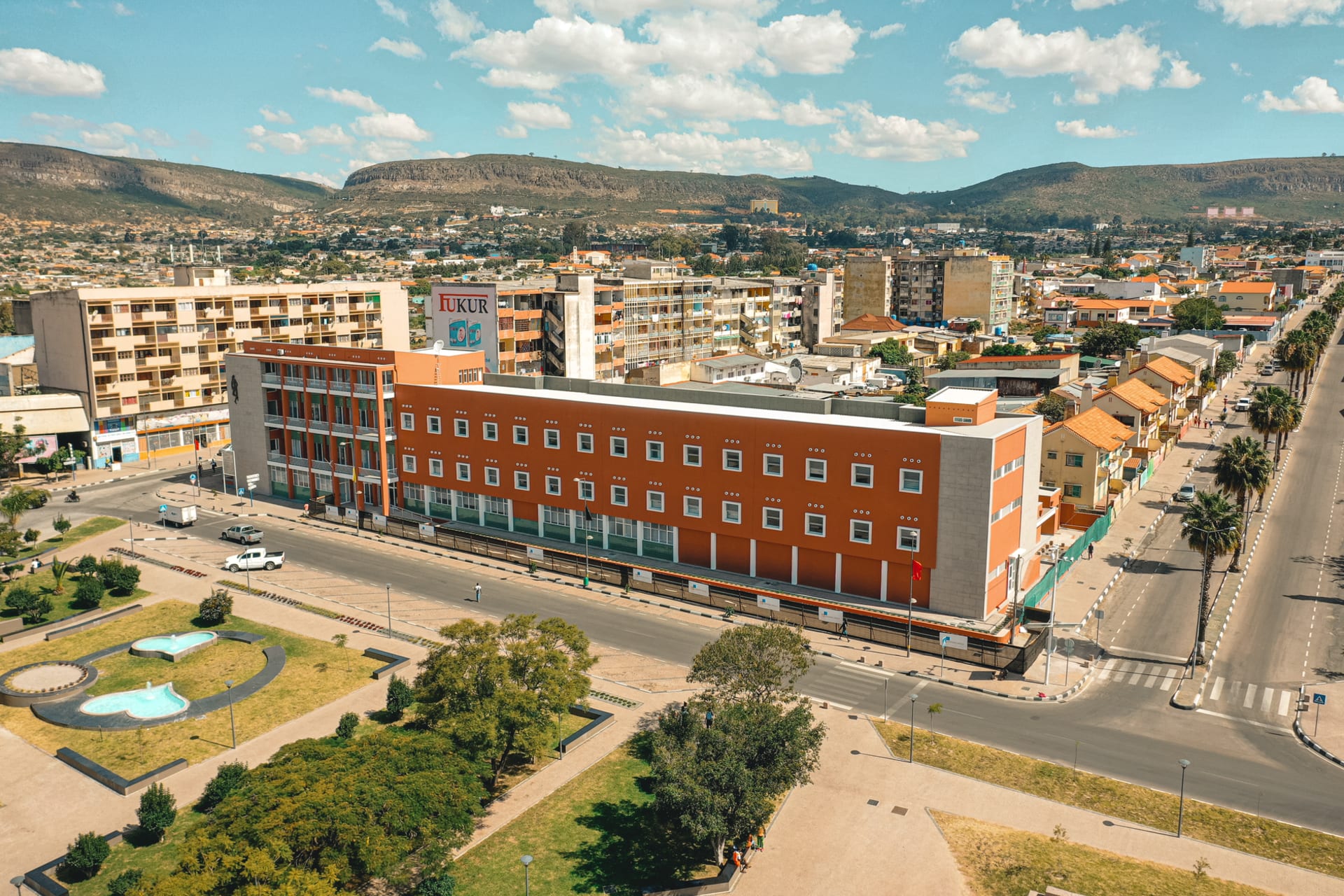
The city itself is angola’s fourth-largest and carries the particular mood of highland towns everywhere — slightly more measured than coastal cities, cleaner in its light, with eucalyptus trees that smell of cold mountain mornings lining the roads out of the centre. The Portuguese built a substantial colonial infrastructure here, and the old neighbourhoods near the city centre have streets lined with low buildings painted in faded ochres and greens, bougainvillea running over walls with the enthusiasm that bougainvillea always brings to anything it’s allowed to climb.

The Cristo Rei statue stands on the rim of the escarpment a few kilometres from the city centre, and I will be honest with you: I was initially resistant to it. Religious monuments on dramatic cliffs, replicated from Rio de Janeiro’s template, are not my usual destination. But the location defeats the scepticism. The statue stands at the point where the highland plateau simply stops — where the rock drops a thousand metres to the coastal lowlands below in a cliff so dramatic it seems improbable. Standing next to the statue, looking down at the coastal plain which is so far below it reads as a different country, a different climate zone, a different world, I found myself very still for a long time. The scale here is geological. The statue matters less than the edge it stands on.
Lubango has a food culture that surprised me. In the restaurants near the market, you can eat in ways that reflect the Huíla Province’s agricultural richness — pork dishes, fresh vegetables, dairy from the highland farms that the lowland coast can’t support. I ate a meal of grilled pork with sweet potato and a local bean stew in a family restaurant where the table had a plastic tablecloth and a single candle in a Cuca bottle, and the woman who served me watched with such undisguised curiosity about whether I was going to find it good that I eventually asked her what she thought the best dish on the menu was. She pointed immediately at the pork and said “é claro” — obviously — and went back to the kitchen.

The city is also the natural base for two of the most dramatic landscapes in Angola: the Serra da Leba pass and the Tundavala Fissure, both within an hour’s drive. I used Lubango as a camp in the full sense — returning each evening to the highland air and the cool nights, going out each morning to encounter another piece of geography that the country had not bothered to apologise for being extraordinary. The nights here, with a clear sky at altitude and no meaningful light pollution to the south, are fully dark in a way that coastal cities never achieve.
When to go: April through September is the dry season and offers the most reliable conditions for the Lubango area, with cool days and cold nights. July and August can see temperatures drop to single digits after dark — bring a proper layer. The wet season (November through March) turns the highlands green and lush but can make the roads toward Serra da Leba and Tundavala slippery. Lubango’s altitude means it is comfortable year-round by Angolan coastal standards.