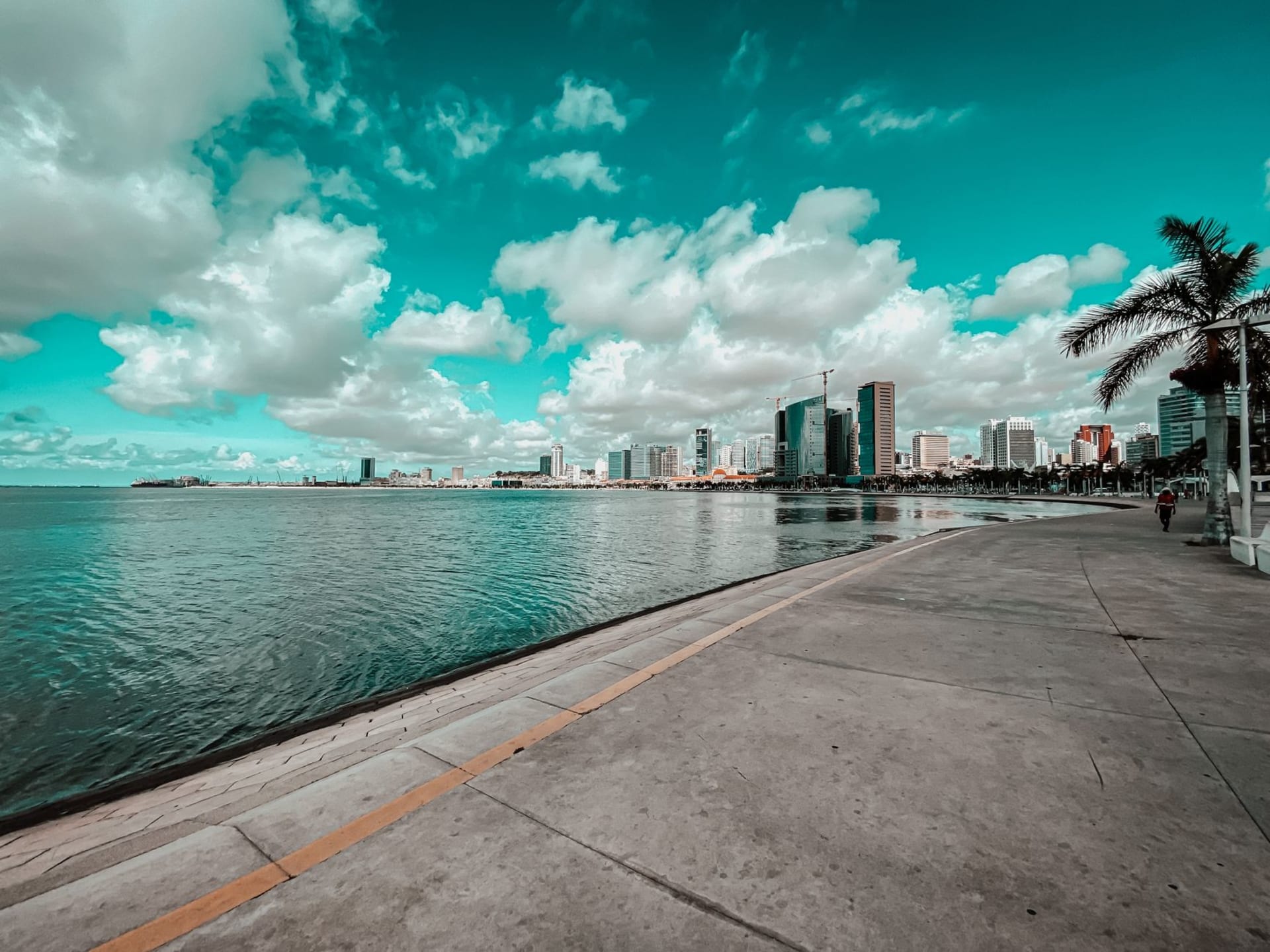
The Ilha de Luanda is technically a peninsula — a four-kilometre finger of sand that curves into the bay and pinches it off from the open Atlantic. To get there from the city you cross a short bridge and immediately feel the air change. The salt hits first, then the particular smell of low tide and charcoal smoke and frying garlic that drifts from the restaurants lining the bay-side road. Whatever tension Luanda gave you in its traffic and noise begins, almost involuntarily, to loosen.
The peninsula has two completely different personalities depending on which side you’re on. The bay side faces east toward the city skyline — a line of glass towers and cranes and the old colonial waterfront that looks, from across the water, almost cinematic in the morning light. The restaurants and beach clubs here are calmer, their terraces suspended over the water on stilts, the bay lapping at the pylons below. I spent an afternoon at one of these places eating garupa — a firm white fish grilled whole and brought out with piri-piri sauce and cassava chips — and drinking cold Cuca beer while the city skyline performed its light show across the water. The fish was flawless. The beer was colder than I deserved.

The Atlantic side is rawer. The ocean here has muscle — long swells that arrive without warning and drag at the sand. In the late afternoon, local kids bodysurf the breaks with a casual expertise that makes it look effortless until you try to stand up and the water pulls your feet out from under you. There are fewer tourists on this side, more fishermen hauling nets in teams, the kind of work that hasn’t changed in its essentials for generations. I walked the length of the ocean beach once at low tide and passed a man mending a blue net the size of a small building, working methodically in the shade of an overturned hull, and he nodded at me with the equanimity of someone who has decided that foreigners wandering his beach are a mild curiosity, nothing more.
At the southern tip of the Ilha, the fishing village predates the restaurants and the nightclubs by several centuries. Women smoke fish over small fires in the early morning, the smoke lying flat in the sea air, and the smell follows you back up the road for longer than you’d expect. The village is not picturesque in any packaged sense — it is simply real, which is harder to find in Angola’s coastal zones than it used to be.

On weekend evenings, the Ilha becomes Luanda’s release valve. The whole city seems to arrive — families with children, couples, groups of friends in good shoes who will dance kizomba until well past midnight. The music from the clubs overlaps and mixes with the sound of the waves until you can’t quite separate them. I stayed later than I intended on my last night and walked back across the bridge with the bay on both sides going black under the streetlights, the city ahead of me already beautiful in the dark.
When to go: The Ilha is a year-round destination, but the dry season months of June through September offer the most pleasant conditions — mild temperatures, clear skies, manageable crowds on weekdays. Weekends fill up with Luanda residents escaping the city’s interior heat; arrive early for a beach club table. The ocean side is best for swimming in the calmer months of March through May, before the Atlantic swells intensify.