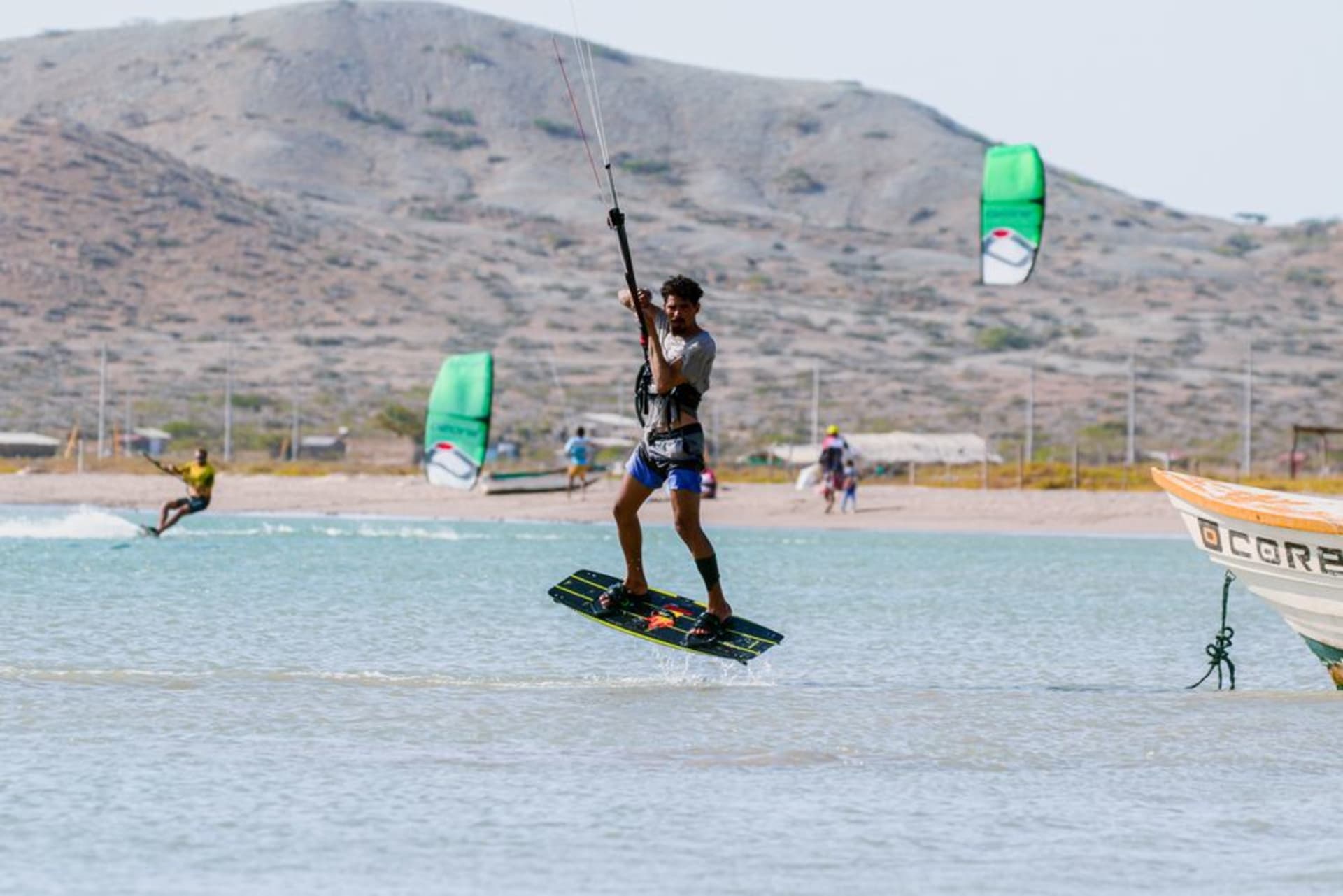
A windswept stretch of red cliffs and Atlantic swell south of Luanda, where kitesurfers chase the trade winds and oil rigs blink on the horizon.
We drove down from Luanda on a Friday afternoon, the kind of trip half the city seems to make once the workweek winds down, and I understood why within the first ten minutes of arriving. Cabo Ledo announces itself with those cliffs — a hundred kilometers of Atlantic coast suddenly interrupted by walls of red clay, sheared clean by wind and water, dropping straight into a beach that stretches further than I could see in either direction. Lia grabbed my arm and pointed at the horizon, where a cluster of oil platforms sat like tiny gray islands against the haze. It was such a strange juxtaposition — this raw, ancient coastline and that unmistakably modern silhouette sharing the same view.
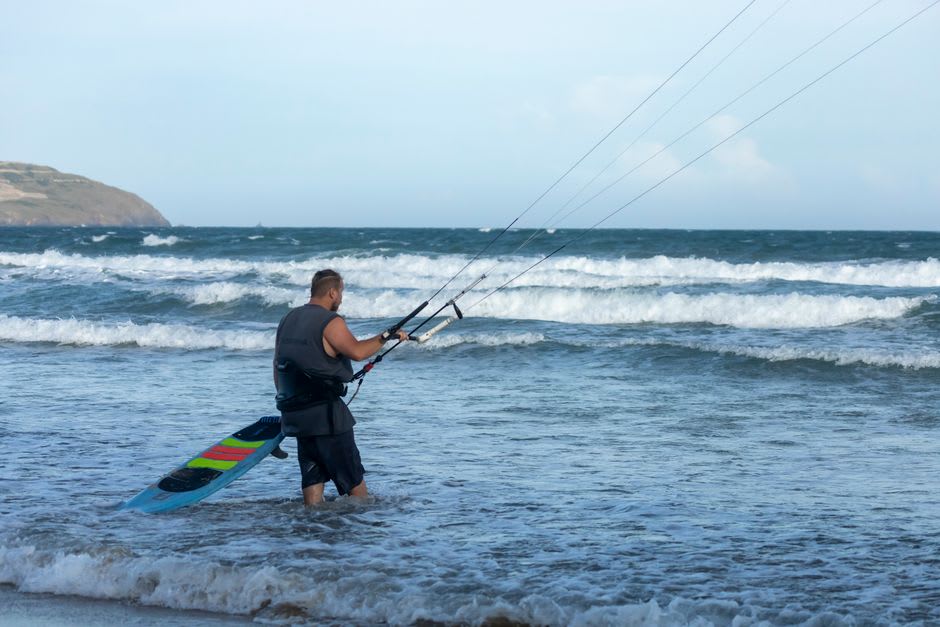
We weren’t there to kite, not being any good at it, but we spent an entire afternoon just watching from the sand as riders launched off the swell, their sails snapping tight in gusts that never seemed to let up. A guy running one of the small guesthouses along the shore told me the wind at Cabo Ledo has been drawing kitesurfers since the early 2000s, and that on a good day in season the whole beach fills with color, dozens of kites stacked against the sky at once. I believed him. Even in the shoulder season when we visited, the wind was constant enough that I gave up trying to keep my hat on.
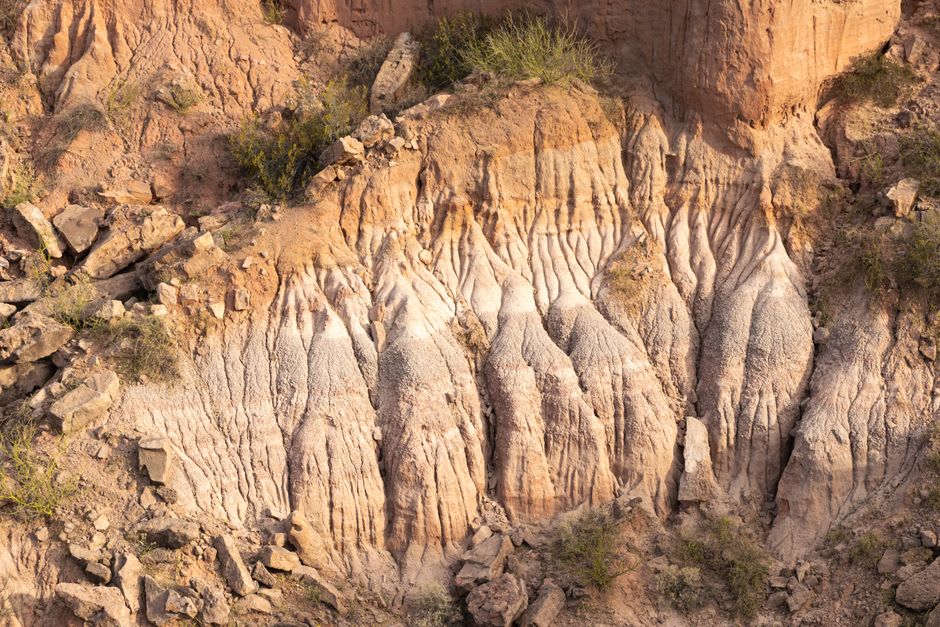
What I didn’t expect was the fossils. Lia is the one who reads ahead before we go anywhere, and she mentioned almost offhand that the eroded cliff strata here have turned up prehistoric fossil finds — enough that paleontologists have made a habit of coming back. We spent a slow morning walking the base of the cliffs looking for anything embedded in the layers, more out of curiosity than expertise, and even without knowing exactly what we were looking at, there was something humbling about standing under rock that old while the wind kept hammering past us toward the water.
We stayed two nights in a small camp a short walk from the water, the kind of place with hammocks strung between posts and grilled fish showing up whenever someone decided it was time to eat. It felt less like a destination and more like a release valve for Luanda — weekenders unwinding, kite lines humming in the wind, nobody in a hurry. I left with sand still in my boots and grand plans to come back and actually learn to kite next time.
When to go: If you want the wind that makes this place famous, aim for June through September, when the trade winds blow strongest and most reliably for kitesurfing.