
Escaldes-Engordany
"They built a glass cathedral over a hot spring. It sounds absurd and somehow works completely."
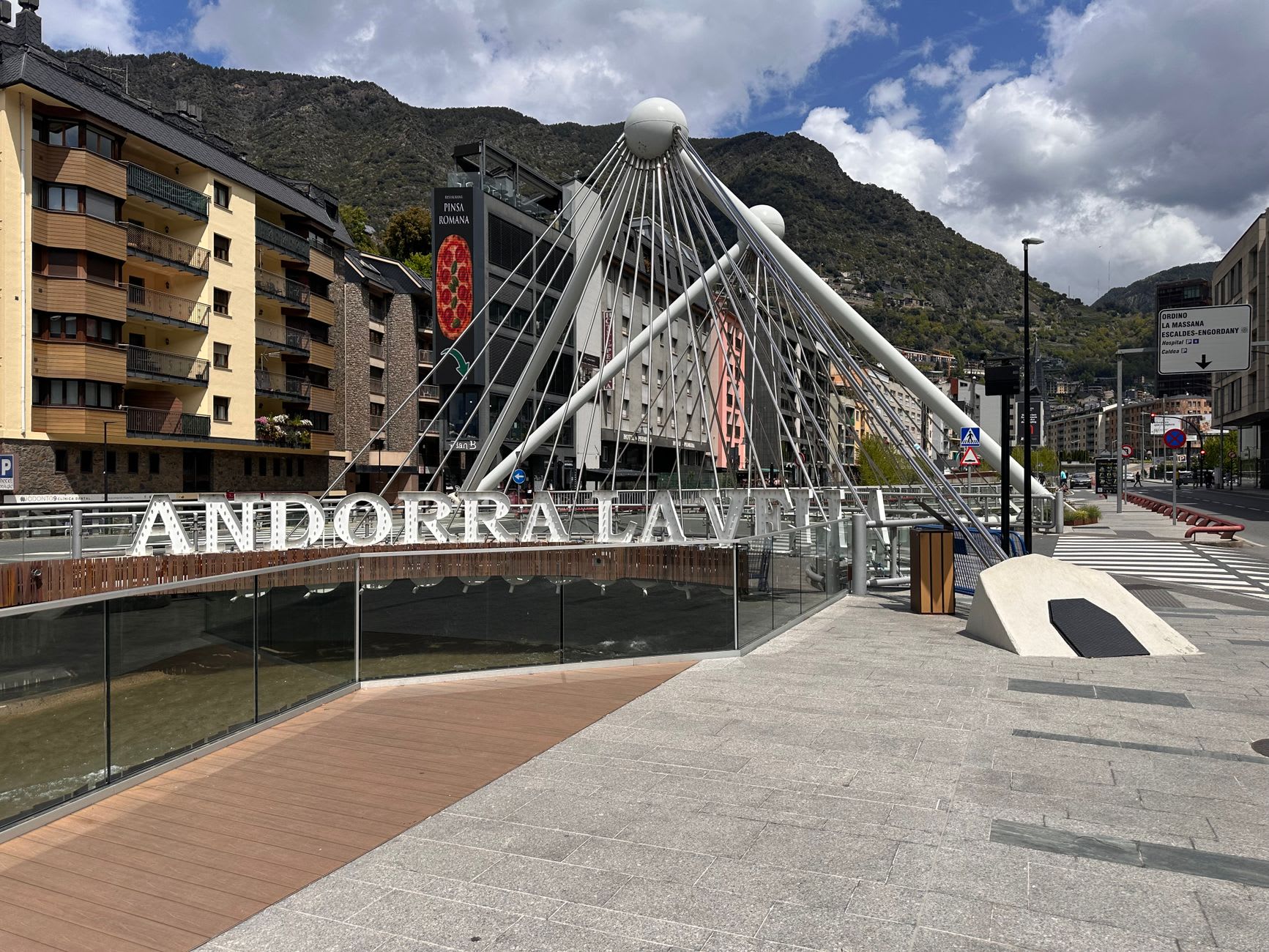
Escaldes-Engordany runs directly into Andorra la Vella without a break you would notice from a moving car — it is, functionally, the same continuous valley development, differentiated mainly by the parish boundary signs and, dramatically, by the glass spire of Caldea rising above everything at its northern end. The first time I saw Caldea from the main road, illuminated against the dark mountain in the early evening, I laughed at its audacity. A thermal spa complex built in 1994 in the form of a Gothic-influenced glass pinnacle, its angular geometry presiding over a commercial strip like a misplaced cathedral. It should look ridiculous. Instead it looks, somehow, like exactly the right building for exactly this place.
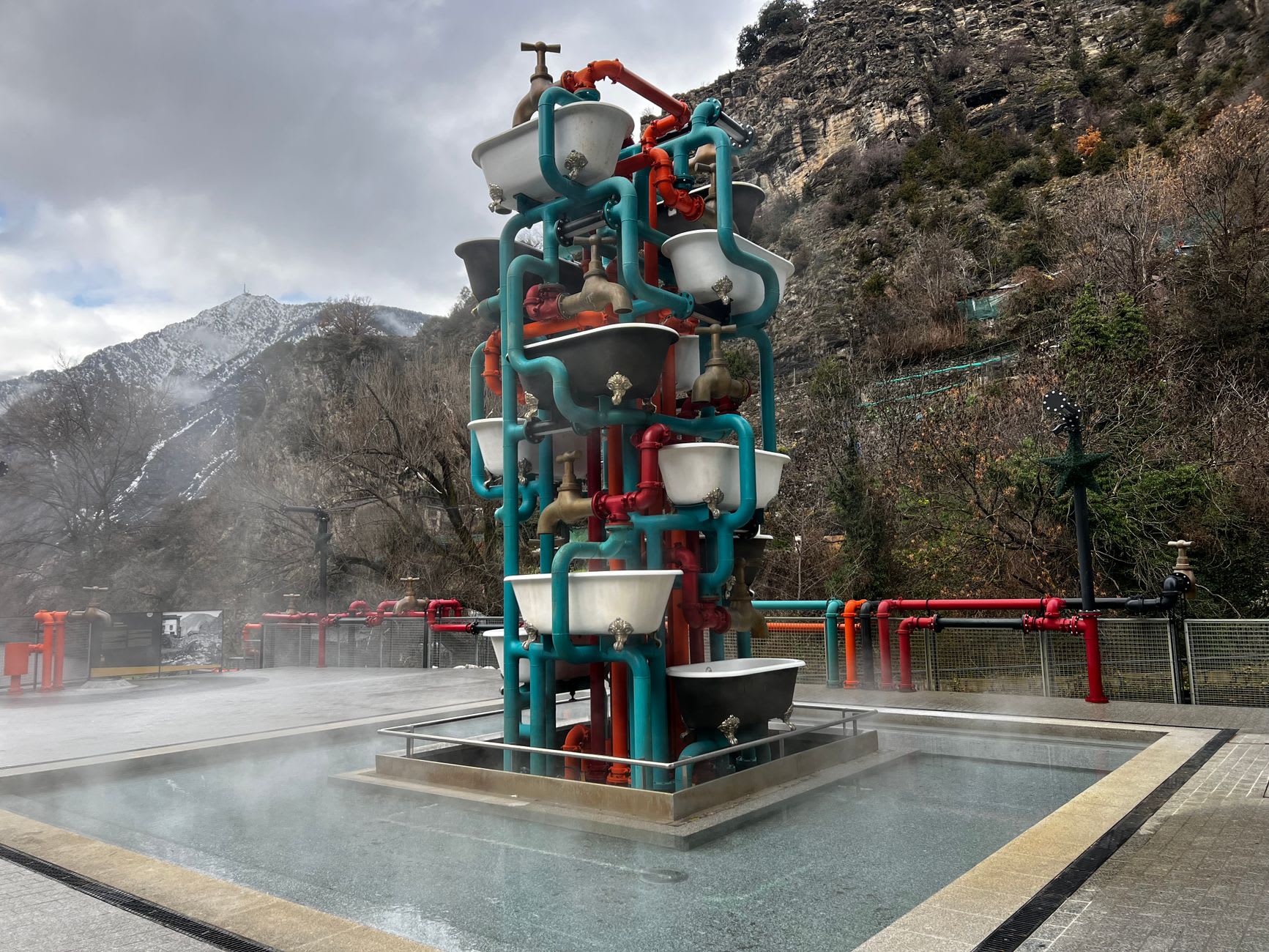
The hot water that feeds Caldea is genuinely natural — thermal springs have been exploited in Escaldes since at least the medieval period, when the warm waters here were used for washing wool. The modern complex built over those springs is large, elaborate, and popular: indoor and outdoor thermal pools, lagoons, waterfalls, a series of grotto-like spaces where the temperature is managed and the mineral content changes between pools. I spent an afternoon in there once, in December, moving between hot indoor pools and an outdoor terrace where the air temperature was close to zero and the contrast made the warmth feel almost hallucinatory. The other bathers — a mixture of French and Spanish visitors and a few locals who moved through the complex with the confidence of regular users — were mostly quiet. The sound of falling water and the smell of minerals dominated. I emerged two hours later feeling emptied and recomposed, which is approximately what thermal water is supposed to do.
Less expected: the Museu Carmen Thyssen Andorra, opened in 2013 in the parish, holds a collection of nineteenth and early twentieth century art — Spanish Realism, Impressionism, a few Catalan Modernist works — that is genuinely worth two hours of concentrated looking. The building is clean and well-lit, the exhibition space modest, and on the Thursday afternoon I visited there were perhaps fifteen other visitors, which meant I could stand as long as I liked in front of the Sorolla oils without anyone edging me aside. A Valencian painter and the interior mountain light of Andorra are an unexpected combination, but the canvases glowed under it.
The parish also contains the Roc del Quer viewpoint, accessible from a trailhead in Engordany by a short but steep walk. The Roc — a massive natural rock outcrop at the edge of a cliff — gives a view down over the entire capital valley: Andorra la Vella laid out below, the ring of mountains visible on all sides, and the Valira rivers threading through the commercial floor of the country. I went up at six in the morning before anyone was about, the air cold and sharp, and had the view entirely to myself. The commercial Andorra looked oddly beautiful from up there, its dense valley development filling the narrow space the mountains allowed it, a whole country visible in a single glance.
Eating in Escaldes-Engordany is better than the parish’s commercial character suggests. There are restaurants here that are not trying to service ski tourists — they are cooking for local regulars, and the difference shows. I had the best escudella I found in Andorra in a family-run place on a side street near the spa: thick, porky, the pasta soft and the broth deep. The bread came in a basket that was replaced without being asked.
When to go: Year-round for Caldea, though winter offers the most dramatic outdoor pool experience. The Thyssen museum keeps standard opening hours and is closed Mondays. The Roc del Quer walk is best in clear weather — morning visits give the best light on the valley below. Caldea is busiest on winter weekends; booking in advance is advisable December through March.