Zion Canyon
"In the Narrows, the water is at your knees and the walls are a thousand feet high — the canyon has you completely."
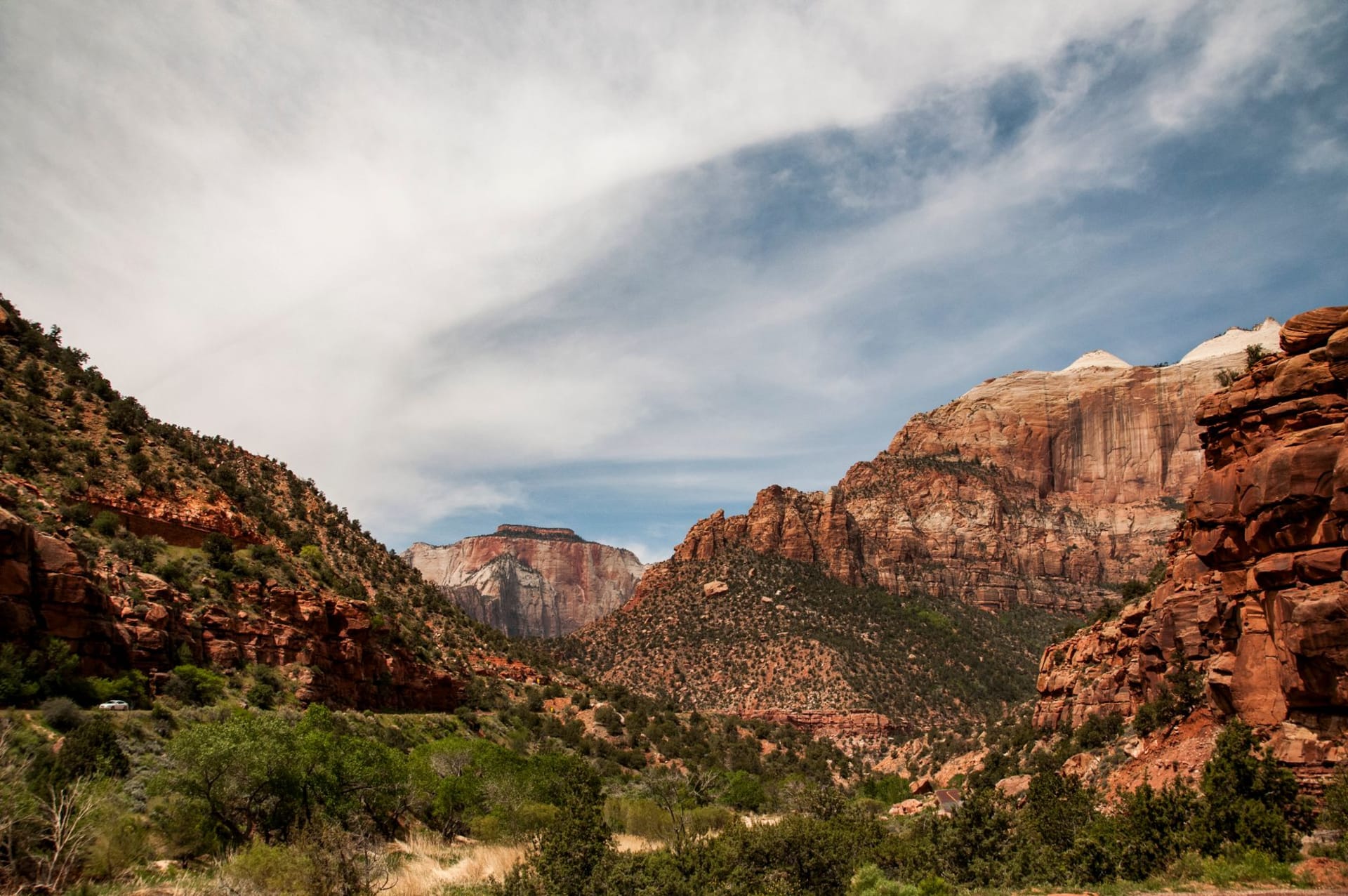
The approach to Zion is theatrical. You drive across a high plateau in open desert, the red rock country of southern Utah spreading flat and spare in every direction, and then the road drops — through tunnels blasted into the cliff face in the 1930s, through switchbacks where the canyon reveals itself in pieces — and suddenly you are inside something. The walls of Zion Canyon rise 2,000 feet from the valley floor, white and pink and red Navajo sandstone, and the Virgin River runs at the bottom of it all, the river that made this possible over several million patient years.
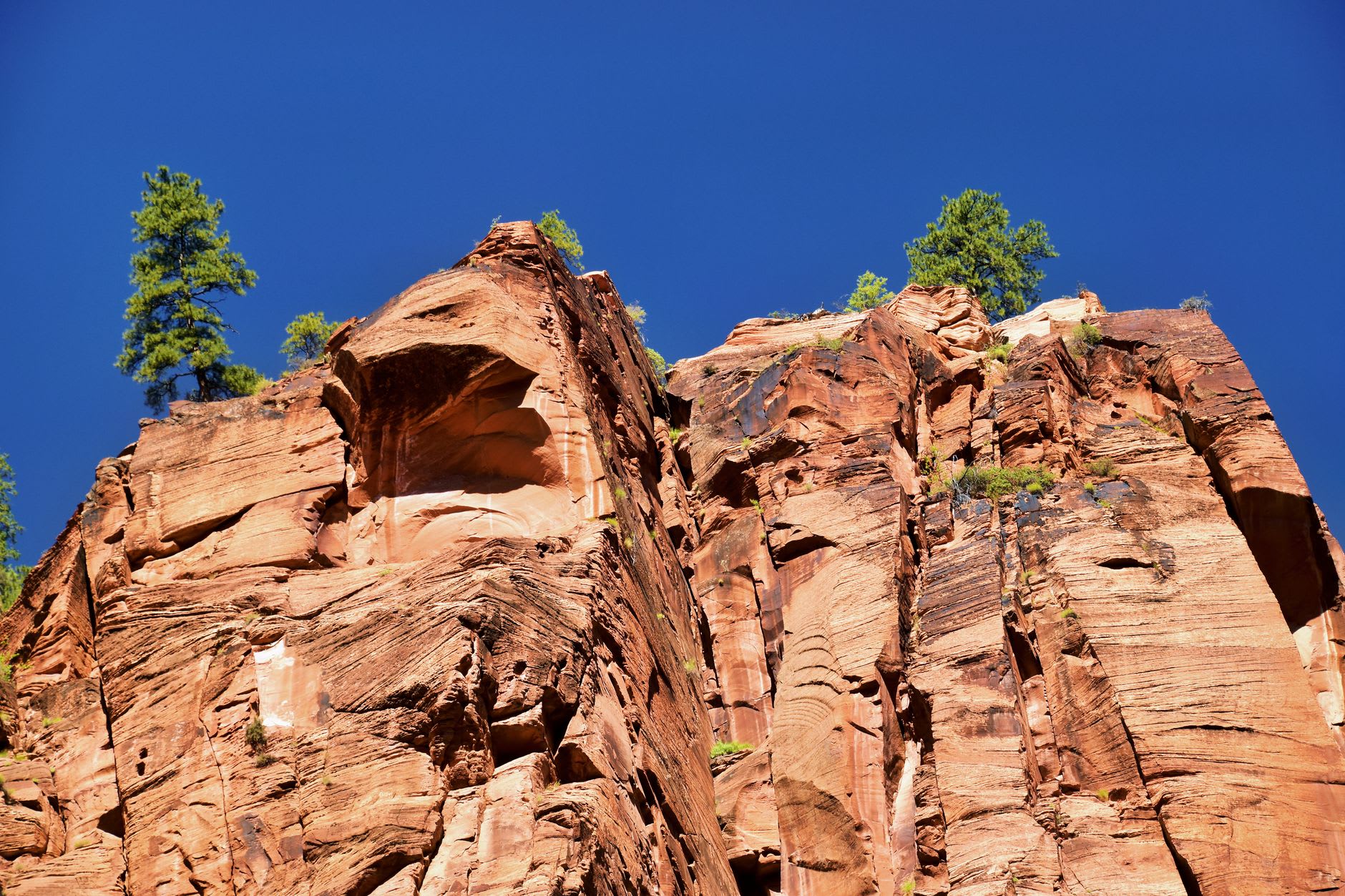
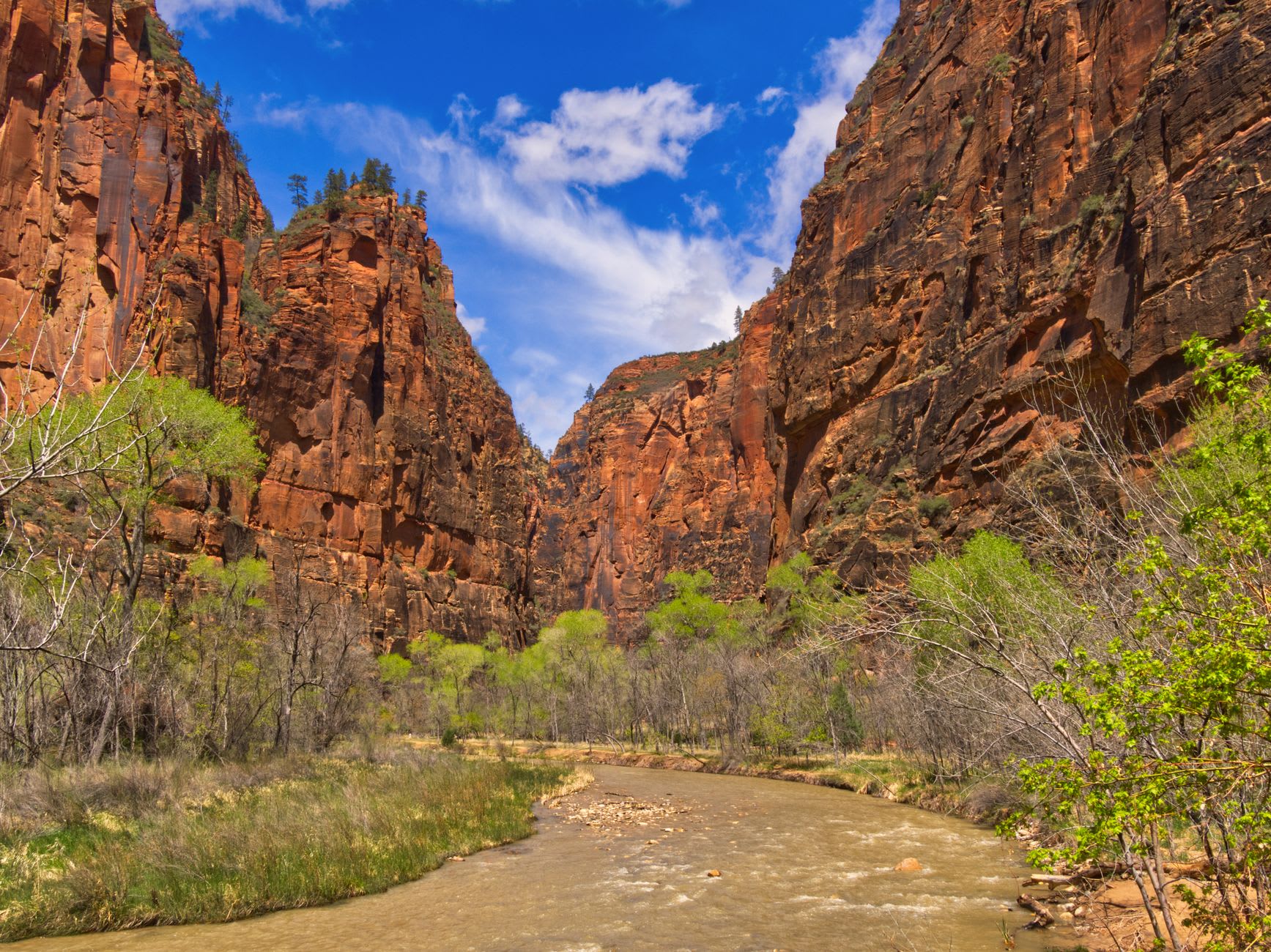
The Narrows is the part of Zion I think about when I’m back in the noise of ordinary life. It’s a sixteen-mile slot canyon hike through the Virgin River itself — not beside it, through it, the water running anywhere from ankle to chest deep depending on the season and the recent weather. The walls close to as little as twenty feet apart while rising nearly a thousand feet above you. The light arrives as a narrow stripe of sky and bounces off the canyon walls in a way that turns the stone a hundred different shades of orange and rust and pale gold. I went in October, with water at mid-calf and the air cold enough that the spray from the river made my face ache. I walked for four hours in a near-silence broken only by water moving over rocks, and I did not want to turn around.
Angels Landing requires more courage than I initially budgeted. The final half-mile to the summit involves chains bolted into a knife-edge ridge with 1,500-foot drops on both sides. I have a functional relationship with heights and I still stopped twice to recalibrate my nerve. The view from the top — the canyon spreading below you in a horseshoe, the shuttle buses looking like toys on the road far below, the late afternoon light going golden on the opposite rim — justifies every anxious step. The permit system introduced in recent years has reduced the summit crowds enough to make the experience feel less like a queue and more like a summit.
Springdale, just outside the park gate, has been quietly gentrifying for a decade and now offers farm-to-table restaurants that would hold their own in any city, plus a bakery that opens at 6 a.m. and has fresh pastries when the first hikers appear. I ate breakfast there three mornings running and felt no need to apologize.
When to go: April through May for wildflowers and moderate temperatures on the trails; September through October for cooler conditions and thinner crowds. The Narrows is closed periodically in spring due to high water — check conditions before planning that hike specifically. Summer is extraordinarily crowded and the shuttle queues are long, though the canyon’s walls provide shade that makes the heat more bearable than in open desert.