Encontro das Águas
"Two rivers, eight kilometres, no mixing — science explains it; standing there, you still don't quite believe it."
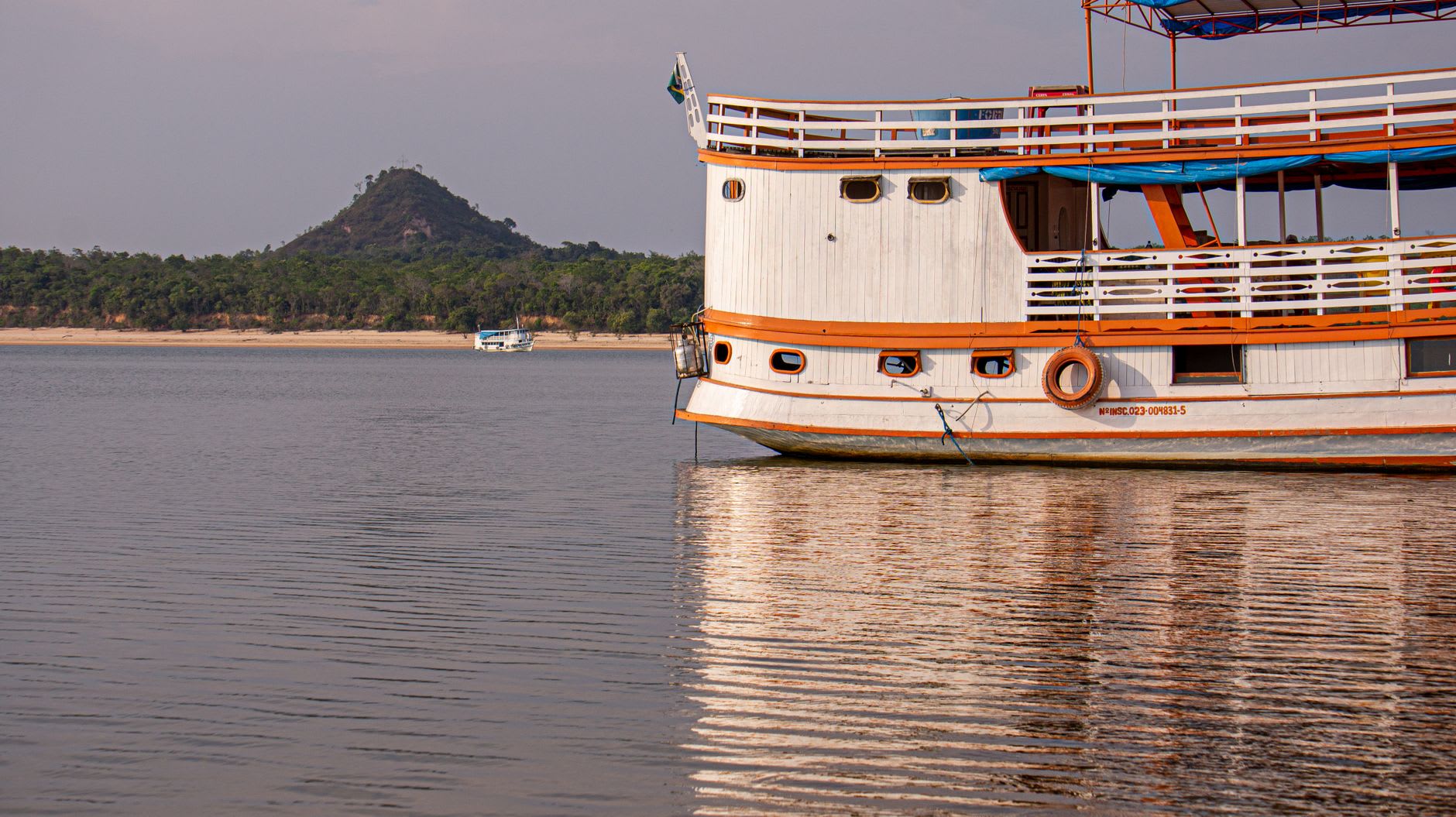
The boat left the Manaus port at seven in the morning, still dark enough that the city lights reflected doubled in the Rio Negro. The river here is the colour of strong black tea — dark brown, almost opaque, smelling faintly of leaves and earth, running cool even in October. I was sitting at the bow with my coffee going cold in my hand, watching the water, when the guide pointed ahead and said simply: ali está — there it is.
The Encontro das Águas happens a few kilometres east of Manaus, where the Rio Negro empties into the Amazon River proper. The Amazon here is called the Solimões — sandy, warm, silt-laden, running fast and shallow-brown. The Negro is cold, dark, acidic, moving slowly. They are so different in temperature, density, and chemistry that they flow alongside each other for roughly eight kilometres without mixing — a hard visible line down the middle of the river, black on the left, brown on the right, the boundary as distinct as paint. The captain cut the engine and we drifted at the meeting point. You could lean over the side and put one hand in each river.
The phenomenon happens because the two rivers travel at different speeds and temperatures. The Solimões runs faster and warmer; the Negro moves slowly and carries different minerals. Eventually, kilometres downstream, they do merge — but at the meeting point itself, the separation is total. I had seen photographs. The photographs look like they have been doctored. Looking at it directly, from a boat rocking on the boundary line, it still felt unreal.
We stayed for two hours, drifting in and out of the boundary. Pink river dolphins — botos — came close to the boat three times. They surface like something from a painting: the rounded forehead, the long pale-pink snout, the way they exhale loud enough to hear across the water. Local legend says they are encantados — enchanted beings who take human form at night, dance in village bars, seduce people. Watching one slide just beneath the surface, pink and enormous and completely indifferent to us, I could see exactly how that mythology took hold.
Most visitors come on day tours from Manaus and stay an hour. I’d advise getting there by private boat if you can — the tourist boats cluster together at peak times and the motors destroy the quiet. The meeting point at dawn, with mist rising off the black water and the first light catching the line between the rivers, is one of those sights the world offers very rarely.
When to go: Year-round, though the dry season (June to October) means clearer skies and calmer river traffic. The phenomenon itself is visible at any water level. The river dolphins are present throughout the year but tend to congregate near the meeting point more frequently in the early mornings.