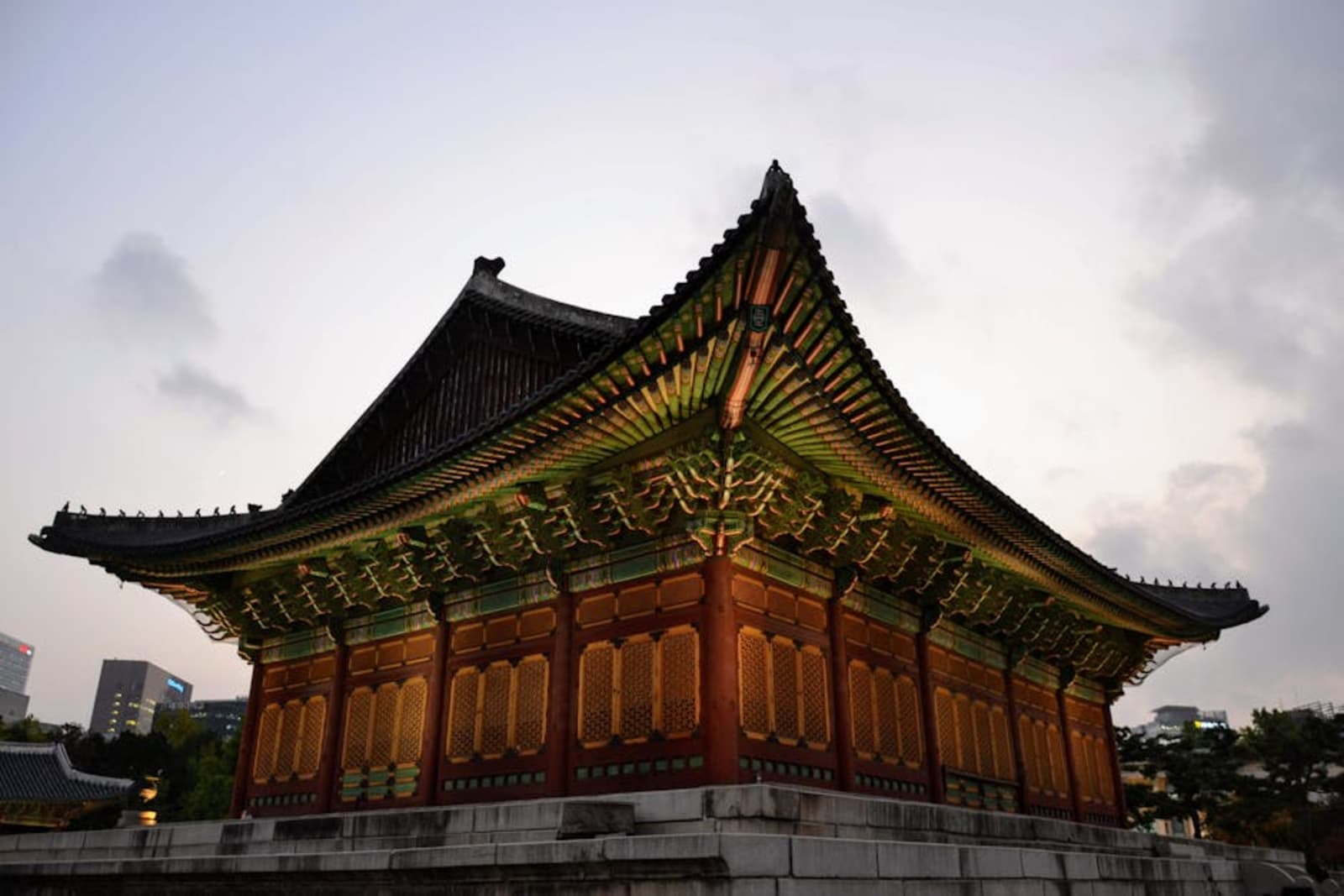
south-korea travel guide
South Korea in 16 Days — Seoul to Jeju, the Complete Route
A day-by-day itinerary from neon-lit Seoul to volcanic Jeju Island, with temple stays, coastal hikes, and the best food on earth — for travelers who eat first and sightsee second.
16
Days planned
15+
Recommendations
2025
Last updated
10K+
Downloads
Why you need this
Stop planning. Start travelling.
You could spend 40+ hours digging through blog posts, forums, and outdated TripAdvisor reviews — cross-referencing opening hours, piecing together transport connections, and hoping the restaurant someone recommended in 2019 is still open. Or you could follow a route that's already been walked, tested, and refined by someone who does this for a living.
Tested Routes
Every route driven, every connection timed, every transfer tested. Not theory — experience.
Handpicked Stays
Boutique hotels, family guesthouses, and locally-owned places I've slept in myself. No affiliate deals.
Crowd-Free Timing
Arrive before the buses, take the back entrance, visit on the right day. Timing tips at every stop.
Local Restaurants
Street stalls to fine dining — what to order, when to go, and the places tourists never find.
What's inside
16 days, planned down to the detail
- 16-day route covering Seoul, Gyeongju, Busan, Jeonju, and Jeju Island
- Where to eat at every stop — street food, barbecue joints, and market picks
- Temple-stay recommendations and booking tips
- Timing strategies for foliage season and crowd avoidance
- Practical logistics: T-money cards, KTX bookings, and the phrases that matter
Beyond the itinerary
Curated recommendations for every part of your trip
The full guide includes more than a day-by-day plan. You'll also get a complete set of curated lists — the places I'd send a friend, organized by category so you can mix, match, and make the trip your own.
Hotels & Stays
Boutique hotels, ryokans, guesthouses & Airbnbs — every one personally vetted.
Restaurants
Street stalls to fine dining, with what to order, when to go & price range.
Neighborhoods
Where to base yourself, where to wander & the areas most visitors miss.
Activities & Tours
Cooking classes, walking tours, cultural experiences & off-the-beaten-path excursions.
Bars & Nightlife
Cocktail bars, izakayas, rooftops & the local spots where the night comes alive.
See exactly what you're buying
Below is the actual guide content for the first three days — not a summary, not a teaser, the real thing. The same level of detail, the same specific recommendations, the same voice. If you like what you read here, the full 16-day guide is more of exactly this.
South Korea ruined me for other food destinations. I arrived expecting good barbecue and left understanding that an entire country had organized itself around eating with a seriousness and a joy I had not encountered anywhere else. The itinerary I built reflects this conviction: every day is structured around meals first, and the temples, mountains, and coastlines arrange themselves around the eating. Sixteen days from Seoul to Jeju, with stops in Andong, Gyeongju, Busan, and Jeonju — the cities that define Korean food, history, and landscape outside the capital. I have eaten at every restaurant in this guide, slept in every hotel, ridden every train, and walked every market. The mistakes have already been made so yours do not have to be.
What You’ll Get
The full 16-day guide includes:
- Day-by-day itinerary from Seoul to Jeju with KTX booking instructions and flight tips
- Restaurant recommendations at every stop — barbecue joints, market stalls, and the meals worth crossing the country for
- Hotel picks tested personally, from hanok guesthouses to modern boutique stays
- Two temple-stay options with booking instructions and etiquette guidance
- Timing strategies for foliage season, cherry blossom, and crowd avoidance at major sites
- T-money card primer, Korail app walkthrough, and the Korean phrases that actually matter
- Restaurant addresses in Korean (essential for taxi drivers) and a curated map of every recommendation
Free Preview — Days 1 to 3
Day 1 — Seoul: Arrival, Jongno & the First Bowl of Gukbap
You land at Incheon and take the AREX express train to Seoul Station — forty-three minutes, reserved seating, and faster than any car will manage through the Incheon expressway traffic. From Seoul Station, the metro to Jongno takes fifteen minutes. Your hotel is in Jongno-gu, the old heart of the city, where the palaces and the markets and the narrow streets of Insadong are all within walking distance. I recommend the Makers Hotel for its clean design and location near Gwanghwamun, or Bukchon Maru Hanok Guesthouse if you want to sleep on a heated ondol floor in a traditional Korean house and wake to the sound of the neighbourhood coming alive. Drop your bags. Do not nap. Walk to Gwangjang Market, ten minutes south, and find the stall where the halmeoni (grandmother) is making bindaetteok — mung bean pancakes, fried crisp in sesame oil, served with soy and chili dipping sauce. Eat them standing up. Then move to the mayak gimbap stall — tiny, addictive rice rolls dipped in mustard and sesame oil that are called “drug kimbap” because you cannot stop eating them. A bowl of yukgaejang — spicy beef soup, red and volcanic, with glass noodles and scallions — from one of the sit-down stalls in the back of the market. Total cost: under ten thousand won. Quality: staggering. Walk back through Insadong as the galleries close and the street food vendors open. Tea at a traditional teahouse — omija-cha, the five-flavour berry tea, sweet and sour and bitter at once. Dinner is optional after the market, but if you are still hungry, Tosokchon near Gyeongbokgung serves samgyetang — whole young chicken stuffed with ginseng and rice, simmered for hours — that Koreans queue for. Sleep in the hanok. The ondol floor is warm beneath you. Seoul hums outside.
Day 2 — Seoul: Gyeongbokgung at Dawn, Bukchon & Gwangjang Market
Be at the Gyeongbokgung Palace gate by 8:45am — it opens at nine, and if you are among the first through the Gwanghwamun gate, the courtyards are nearly empty. The changing of the guard ceremony happens at 10:00 and is worth seeing for the costumes alone, but the palace itself — rebuilt and re-destroyed across five centuries of invasion and occupation — is best experienced in the quiet before the ceremony crowds arrive. Walk through the throne hall, past the Gyeonghoeru Pavilion floating on its lotus pond, to the rear garden where the autumn foliage in October is the kind of colour that photography cannot capture. Exit through the north gate into Bukchon Hanok Village — the traditional neighbourhood preserved between Gyeongbokgung and Changdeokgung, where the tiled rooftops cascade down the hillside and the alleys are too narrow for cars. This is where Seoul shows its age, and it is beautiful. Be respectful — people live here, and the resident frustration with selfie-stick tourism is justified. Coffee at Fritz in Mapo-gu — a twenty-minute walk or short taxi ride — where the beans are roasted on-site and the space feels more Berlin than Seoul. Lunch at Tongin Market, where you buy brass coins at the entrance and use them to fill a lunch tray from the individual vendors — a uniquely Korean experience that delivers an excellent meal for three thousand won. Afternoon at the National Museum of Korea in Yongsan — free entry, world-class collection, and the Silla gold crown room alone is worth the visit. Dinner at Maple Tree House in Itaewon — galbi (short rib) grilled at your table over charcoal, wrapped in lettuce with ssamjang and raw garlic, accompanied by more banchan than you can count. This is the meal Korea is famous for, and this restaurant does it at the highest level.
Day 3 — Seoul: Mapo-gu Barbecue, Hongdae & the Night That Runs Late
Today is the day you eat barbecue until the concept of hunger becomes theoretical. Morning: walk the Yeonnam-dong neighbourhood near Hongdae — the tree-lined streets, the independent coffee shops, the bookstores and vinyl shops that give this area its reputation as Seoul’s creative district. Brunch at Cafe Onion in Seongsu-dong — a converted factory where the pastries are exceptional and the industrial architecture has been preserved with the exact right amount of restraint. Then cross back to Mapo-gu for the main event. Lunch at Yeongcheon Sikdang, a barbecue restaurant that has been serving the same cut of pork — thick, marbled, grilled over briquettes — since the neighbourhood was a working-class district and the rent was cheap. The meat is extraordinary. The kimchi is house-made and fermented long enough to develop a sourness that cuts through the fat. You wrap everything in perilla leaves and eat with your hands and the smoke gets into your clothes and your hair and you do not care. Afternoon, walk off the barbecue through Hongdae — the university neighbourhood where the buskers and the street performers set up after three and the energy builds toward evening. The mural alleys are worth exploring. The vintage shops are excellent. The street food — hotteok stuffed with brown sugar and nuts, tteokbokki in paper cups — is inevitable. Dinner is your choice: Jokbal Alley in Jangchung-dong for braised pig’s feet with the texture of silk, or New Mapo Galmaegi in Mapo-gu for another round of barbecue — this time galmaegi-sal, the skirt meat cut that Koreans prize and that tourists rarely discover. After dinner, Seoul’s night begins. Pojangmacha — the orange tent bars — line the streets of Euljiro, where you drink soju and eat fried chicken feet and the city reveals a side that daylight keeps hidden. The subway runs until midnight. After that, the taxis are cheap and the night goes as long as you do.
Who It’s For
This guide is for travellers who understand that the best meals in Korea are not in restaurants with English menus, and who are willing to point at photographs and trust the result. You care about food more than shopping. You want to see temples and mountains and markets, not theme parks and duty-free malls. You are comfortable with early mornings — the best experiences in Korea happen before nine — and with the kind of physical engagement that involves hiking up eight hundred stairs to see a rock formation that looks like a hand reaching for the sky.
If you are planning a first trip to South Korea and want more than the standard Seoul-plus-DMZ itinerary, this guide will take you deeper. If you have been before and only saw the capital, this will show you the country the capital tends to overshadow.
The full itinerary
Days 1–3 are yours free. Unlock the remaining 13 days to get every hotel, restaurant, and route for the complete trip.
Full guide
Instant PDF download. 16 days of hotels, restaurants, routes & logistics.
- Complete 16-day itinerary
- Hotel & restaurant names + addresses
- Transport logistics & timing tips
- Free updates when the guide is refreshed
Coming soon
Secure checkout via Stripe. Instant download.
Free 3-day PDF preview. No spam, ever.
Not another top-10 list
Why these guides are different
Written from the ground
Every recommendation comes from personal experience — weeks and months spent in each destination. Not sourced from other blogs, not generated by AI, not recycled from tourism boards. I walked these streets, ate at these restaurants, slept in these hotels.
Specific, not generic
You won't find "find a nice hotel near the centre" in these guides. You'll find the hotel name, why I chose it, what room to request, and what to order at breakfast. The specificity is the point — it's what saves you from bad decisions.
Tested by thousands
Over 10,000 travelers have followed these itineraries. Their feedback shapes every update — closed restaurants get replaced, timing tips get refined, new discoveries get added. These guides get better with every reader.
Logistics included
Transport connections, driving times, visa requirements, SIM card advice, tipping customs, what to pack — the practical details that free content never covers because they're boring to write but essential to know.
No affiliate noise
Every hotel and restaurant is recommended because it's genuinely the best option I found — not because it pays a commission. When you pay for the guide, you're paying for honest recommendations.
Saves you real time
The average trip takes 40–60 hours to plan from scratch. These guides compress that into a few minutes of reading. For $27, you're buying back days of your life — and getting a better trip than you'd plan yourself.
Reviews
What travelers are saying
"This guide saved us easily 40 hours of planning. Every restaurant was exactly as described, the timing tips for Fushimi Inari were spot-on, and the hotel picks were perfect for a couple. We followed it day by day and had zero bad meals in 20 days."
Sarah & Chris
Traveled October 2025
"The Kurama-to-Kibune hike and the kawadoko lunch were the highlight of our entire trip — we never would have found it without this guide. The level of detail is insane. Which train platform, which exit, what time to arrive. Worth every penny."
Marco R.
Traveled November 2025
"We've bought travel guides before and they're usually generic lists. This was completely different — it reads like a friend handing you their personal notes. The Disney and DisneySea strategy alone saved us hours of queueing. Our best trip ever."
Julie & Laurent
Traveled September 2025
"My girlfriend and I used this for our anniversary trip. The tea ceremony in kimonos, the ryokan at Kawaguchiko, the Arashiyama bamboo grove at 8:30am with nobody there — it felt like the whole trip was curated just for us. Genuinely life-changing."
David K.
Traveled December 2025
"I was skeptical — how good can a free travel guide really be? Then I read the 3-day preview and the detail was on another level. After following the full guide for all 20 days, I can say it's the best travel resource I've ever used. The Dotonbori street food route alone was worth signing up for."
Ana P.
Traveled January 2026
"We followed the 20-day itinerary almost exactly and it was flawless. The shinkansen tips, the Suica card setup, the luggage forwarding advice — all the logistics stuff that stresses you out was already solved. We just showed up and enjoyed Japan."
Tom & Nina
Traveled February 2026
Stripe Secured
256-bit SSL encryption
30-Day Guarantee
Full refund, no questions
4.9/5 Rating
240+ verified reviews
Instant Download
PDF delivered immediately
Free Updates
Lifetime access included
Questions
Before you decide
What format is the guide?
A beautifully formatted PDF that you can read on your phone, tablet, or laptop — or print and carry with you. It's designed to be practical in the field, not just pretty on a screen.
How do I receive it?
Instant download after purchase. You'll also receive an email with a permanent download link, so you can access it from any device, anytime.
Is the free 3-day preview the same quality as the full guide?
Identical. The free preview is days 1–3 of the actual guide, not a watered-down version. If you like the level of detail in the preview, that's exactly what continues for every remaining day.
How is this different from free content online?
Free blog posts give you "what to do in Tokyo." This guide gives you a specific route through Tokyo on a specific day — which train to take, where to eat lunch, what time to arrive at the temple to avoid crowds, and which hotel room has the best view. It's the difference between a list and a plan.
Do you offer refunds?
Yes — if the guide doesn't meet your expectations, email me within 30 days for a full refund. No questions asked. But the free preview exists so you can judge the quality before buying.
Will the guide be updated?
Guides are updated regularly based on reader feedback and my own return visits. When a guide is updated, you'll receive the new version free — your purchase includes all future updates.
Your south-korea trip, planned.
16 days of tested recommendations — hotels, restaurants, routes, and the logistics that make the difference between a good trip and an unforgettable one.
30-day money-back guarantee. Secure checkout via Stripe.