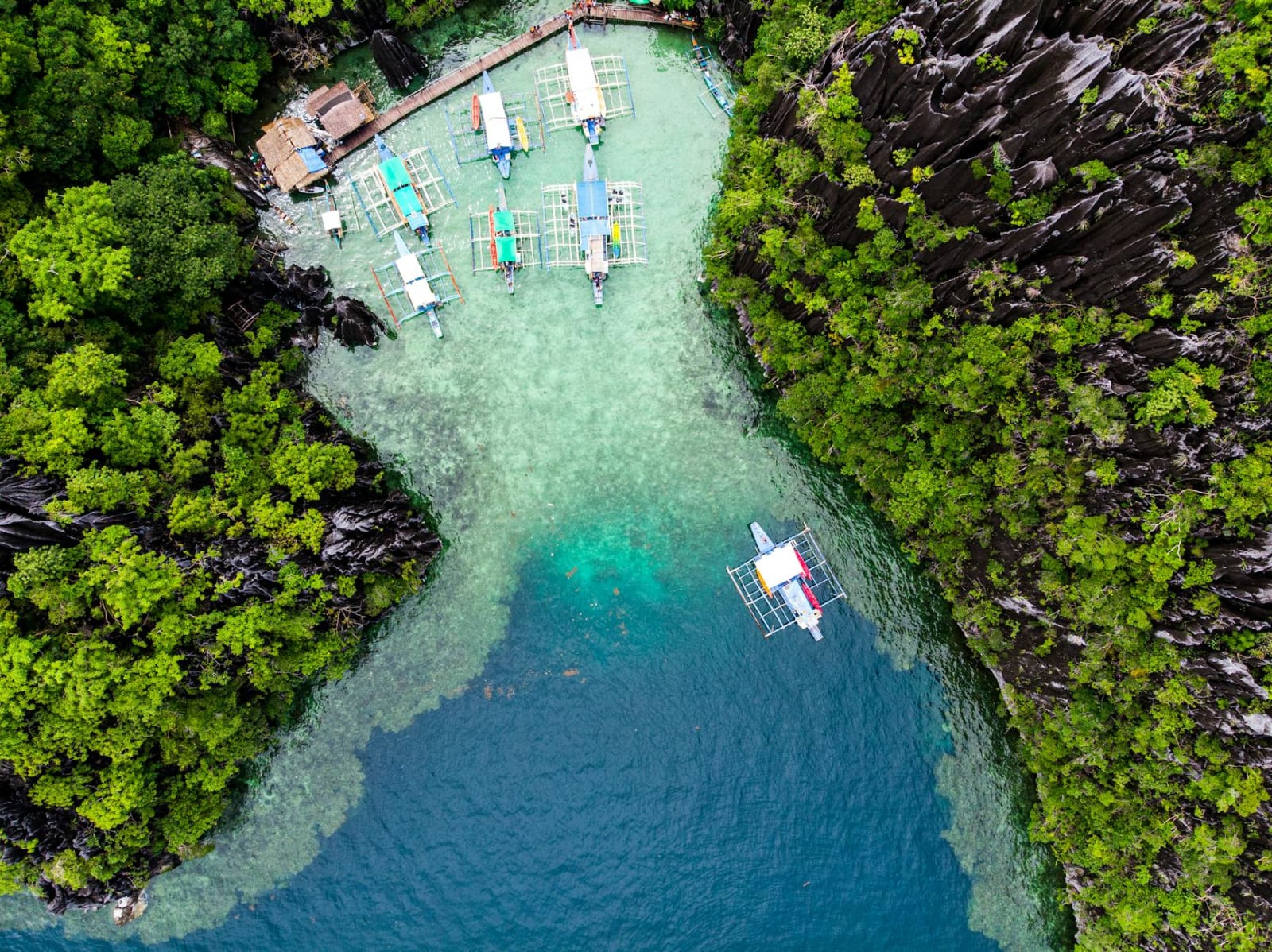
philippines travel guide
The Philippines in 3 Weeks — Islands, Mountains & the Warmest People on Earth
A complete route through the Philippine archipelago — from Manila's chaos to Palawan's lagoons, Siargao's surf, and the rice terraces of the Cordillera.
21
Days planned
15+
Recommendations
2025
Last updated
10K+
Downloads
Why you need this
Stop planning. Start travelling.
You could spend 40+ hours digging through blog posts, forums, and outdated TripAdvisor reviews — cross-referencing opening hours, piecing together transport connections, and hoping the restaurant someone recommended in 2019 is still open. Or you could follow a route that's already been walked, tested, and refined by someone who does this for a living.
Tested Routes
Every route driven, every connection timed, every transfer tested. Not theory — experience.
Handpicked Stays
Boutique hotels, family guesthouses, and locally-owned places I've slept in myself. No affiliate deals.
Crowd-Free Timing
Arrive before the buses, take the back entrance, visit on the right day. Timing tips at every stop.
Local Restaurants
Street stalls to fine dining — what to order, when to go, and the places tourists never find.
What's inside
21 days, planned down to the detail
- 21-day route: Manila, Banaue, Cebu, Bohol, El Nido, Coron & Siargao
- Island-hopping logistics — ferries, flights, and how to build buffer days
- Dive site picks from beginner to advanced, with shop recommendations
- Where to eat at every stop — street food, local restaurants, and the lechon worth crossing an ocean for
- Practical logistics: visas, typhoon season, internal flights, and budget breakdowns
Beyond the itinerary
Curated recommendations for every part of your trip
The full guide includes more than a day-by-day plan. You'll also get a complete set of curated lists — the places I'd send a friend, organized by category so you can mix, match, and make the trip your own.
Hotels & Stays
Boutique hotels, ryokans, guesthouses & Airbnbs — every one personally vetted.
Restaurants
Street stalls to fine dining, with what to order, when to go & price range.
Neighborhoods
Where to base yourself, where to wander & the areas most visitors miss.
Activities & Tours
Cooking classes, walking tours, cultural experiences & off-the-beaten-path excursions.
Bars & Nightlife
Cocktail bars, izakayas, rooftops & the local spots where the night comes alive.
See exactly what you're buying
Below is the actual guide content for the first three days — not a summary, not a teaser, the real thing. The same level of detail, the same specific recommendations, the same voice. If you like what you read here, the full 21-day guide is more of exactly this.
The Philippines is the country that broke my itinerary three times. Not because anything went wrong — everything went right, just not according to plan. A ferry was delayed, so I spent an extra day in a fishing village where someone’s grandmother fed me adobo and refused payment. A storm closed the airport, so I discovered a beach that was not on any map and swam alone for two hours. A local told me to skip the tourist restaurant and eat at his cousin’s house, and the sinigang his aunt made was the best soup I have had in Southeast Asia. This is a country where the detours are better than the destinations, and the people are the reason you came even if you thought it was the lagoons. Twenty-one days, seven islands, and a route I have tested and retested until every connection works — but with enough flexibility built in for the Philippines to surprise you, because it will.
What You’ll Get
The full 21-day guide includes:
- Day-by-day itinerary across seven islands with flight, ferry, and bus logistics
- Tested accommodation at every stop — from backpacker hostels that are actually clean to boutique hotels worth the splurge
- Restaurant and street food picks at every destination, including the lechon, adobo, and sinigang worth crossing an ocean for
- Dive site guide from beginner-friendly house reefs to advanced WWII wreck penetrations, with shop recommendations
- Island-hopping logistics: which flights to book in advance, which ferries run on time, and where to build buffer days
- Typhoon season timing, visa info, and a realistic budget breakdown
- A surf guide for Siargao — Cloud 9 and beyond, for beginners to advanced
Free Preview — Days 1 to 3
Day 1 — Manila: Arrival, Intramuros & the Chaos You Learn to Love
You land at Ninoy Aquino International Airport and the chaos begins before you reach the taxi rank — the heat, the humidity, the press of bodies, the jeepneys belching diesel outside the terminal. Take a Grab car to your hotel. Stay in Makati at the Poblacion neighbourhood: I recommend the Curator Hotel for its rooftop bar and its position in the middle of Manila’s best restaurant strip, or the Z Hostel for a reliable budget option with a social rooftop. Drop your bags and take a Grab to Intramuros, the old walled city the Spanish built in the sixteenth century. Walk the walls — the ramparts are intact and the view over the Pasig River and the Manila skyline is the collision of colonial and modern that defines this city. Visit San Agustin Church, the oldest stone church in the Philippines, where the baroque interior is cool and dark and the wooden saints have the expressions of people who have seen four centuries pass and are tired. Lunch at Barbara’s in Intramuros — Filipino heritage cooking in a colonial dining room, the kare-kare (oxtail in peanut sauce) is rich and complex, and the halo-halo for dessert is the sugar rush you need. Afternoon, walk to Rizal Park and the National Museum complex — free entry, and the Juan Luna paintings in the National Museum of Fine Arts are among the most important artworks in Southeast Asia. Dinner at Toyo Eatery in Makati — modern Filipino cuisine by a chef who is doing for Philippine food what the Nordic movement did for Scandinavian cooking. The coconut, the calamansi, the fermented shrimp paste — everything tastes like the Philippines distilled. Late evening, rooftop drinks at the Curator with a San Miguel and the Makati skyline. Manila is not beautiful in the conventional sense. It is alive in a way that beautiful cities often are not.
Day 2 — Manila: Binondo Chinatown, Street Food & Rizal Park
Morning in Binondo, the oldest Chinatown in the world. Walk from the Binondo Church down Ongpin Street, where the signage is in Chinese and Tagalog and the food stalls open early. Start at Dong Bei Dumplings for xiao long bao — soup dumplings that burst with pork broth when you bite through the skin, four pieces for fifty pesos. Then find the machang vendor on Carvajal Street — sticky rice wrapped in lotus leaf, stuffed with pork and Chinese sausage and mushroom, a Filipino-Chinese street food that exists nowhere else in this form. Lumpia from the corner stall — fresh spring rolls, not fried, with a peanut-lettuce filling and a sweet sauce that ties everything together. You eat standing, walking, pointing at things you cannot name, and everything is good. Cross the Jones Bridge to Escolta Street, Manila’s original main street, now slowly reviving with coffee shops and art spaces in the old commercial buildings. Lunch at Quik Snack in Binondo for the best beef wonton noodle soup in Manila — the kind of meal that costs less than a coffee in Paris and delivers more satisfaction than most dinners anywhere. Afternoon, return to Rizal Park and the surrounding museums if you did not finish yesterday, or walk the Manila Baywalk for the sunset — the reclaimed waterfront promenade where families gather and the sky turns colours that seem too vivid to be natural. Dinner at Abe in Serendra — regional Filipino cooking from Pampanga province, the culinary heartland, where the sisig (sizzling pork face) is crispy and vinegary and served on a cast-iron plate with an egg cracked over it. You will eat sisig at many places on this trip. This is the one that sets the standard.
Day 3 — Banaue: Overnight Bus, Arrival in the Cordillera
You have two options for reaching Banaue: fly to Baguio and take a van (faster, less authentic), or take the overnight Ohayami bus from Manila’s Sampaloc terminal at 10:00pm (slower, essential). I recommend the bus. It is not comfortable — the seats recline to approximately the angle of mild disappointment — but the drive through the Cordillera mountains in the predawn hours, as the road climbs through switchbacks and the valleys open below you in the darkness, is one of the great approaches in Philippine travel. You arrive in Banaue at 5:30am, stiff and sleepy and suddenly at altitude. The air is different here — cool, pine-scented, a complete reset from Manila’s heat. Check into the Banaue Hotel and Youth Hostel for its terrace view of the rice terraces, or the Sanafe Lodge for a quieter, family-run option closer to the viewpoint. Hot coffee. Breakfast of tapsilog — cured beef, garlic rice, fried egg — at a carenderia across the road. Then walk to the Banaue Rice Terraces viewpoint, a fifteen-minute climb from the town centre. What opens before you is not a landscape but an engineering project two thousand years old — the Ifugao people carved these terraces into the mountainside with their hands, and the result is a staircase of emerald water and rice that climbs from the valley floor to the clouds. The scale is disorienting. You stand there and try to photograph it and the photograph fails because it always fails — the terraces need depth, and sound (the water moving through the channels), and the smell of wet earth and growing things. Rest in the afternoon. Your legs need it before tomorrow’s trek to Batad. Dinner at the People’s Lodge restaurant — simple Filipino mountain food, rice and adobo and vegetables, eaten on a terrace above the valley as the fog rolls in and the terraces disappear and reappear like something breathing.
Who It’s For
You are drawn to the Philippines because of the photos — those impossible lagoons, those turquoise waters, those limestone karsts — but you want more than a beach holiday. You want to understand the country, not just photograph it. You are comfortable with imperfect logistics — delayed flights, ferries that run on island time, accommodation that prioritizes location over luxury — because you know that the best experiences in the Philippines happen in the spaces between plans.
You might be a diver looking for world-class sites at Southeast Asian prices. You might be a surfer chasing Cloud 9. You might be a traveler who has done Thailand and Vietnam and Bali and wants the next destination — the one your friends have not been to yet, the one that still has empty beaches and genuine hospitality and food that surprises you. You have two to three weeks, and you want someone who has made the mistakes already to hand you a route that works.
You are not precious about comfort, but you are not a masochist either. You want to know which budget options are genuinely good and which luxury options are worth the splurge. You want honest recommendations, not sponsored content. And you want to end the trip on a beach with a San Miguel, watching the sun go down, feeling like you have been somewhere that changed you — not just somewhere you visited.
The full itinerary
Days 1–3 are yours free. Unlock the remaining 18 days to get every hotel, restaurant, and route for the complete trip.
Full guide
Instant PDF download. 21 days of hotels, restaurants, routes & logistics.
- Complete 21-day itinerary
- Hotel & restaurant names + addresses
- Transport logistics & timing tips
- Free updates when the guide is refreshed
Coming soon
Secure checkout via Stripe. Instant download.
Free 3-day PDF preview. No spam, ever.
Not another top-10 list
Why these guides are different
Written from the ground
Every recommendation comes from personal experience — weeks and months spent in each destination. Not sourced from other blogs, not generated by AI, not recycled from tourism boards. I walked these streets, ate at these restaurants, slept in these hotels.
Specific, not generic
You won't find "find a nice hotel near the centre" in these guides. You'll find the hotel name, why I chose it, what room to request, and what to order at breakfast. The specificity is the point — it's what saves you from bad decisions.
Tested by thousands
Over 10,000 travelers have followed these itineraries. Their feedback shapes every update — closed restaurants get replaced, timing tips get refined, new discoveries get added. These guides get better with every reader.
Logistics included
Transport connections, driving times, visa requirements, SIM card advice, tipping customs, what to pack — the practical details that free content never covers because they're boring to write but essential to know.
No affiliate noise
Every hotel and restaurant is recommended because it's genuinely the best option I found — not because it pays a commission. When you pay for the guide, you're paying for honest recommendations.
Saves you real time
The average trip takes 40–60 hours to plan from scratch. These guides compress that into a few minutes of reading. For $37, you're buying back days of your life — and getting a better trip than you'd plan yourself.
Reviews
What travelers are saying
"This guide saved us easily 40 hours of planning. Every restaurant was exactly as described, the timing tips for Fushimi Inari were spot-on, and the hotel picks were perfect for a couple. We followed it day by day and had zero bad meals in 20 days."
Sarah & Chris
Traveled October 2025
"The Kurama-to-Kibune hike and the kawadoko lunch were the highlight of our entire trip — we never would have found it without this guide. The level of detail is insane. Which train platform, which exit, what time to arrive. Worth every penny."
Marco R.
Traveled November 2025
"We've bought travel guides before and they're usually generic lists. This was completely different — it reads like a friend handing you their personal notes. The Disney and DisneySea strategy alone saved us hours of queueing. Our best trip ever."
Julie & Laurent
Traveled September 2025
"My girlfriend and I used this for our anniversary trip. The tea ceremony in kimonos, the ryokan at Kawaguchiko, the Arashiyama bamboo grove at 8:30am with nobody there — it felt like the whole trip was curated just for us. Genuinely life-changing."
David K.
Traveled December 2025
"I was skeptical — how good can a free travel guide really be? Then I read the 3-day preview and the detail was on another level. After following the full guide for all 20 days, I can say it's the best travel resource I've ever used. The Dotonbori street food route alone was worth signing up for."
Ana P.
Traveled January 2026
"We followed the 20-day itinerary almost exactly and it was flawless. The shinkansen tips, the Suica card setup, the luggage forwarding advice — all the logistics stuff that stresses you out was already solved. We just showed up and enjoyed Japan."
Tom & Nina
Traveled February 2026
Stripe Secured
256-bit SSL encryption
30-Day Guarantee
Full refund, no questions
4.9/5 Rating
240+ verified reviews
Instant Download
PDF delivered immediately
Free Updates
Lifetime access included
Questions
Before you decide
What format is the guide?
A beautifully formatted PDF that you can read on your phone, tablet, or laptop — or print and carry with you. It's designed to be practical in the field, not just pretty on a screen.
How do I receive it?
Instant download after purchase. You'll also receive an email with a permanent download link, so you can access it from any device, anytime.
Is the free 3-day preview the same quality as the full guide?
Identical. The free preview is days 1–3 of the actual guide, not a watered-down version. If you like the level of detail in the preview, that's exactly what continues for every remaining day.
How is this different from free content online?
Free blog posts give you "what to do in Tokyo." This guide gives you a specific route through Tokyo on a specific day — which train to take, where to eat lunch, what time to arrive at the temple to avoid crowds, and which hotel room has the best view. It's the difference between a list and a plan.
Do you offer refunds?
Yes — if the guide doesn't meet your expectations, email me within 30 days for a full refund. No questions asked. But the free preview exists so you can judge the quality before buying.
Will the guide be updated?
Guides are updated regularly based on reader feedback and my own return visits. When a guide is updated, you'll receive the new version free — your purchase includes all future updates.
Your philippines trip, planned.
21 days of tested recommendations — hotels, restaurants, routes, and the logistics that make the difference between a good trip and an unforgettable one.
30-day money-back guarantee. Secure checkout via Stripe.