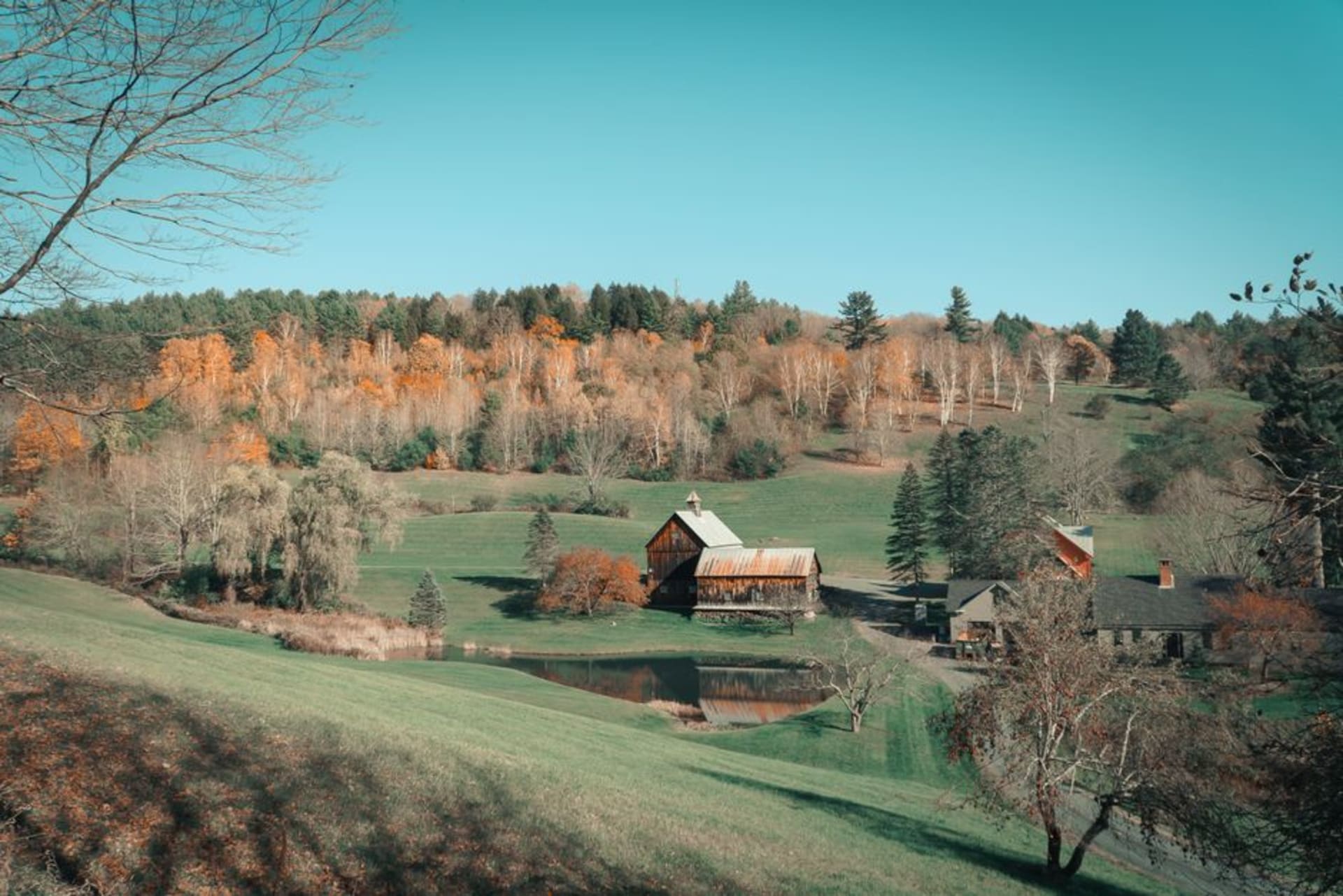
We nearly drove straight through Woodstock. It was late September, the leaves just beginning to turn, and Lia and I had been chasing color across Vermont for three days, half-convinced the perfect village was a marketing invention. Then the road curved and there it was — the oval green, the white steeple, the covered bridge slung across the Ottauquechee river — and Lia actually said “oh” out loud. We parked, and we did not leave for two days. What won me over was not the prettiness, which is undeniable, but the fact that it is a working town: someone was arguing about zoning outside the general store, a farmer’s truck idled by the bank, and none of it was for our benefit.
The Green and the Bridge
The heart of Woodstock is its oval green, ringed by Federal and Greek Revival houses so well kept they look freshly painted. We walked its perimeter slowly, coffees in hand, reading the historical plaques and eavesdropping on the town’s small business. At the green’s edge, the Middle Covered Bridge crosses the Ottauquechee — unusually, it was built in 1969 using traditional lattice-truss methods, a modern homage rather than a relic, though you’d never guess. Lia stood in the middle of it, listening to the boards creak and the water rush underneath, and declared it the most Vermont place in Vermont. Below, the river ran clear over smooth stones, and a heron picked its way along the far bank, entirely unbothered by us.
Up to the Farm
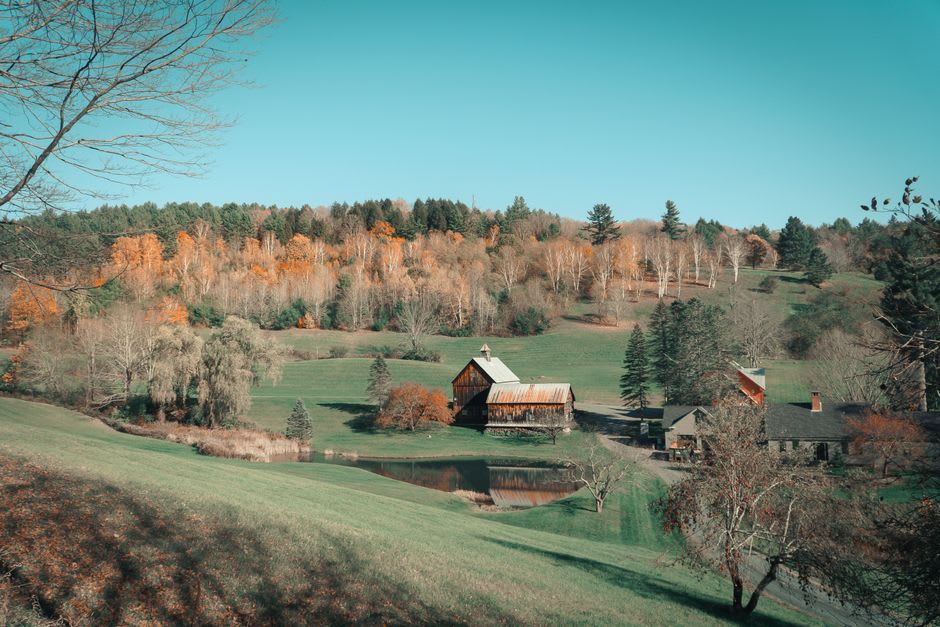
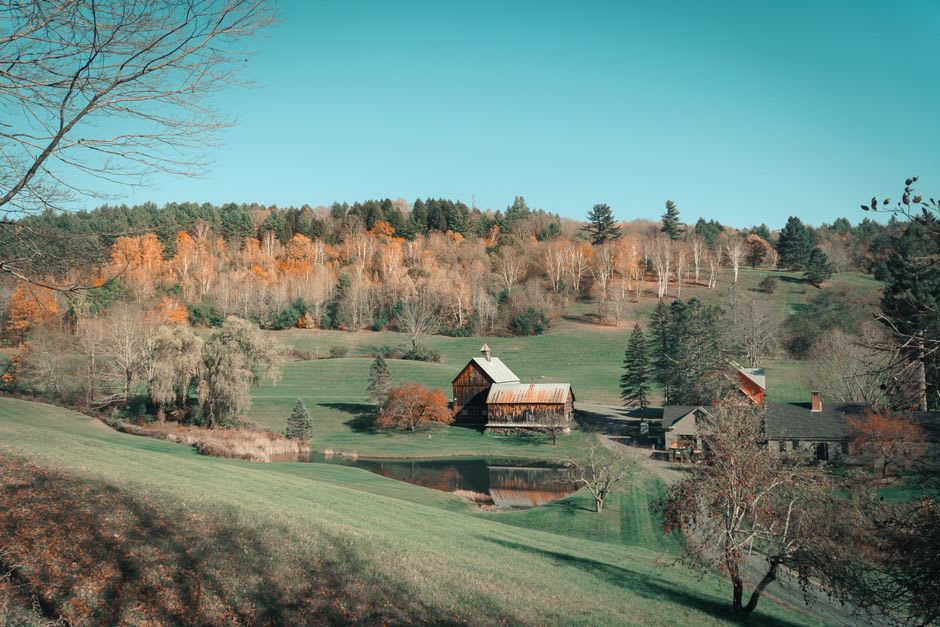
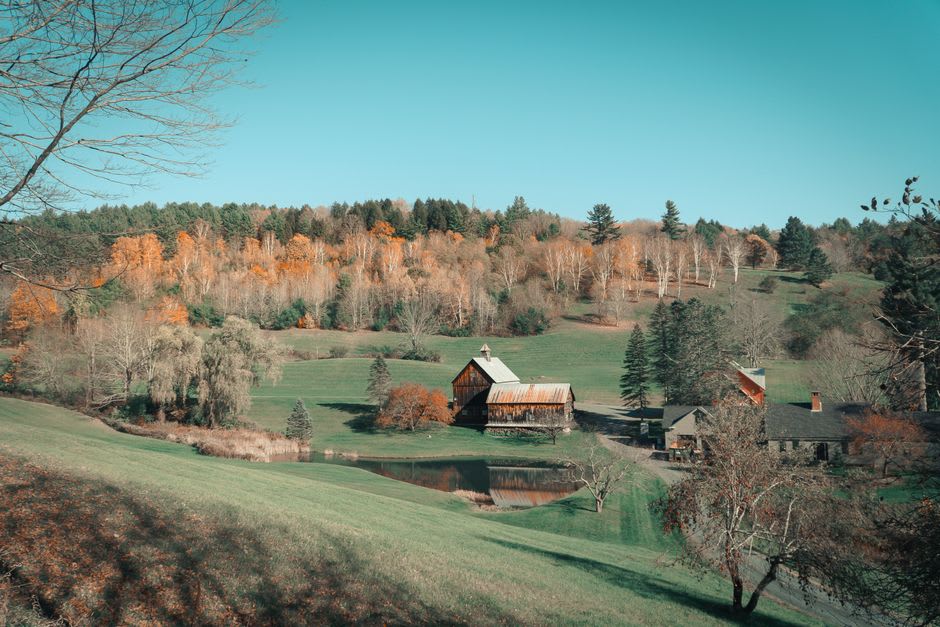
On our second morning we walked out to Billings Farm & Museum, just north of the village, and it turned out to be the soul of the place. This is a genuine working dairy farm, its Jersey cows the color of caramel, paired with a museum of nineteenth-century rural Vermont life. We watched the afternoon milking, and Lia — a city person to her bones — got completely absorbed in the rhythm of it. Adjoining the farm is the Marsh-Billings-Rockefeller National Historical Park, the only national park to tell the story of conservation and land stewardship. We hiked its carriage roads up through sugar maples to Mount Tom, the whole valley of white houses and red barns spread out below, the light going gold. I have rarely felt time slow down so completely.
Cheese, Cider, and Quiet
Vermont is serious about what it eats, and we happily surrendered to it. At the village general store we bought sharp cheddar, a wedge of something wrapped in ash, and cider pressed that week, then carried it all to a bench by the river for an improvised lunch. Down the road, the Sugarbush Farm let us taste our way through a dozen cheeses and watch maple syrup being made over a wood fire, the steam sweet and thick. In the evenings the village empties out and grows wonderfully still; we sat on the porch of our inn as the temperature dropped, wrapped in borrowed blankets, and watched the last light leave the steeple. Lia said she finally understood why people move here and never explain themselves further.
Getting There
Woodstock lies in east-central Vermont, roughly a two-and-a-half-hour drive from Boston and about four and a half from New York, most pleasantly reached along Route 4 through the Ottauquechee valley. There is no passenger rail into the village itself, though Amtrak’s Vermonter stops in nearby White River Junction, about a twenty-minute drive away, where you can rent a car. Come in late September or early October for peak foliage — but book your lodging months ahead, because the whole world seems to have the same idea.