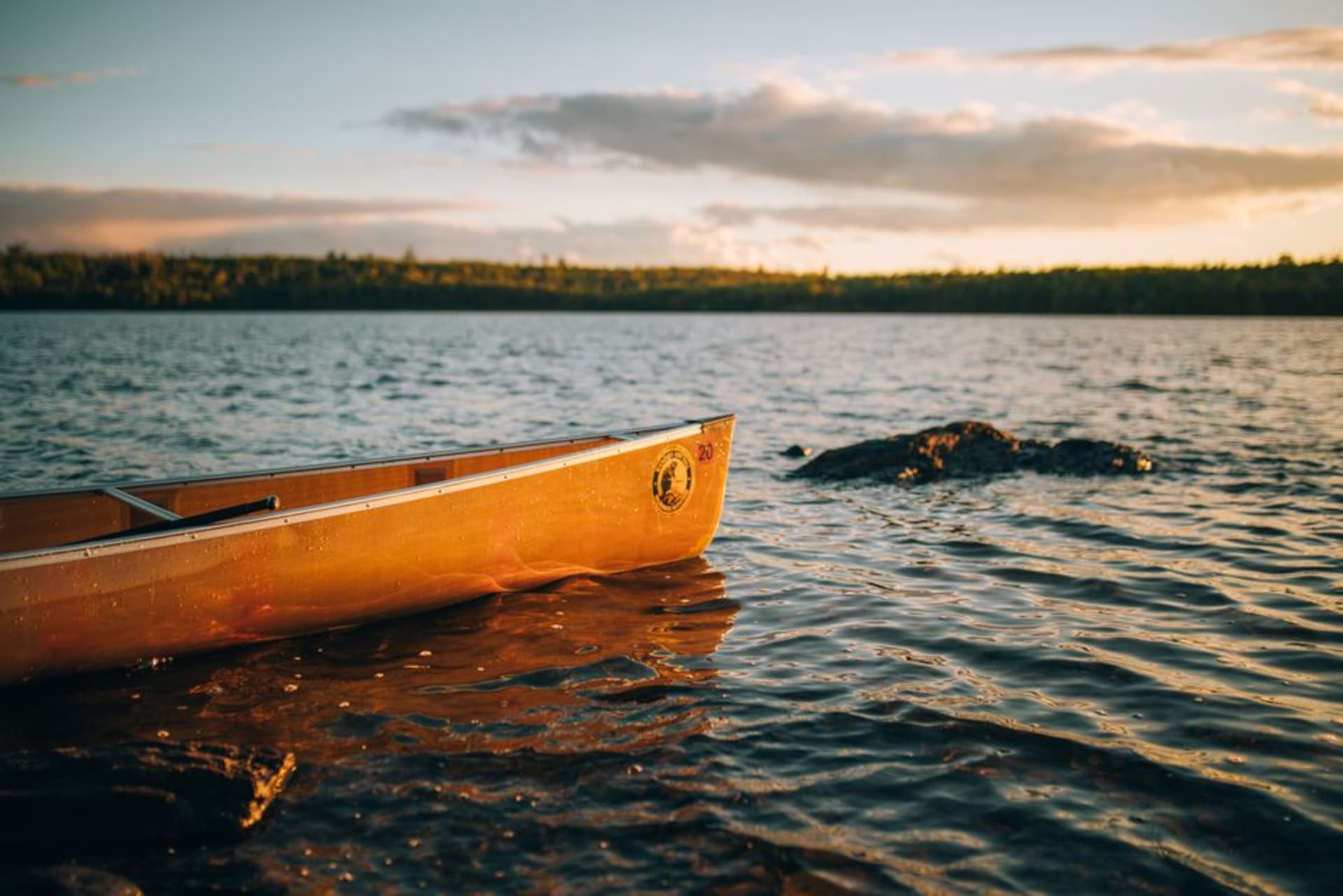
The first thing you have to accept at Voyageurs is that your car is now useless. The park is a maze of interconnected lakes on the Canadian border, and the roads simply end at the shore — beyond that, the fur-trappers who gave the place its name travelled by canoe, and so, more or less, must you. We rented a small motorboat at Rainy Lake, and Lia, who had never driven anything on water, took the tiller with a look of fierce concentration while I fumbled with the map. Within an hour we were somewhere with no other boats, no houses, no sound but the engine and, when we cut it, an enormous ringing silence.
Life on the Water
We spent two days moving between islands, and the water became our whole world. The channels twist and double back, dotted with islands of pine and birch, and it takes real attention to know where you are — every bay looks like the last one. We beached the boat on a rocky point for lunch and swam in water the colour of strong tea, stained by the tannins of the northern forest. A bald eagle lifted from a dead pine and Lia followed it with her eyes until it was a speck. There is a particular freedom to a place you can only reach by boat; the effort of arrival keeps it half-empty, and half-empty here means you can go a whole afternoon feeling like the last two people on earth.

The Loons
At dusk the loons started up, and I will never forget it. The common loon is Minnesota’s state bird, and its call is a sound that seems designed to unsettle you in the loveliest way — a long, wavering, minor-key cry that carries across still water for miles. We sat on the dock of our lakeside cabin as the light went, and the loons called back and forth across the bay, one voice answered by another far off, until the whole lake seemed to be conversing. Lia had gone completely quiet. When I looked over she had tears in her eyes and laughed at herself for it. Some sounds go straight past the mind and into somewhere older.
The Northern Lights
We had heard Voyageurs was one of the best places in the lower forty-eight to see the aurora, but I hadn’t let myself hope. Then near midnight Lia shook me awake — “Pierre, outside, now” — and I stumbled out onto the dock to find the northern sky moving. Pale green curtains rose and folded and thinned, brightening and fading, reflected whole in the black mirror of the lake so that we seemed to be suspended between two skies. It is very dark here, far from any city glow, and that darkness is protected on purpose. We stood shivering in our coats until the cold won, and even then we didn’t want to go in. I have chased that light in a few places since. It began here.
Getting There
Voyageurs sits on Minnesota’s far northern border, about a four-and-a-half-hour drive north of Minneapolis, with the town of International Falls as the nearest hub. There are three main entry points — Rainy Lake, Kabetogama, and Ash River — each with a visitor centre and boat access. You genuinely need a boat to see the park’s heart; you can rent one, join a ranger-led tour on the concessioner’s larger vessel, or bring a canoe. Come in late summer or autumn for calm water, or in winter when the lakes freeze into ice roads. Whenever you visit, stay for at least one night on the water — the loons and the dark sky are the whole reason to come.