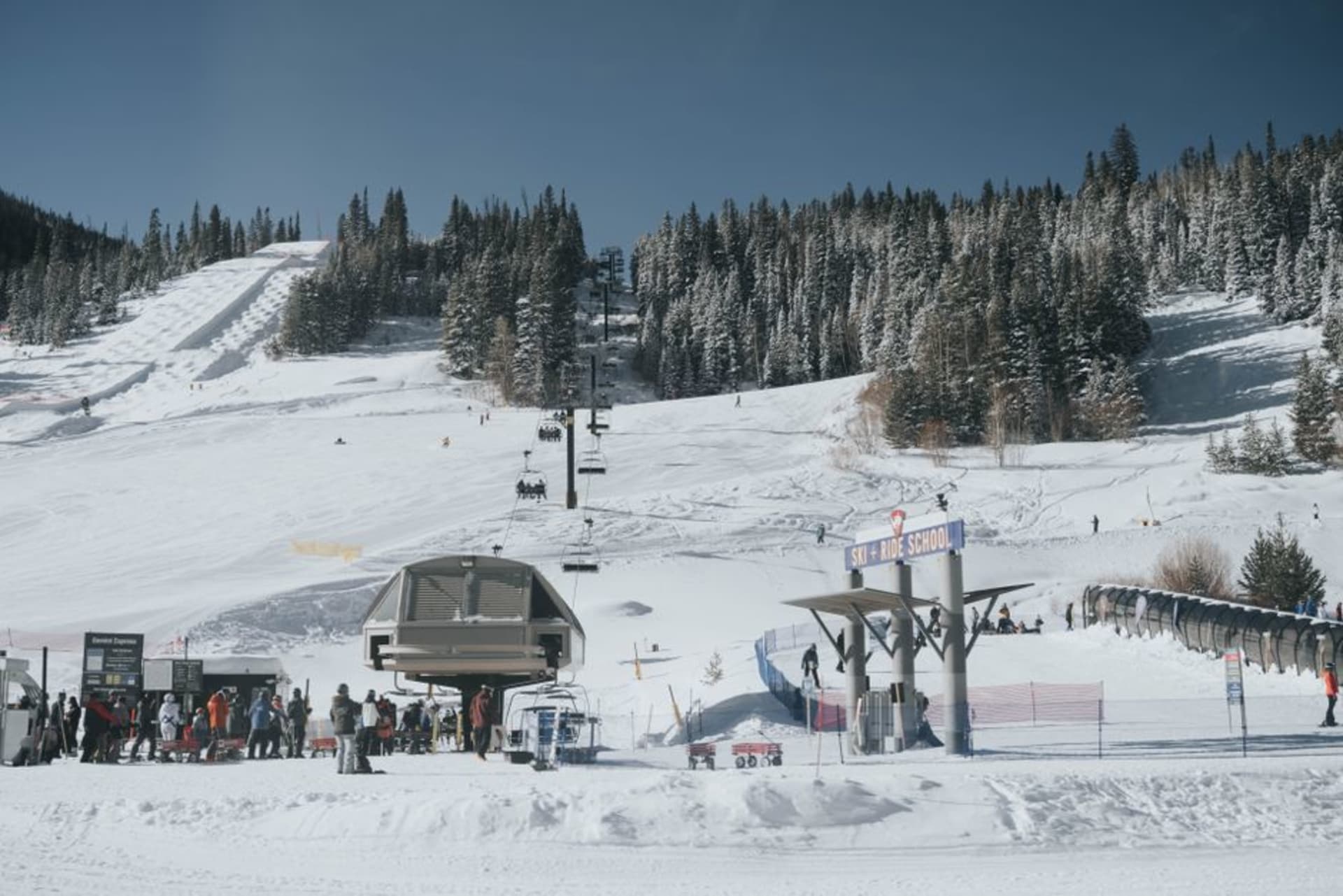
I will admit I arrived in Vail a little skeptical. I knew the story — that the whole village was conceived in the 1960s to serve a ski mountain, dressed up in Alpine timber and stucco to feel like somewhere older. And yet, when Lia and I left the car behind and walked into the pedestrian heart of it, with Gore Creek chattering under a wooden footbridge and geraniums spilling from every window box, my French cynicism quietly dissolved. It is a stage set, yes. But it is a very good one, and the real mountains behind it are beyond anyone’s power to fake.
The car-free village
Vail Village bans cars from its core, and that single choice changes everything. We spent a whole afternoon simply walking — down cobbled lanes, over little bridges, past bakeries and boot fitters, the sound of the creek always somewhere near. Lia bought a slab of strudel from a bakery that leaned hard into the Bavarian theme, and we ate it on a bench while a covered bridge framed the mountain beyond. Without engine noise the place breathes differently; you hear water, footsteps, and the occasional church bell. For a manufactured town it felt genuinely calm.
Up to the Back Bowls
Vail Mountain is enormous, and its fame rests on the Back Bowls — vast open faces on the far side of the ridge. In summer they trade snow for wildflowers, so we rode the gondola up from the village and walked out along the ridgeline. The view over the back was staggering: bowl after treeless bowl rolling away toward the distant Gore Range, the grass thick with blue and yellow blooms. Lia lay back in it while I tried and failed to photograph the scale of the place. Nothing I took came close.
Gore Creek and the wilder edge
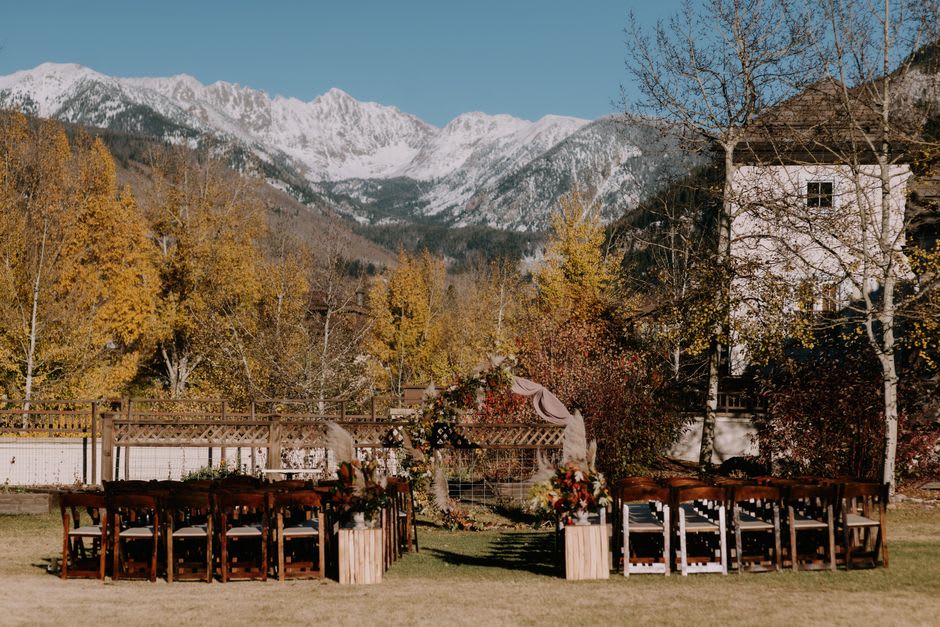
For all its polish, Vail sits right against real wilderness. We followed Gore Creek upstream out of the village until the buildings fell away and it became simply a mountain stream running through spruce and aspen. Anglers stood thigh-deep casting for trout in the clear water, and the trail climbed gently toward the peaks of the Eagles Nest Wilderness. Twenty minutes from the strudel and the boutiques, and we had the sound of the creek entirely to ourselves. That contrast, I decided, is the real Vail — the resort and the raw country pressed right up against each other.
Getting There
Vail sits directly on Interstate 70, about a hundred miles west of Denver — one of the most accessible mountain resorts in Colorado, roughly two hours by car in fair weather. Shuttles run regularly from Denver airport, and there is a small regional airport at Eagle, forty minutes west, that grows busy in ski season. Once you arrive you truly do not need a car: the village is car-free at its core and a free, frequent bus links Vail with neighboring Lionshead and beyond. Park once, walk everywhere, and let the gondola carry you the rest of the way up.